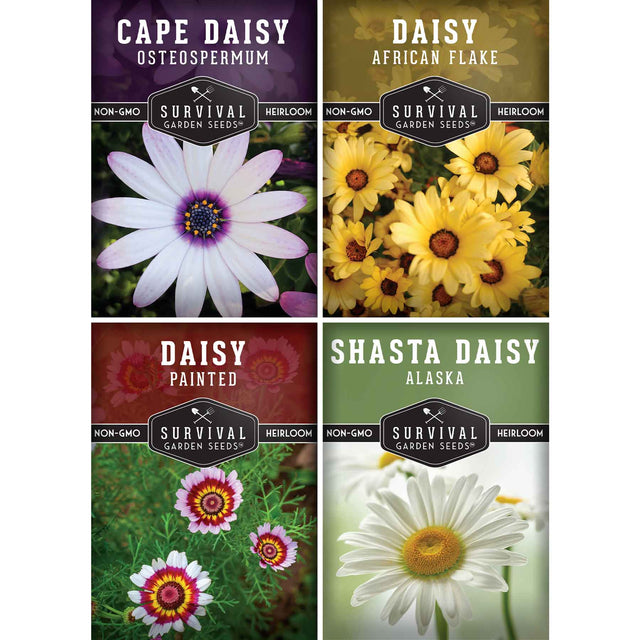
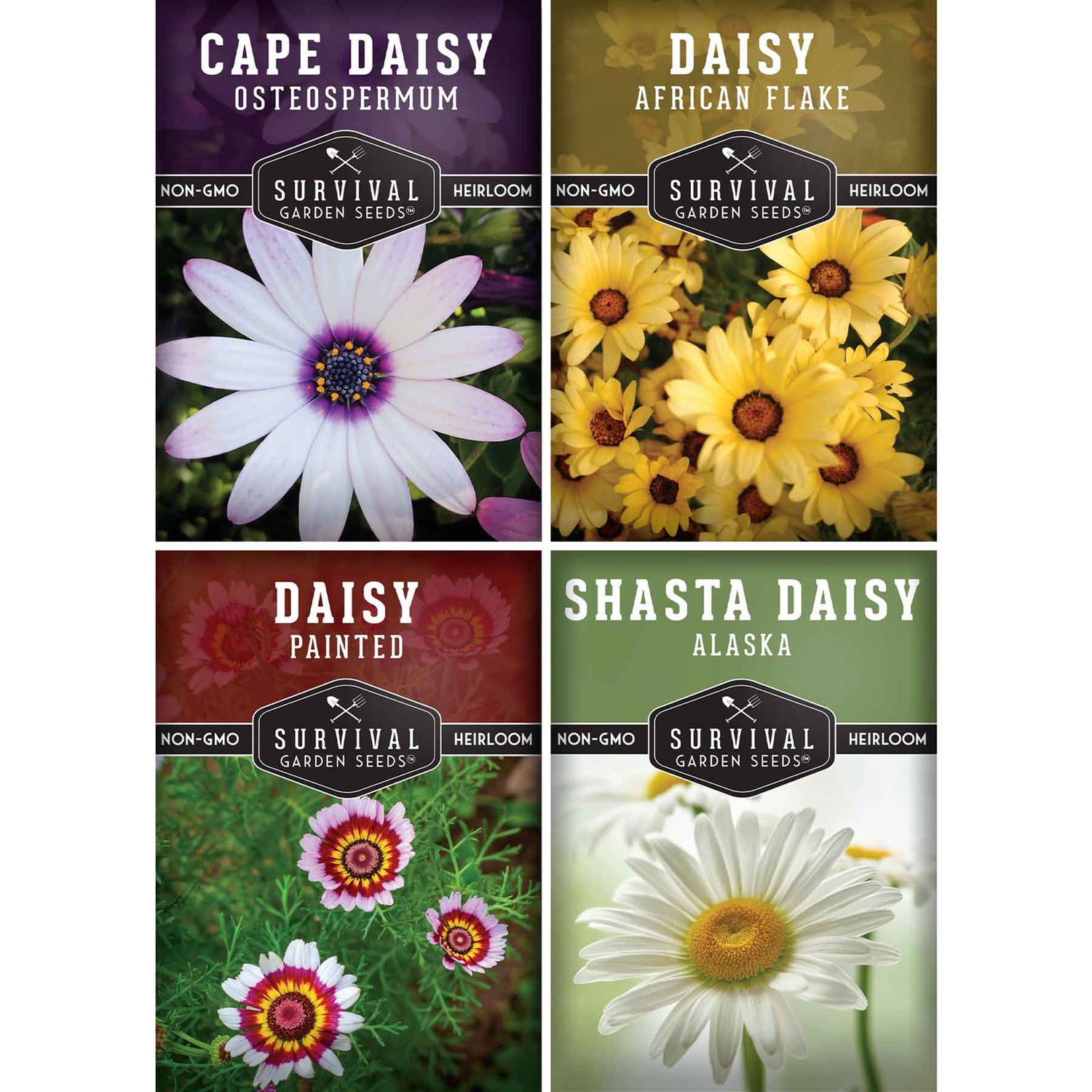
Daisy Seed Collection – Shasta, Cape, Painted & African Flake Daisies for Pollinator & Cut Flower Gardens
Heirloom - Non-GMO - Reliable Germination
Daisy Seed Collection – Shasta, Cape, Painted & African Flake Daisies for Pollinator & Cut Flower Gardens is backordered and will ship as soon as it is back in stock.
Couldn't load pickup availability

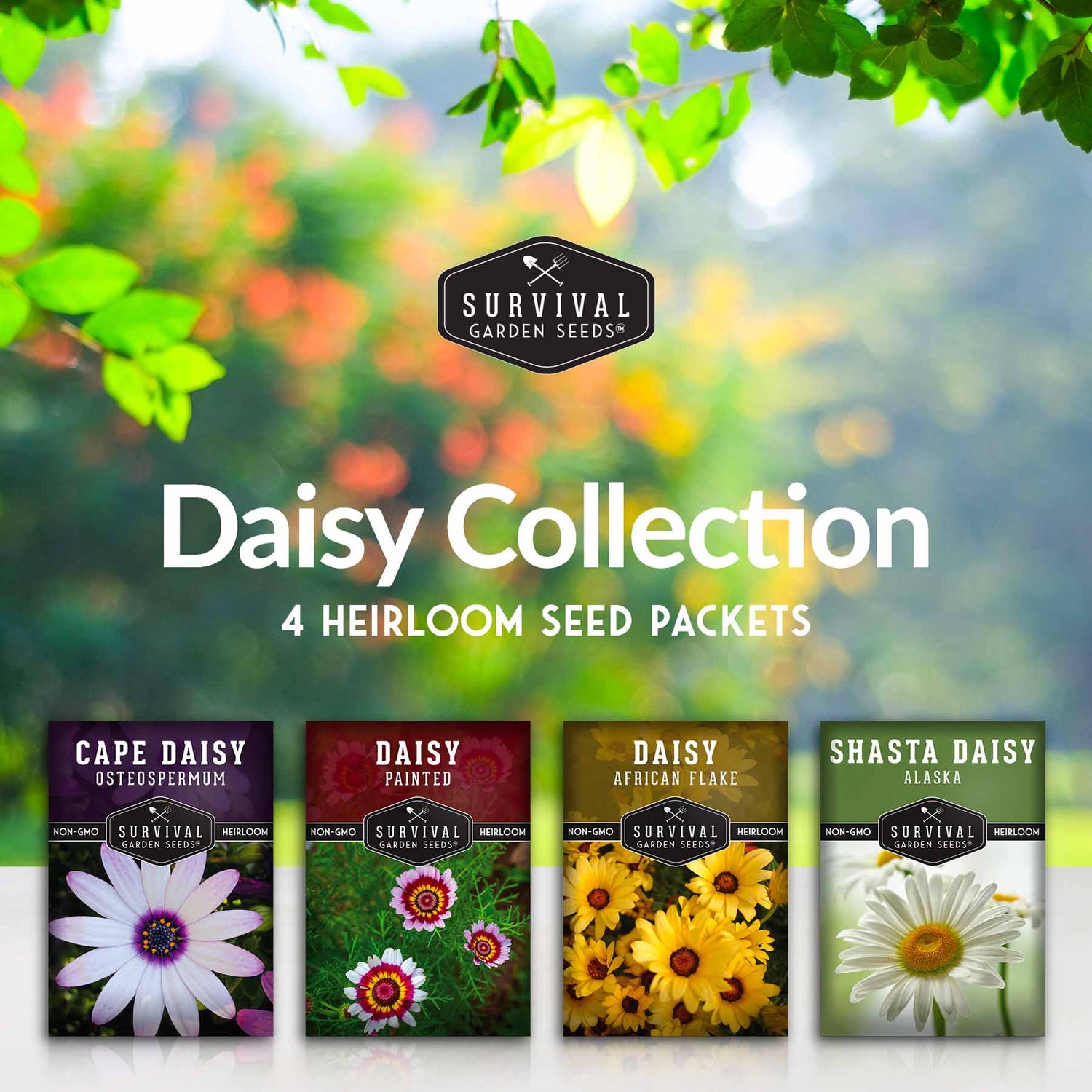
Brighten your garden with a charming mix of daisy varieties using the Daisy Seed Collection from Survival Garden Seeds. This four-pack assortment includes annual and perennial daisies chosen for their beauty, pollinator appeal, and versatility in both ornamental and vegetable gardens. With a range of heights, colors, and bloom styles, these flowers bring movement, color, and beneficial insects to beds, borders, and containers. They also make lovely cut flowers for indoor arrangements.
These daisy varieties thrive in full sun and attract bees, butterflies, and other friendly insects that support healthy garden ecosystems. Each flower offers unique color and form, creating a dynamic summer display ideal for pollinator pathways, cottage gardens, and mixed beds.
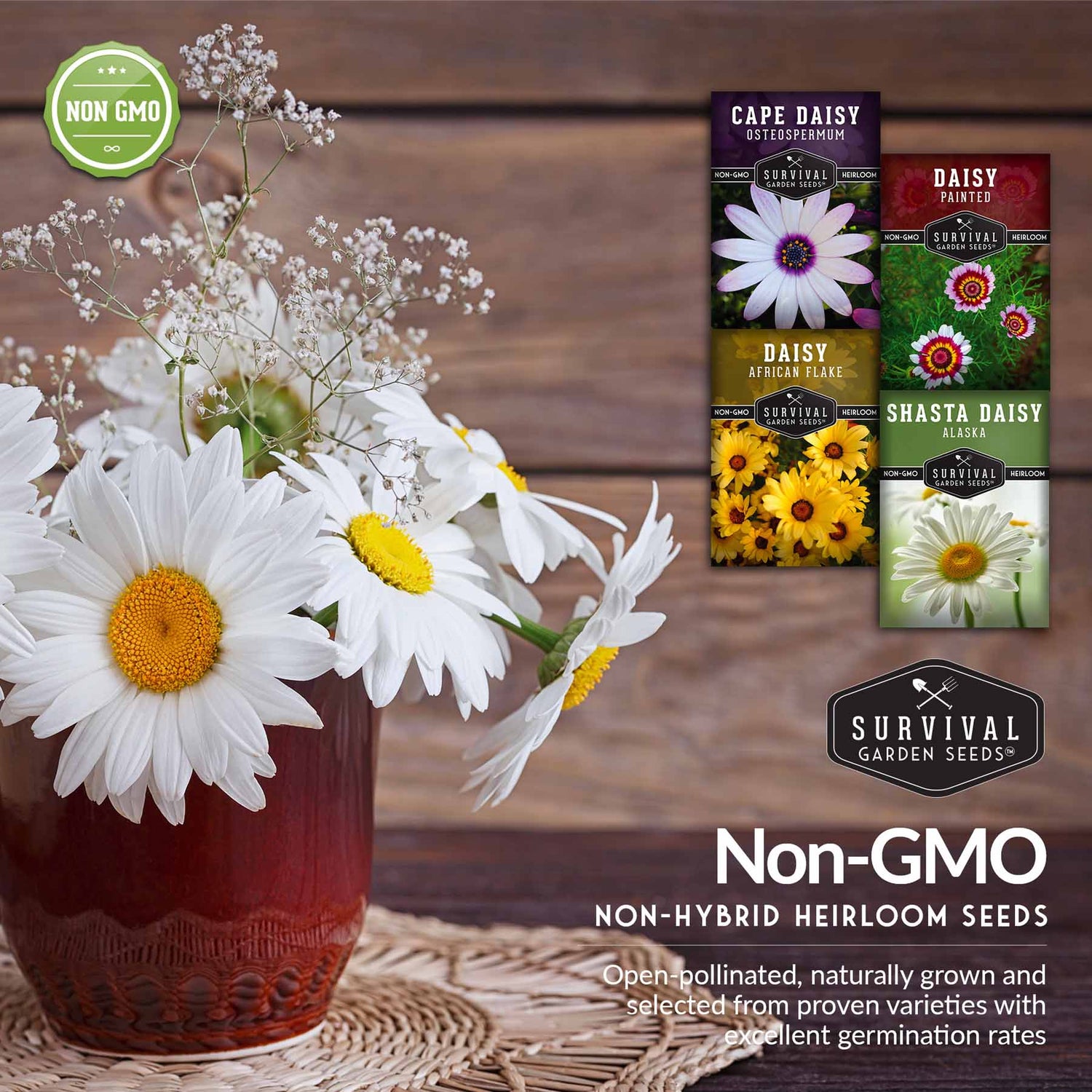
Varieties Included in the Daisy Seed Collection:
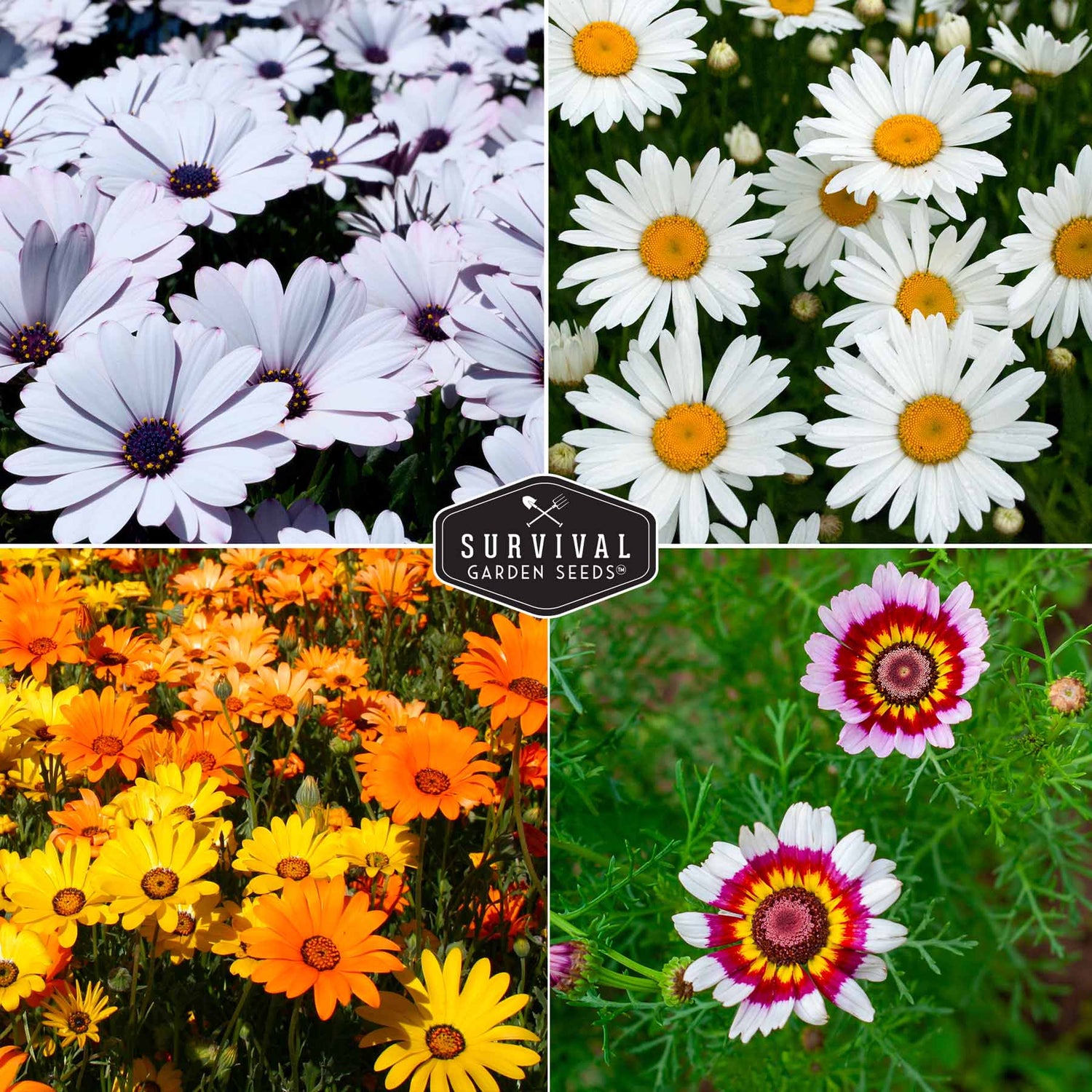
- Shasta Daisy: A classic white daisy with bright yellow centers on sturdy, cold-hardy plants that reach 2–4 feet tall. Blooms are edible and can be used to add decorative flair to salads and baked goods.
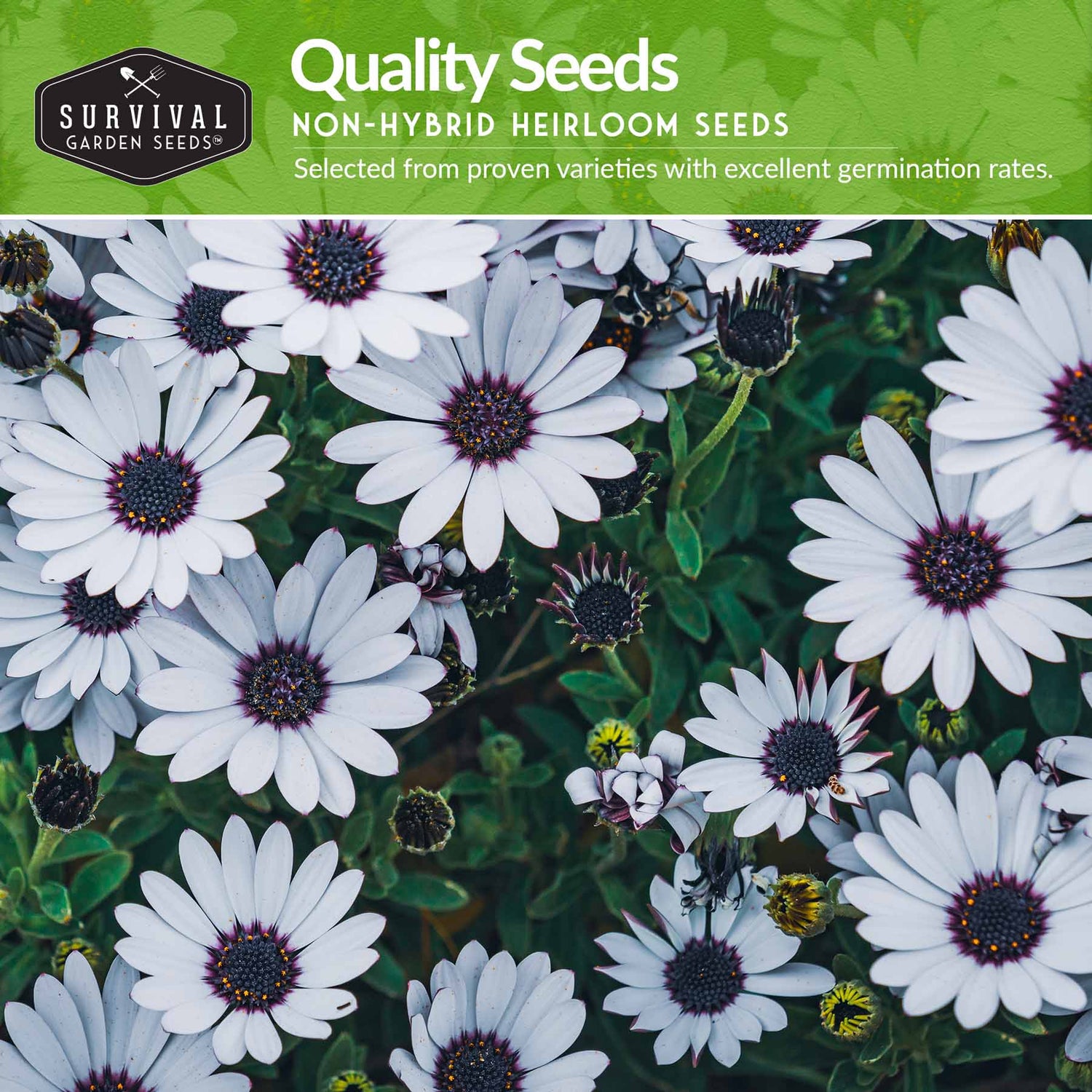
- Cape Daisy (Osteospermum): A perennial African daisy featuring white petals with purple centers and a light floral fragrance. Compact plants grow 12–18 inches tall and bloom beautifully in containers and sunny borders.
- Painted Daisy (Chrysanthemum carinatum): A colorful annual producing flowers in shades of red, pink, white, and yellow, often with striking bullseye rings. Plants grow 18–36 inches tall with a bushy habit.
- African Flake Daisy: A drought-tolerant annual with daisy-like blooms in orange, yellow, or white, each with a contrasting purple center. Compact 8–12 inch plants thrive in hot, dry conditions.
Why Customers Love the Daisy Seed Collection:
- Includes four unique daisy varieties for diverse color and height
- Attracts bees, butterflies, and other beneficial pollinators
- Suitable for cut flower gardens, pollinator beds, borders, and containers
- Offers both annual and perennial blooms for lasting garden interest
- Beginner-friendly with clear planting instructions included
How to Grow:
Sow seeds in full sun after the danger of frost has passed, or start indoors and transplant when conditions are warm. Provide well-drained soil and moderate watering. Taller varieties may benefit from light staking in windy areas. Deadhead spent blooms to encourage continuous flowering. These daisies grow well in traditional beds, raised beds, and containers, making them versatile choices for any garden layout.
Daisy Seed Collection – Shasta, Cape, Painted & African Flake D...
Heirloom Garden Seeds
All of our seeds are open-pollinated, non-GMO, heirloom varieties with tested germination rates
Payment & Security
Payment methods
Your payment information is processed securely. We do not store credit card details nor have access to your credit card information.
Why Choose Survival Garden Seeds
At Survival Garden Seeds, we believe in preparing today for tomorrow’s peace of mind. That’s why we offer only heirloom, non-GMO, and untreated seeds you can trust to nourish your family and support a sustainable lifestyle. As a family-owned American company, we’re committed to providing seeds that grow strong and true—helping you cultivate health, resilience, and beauty in your garden.
Frequently Asked Questions
Are your seeds heirloom and open-pollinated?
Are your seeds heirloom and open-pollinated?
Yes. All of our seeds are heirloom, open-pollinated varieties, which means they can produce seeds that grow true to type and are suitable for seed saving.
You can learn more about open-pollinated, heirloom, and non-GMO seeds in our Survival Garden Training blog.
Are your seeds non-GMO?
Are your seeds non-GMO?
Yes. All Survival Garden Seeds are 100% non-GMO. Our seeds are open-pollinated heirloom varieties and are never genetically modified.
Are your seeds treated with chemicals?
Are your seeds treated with chemicals?
No. Our seeds are completely untreated and free from chemical coatings, fungicides, or synthetic treatments.
How do I know my seeds are fresh?
How do I know my seeds are fresh?
Every seed packet includes a packed-for date, and we germination-test each seed lot before packaging to ensure high viability.
What is the shelf life of your seeds?
What is the shelf life of your seeds?
Most seeds remain viable for 3 to 5 years or longer when stored properly in a cool, dry place away from light and moisture.
In what USDA hardiness zones can I grow your seeds?
In what USDA hardiness zones can I grow your seeds?
Our varieties are selected to grow successfully across USDA Hardiness Zones 3 through 10. Each packet includes variety-specific planting guidance and germination tips.