
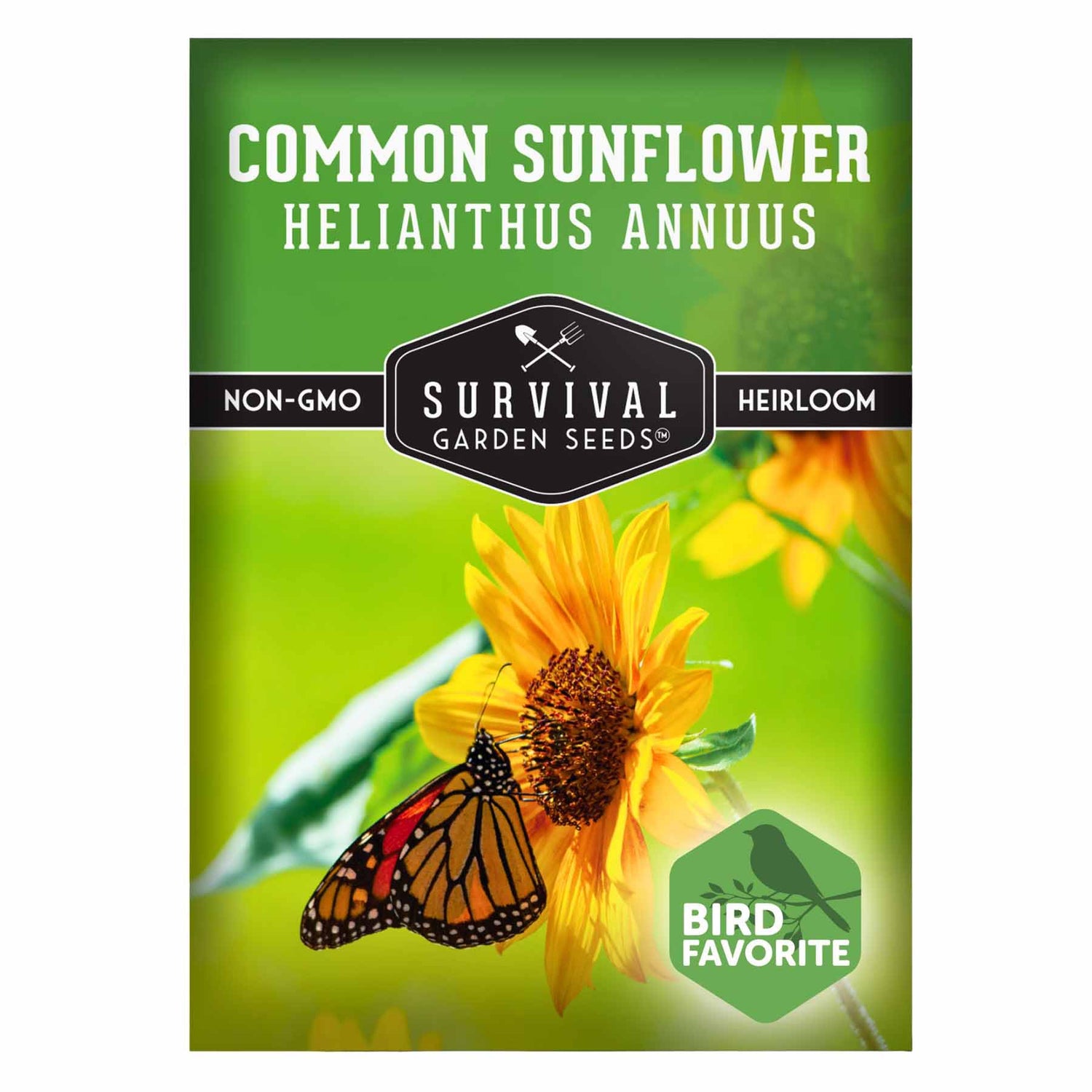
Common Sunflower Seeds (Helianthus annuus) – Native Branching Sunflower for Pollinators, Birds & Edible Seeds
Heirloom - Non-GMO - Reliable Germination
Common Sunflower Seeds (Helianthus annuus) – Native Branching Sunflower for Pollinators, Birds & Edible Seeds - 1 Packet is backordered and will ship as soon as it is back in stock.
Couldn't load pickup availability

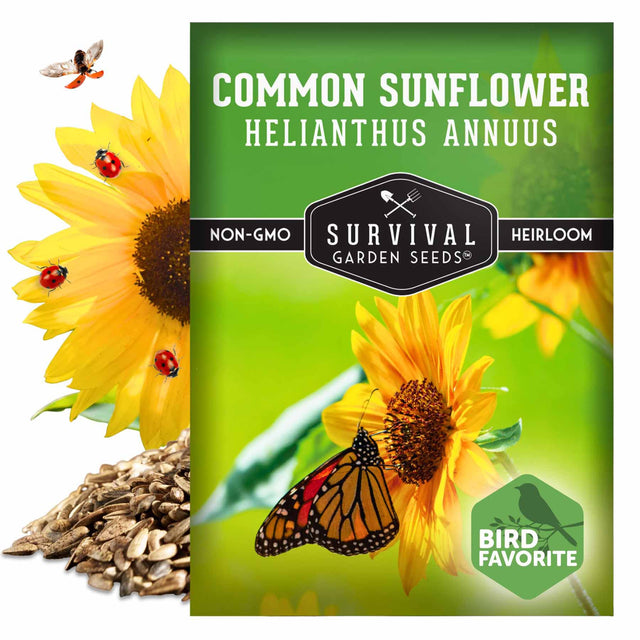
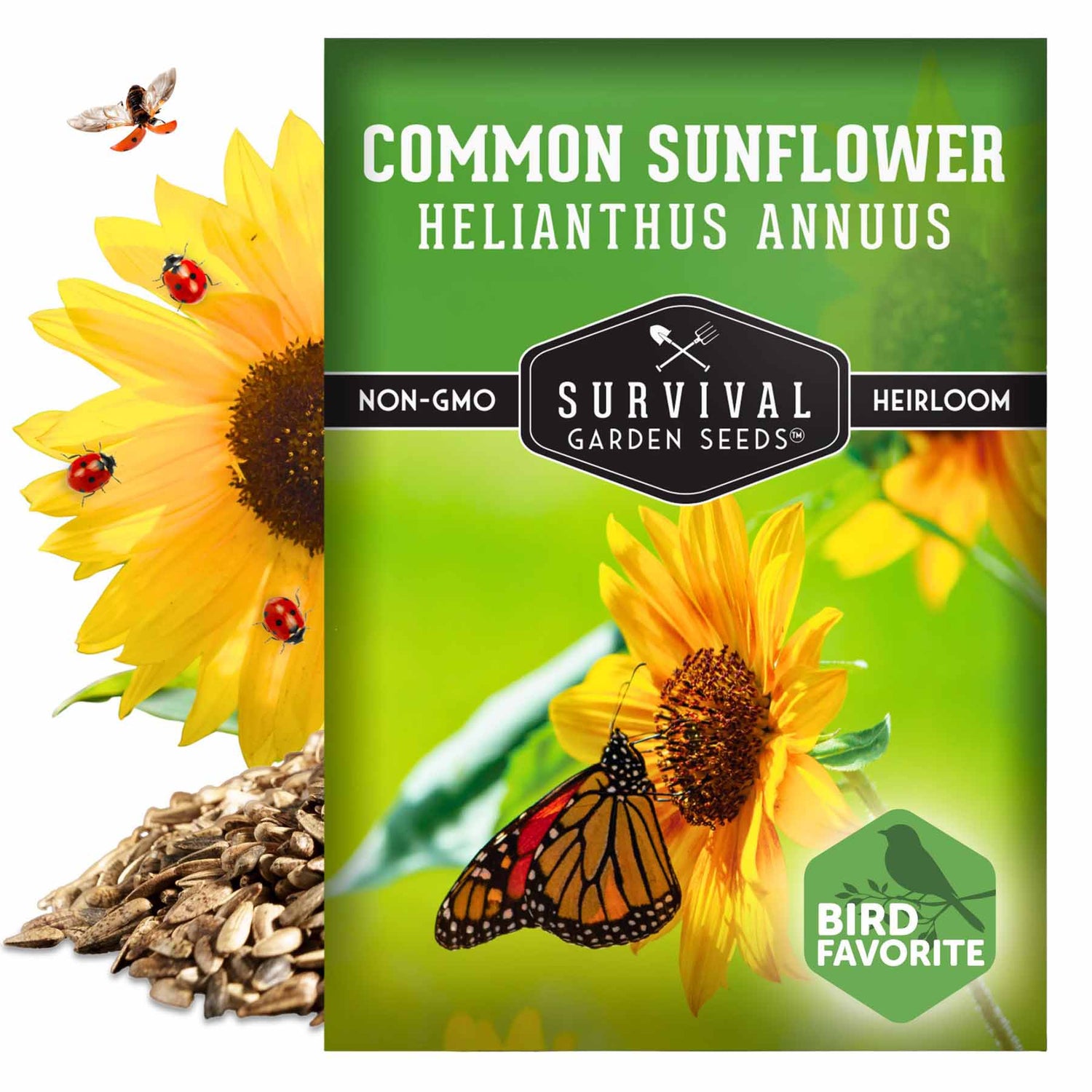
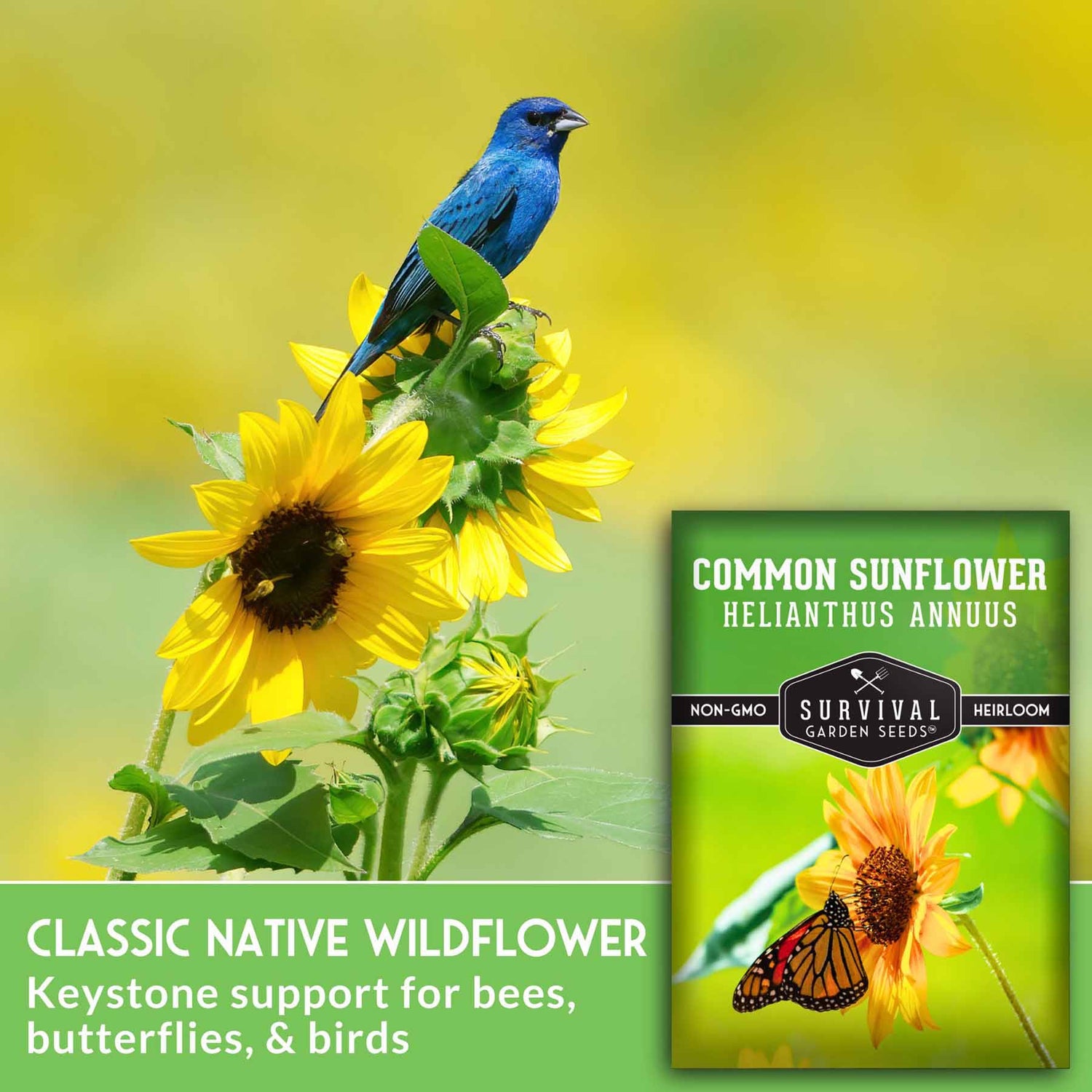
Common Sunflower seeds (Helianthus annuus) grow into one of North America’s most recognizable and ecologically valuable native wildflowers. This fast-growing annual produces classic golden-yellow blooms on sturdy, widely branching plants that can reach up to 10 feet tall, creating bold focal points and vibrant summer-to-fall color.
Unlike many modern ornamental sunflowers bred for uniform size or single large blooms, Common Sunflower is a true native species. Its naturally branching structure produces multiple flowers of varying sizes, offering extended bloom time and greater value for pollinators, birds, and beneficial insects. The oil-rich seeds are especially nutritious for wildlife and can also be enjoyed by people.
A Keystone Native with Broad Benefits:
Common Sunflower supports entire ecosystems while remaining easy and rewarding to grow.
Plant characteristics:
- Native annual sunflower (Helianthus annuus)
- Widely branching growth habit
- Reaches up to 10 feet tall
- Produces abundant yellow blooms from summer through fall
- Oil-rich seeds valued by wildlife and people
- Thrives in full sun across diverse soil types
Why Customers Love Common Sunflower Seeds:
- Iconic golden blooms that create instant garden impact
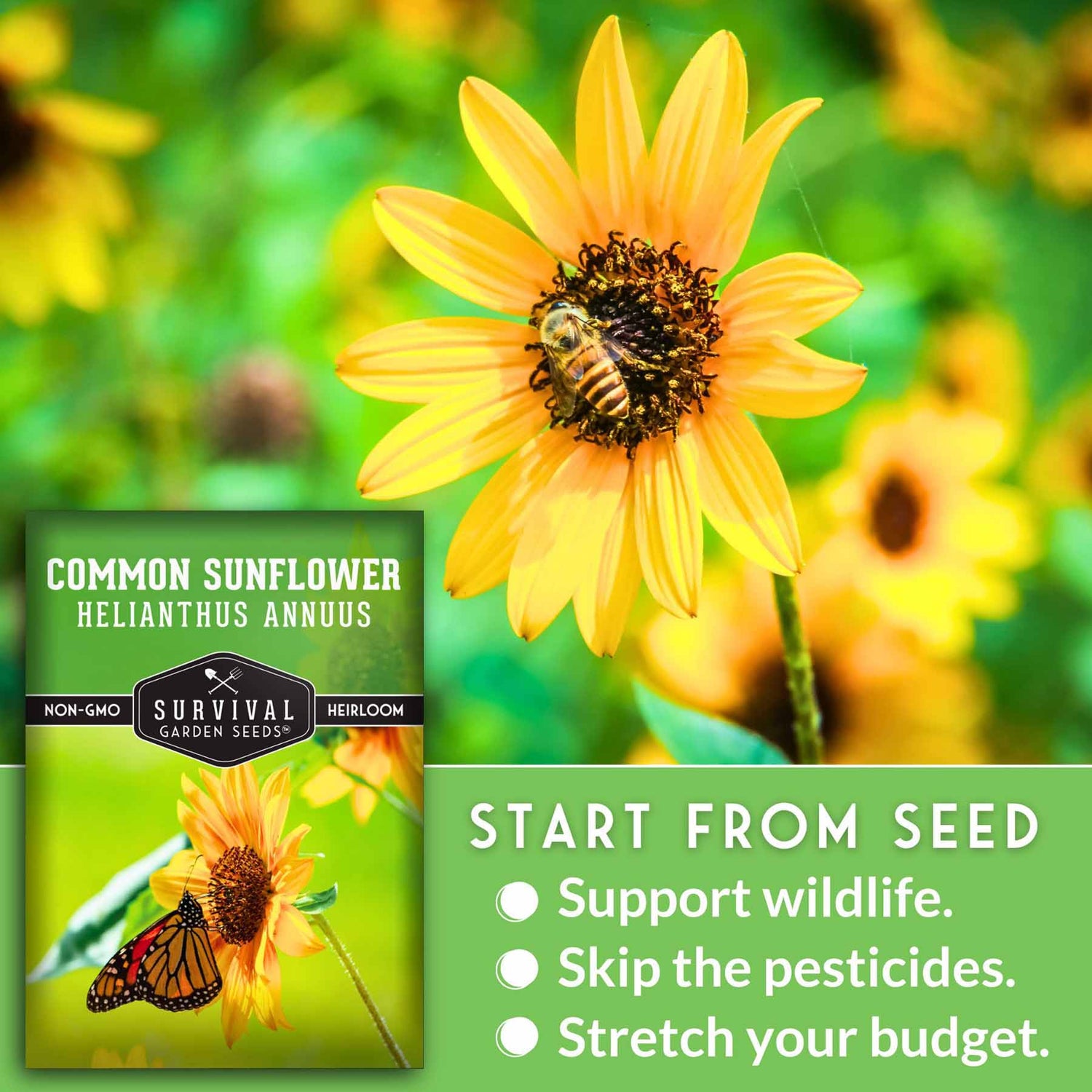
- Attracts bees, butterflies, and other pollinators
- Provides seeds for songbirds and winter feeding
- Serves as a larval host plant for caterpillars
- Edible seeds, buds, petals, and leaves
- Drought tolerant and low maintenance once established
- Ideal for beginners, children’s gardens, and large plantings
How to Use / How to Grow:
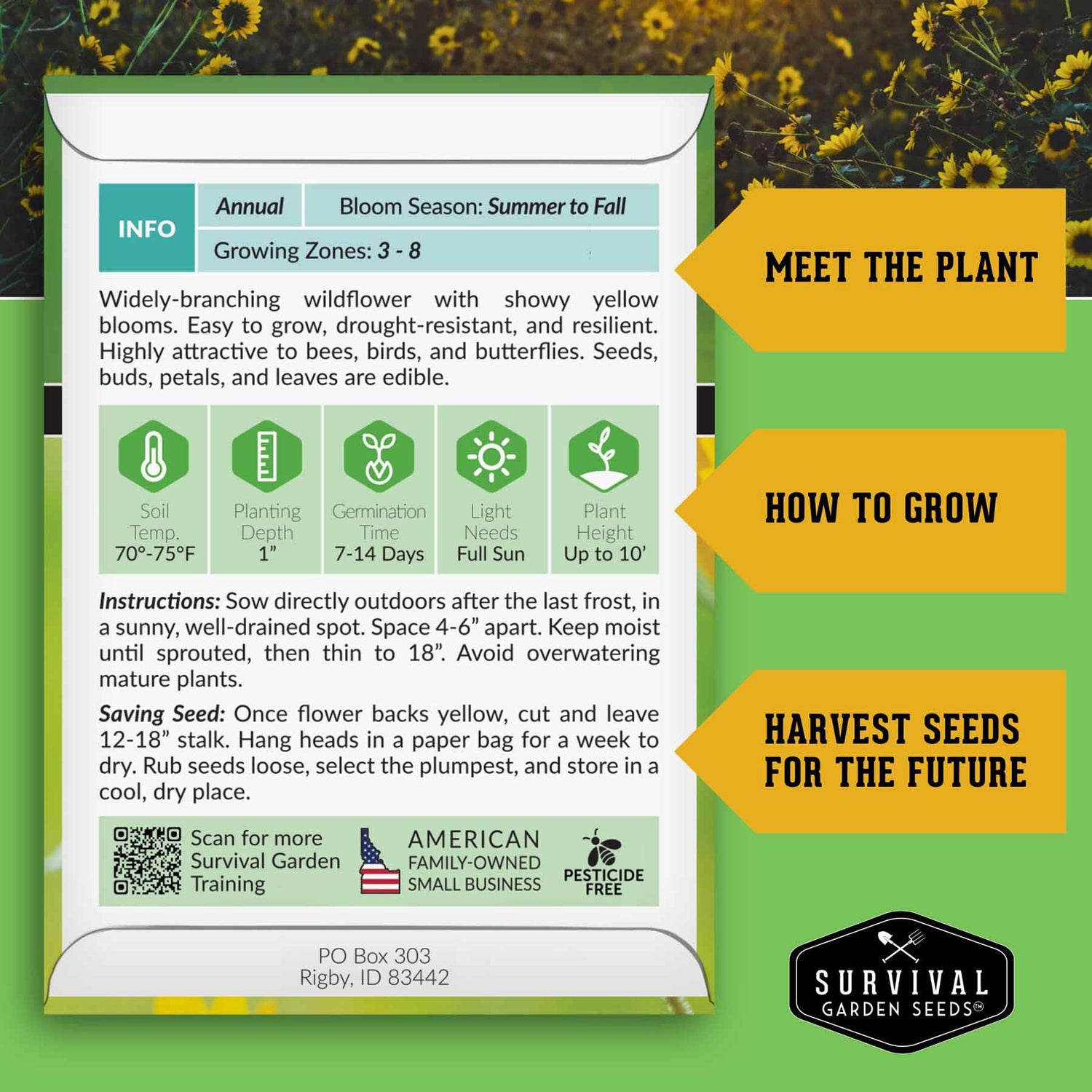
Direct sow seeds outdoors after the last frost in full sun. Plant in well-draining soil; Common Sunflower adapts easily to clay, sand, or loam. Seeds typically germinate in 7–14 days and grow quickly. Water during establishment, then reduce watering as plants mature. Allow some flowers to go to seed to support wildlife or natural reseeding.
Harvest & Use:
Harvest mature seed heads once seeds have fully developed and dried. Seeds can be saved for replanting, used for bird feed, or prepared for human consumption following appropriate processing.
Common Sunflower Seeds (Helianthus annuus) – Native Branching Sunfl...
Heirloom Native Plant Seeds
All of our seeds are open-pollinated, non-GMO, heirloom varieties with tested germination rates
Specifications
Specifications
-
Botanical Name
-
Seasonality
-
Planting Zones
-
Light
-
Soil Temp for Germination
-
Germination Time
-
Planting Depth
-
Plant Size
-
Growing Instructions
-
Seed Saving Instructions
-
Seed Count (approximate)
Payment & Security
Your payment information is processed securely. We do not store credit card details nor have access to your credit card information.

Native Perennials Are Worth The Wait!
Native perennials may not bloom in their first year. When planted from seeds, perennials put almost all of their energy into establishing strong, healthy root systems in the first year of growth. In the second year, you should see larger plants and some blooms. After the third year, you will be able to enjoy a bounty of beautiful blooms. Trust us! It will be worth the wait!
Cold Stratification Aids Germination
-
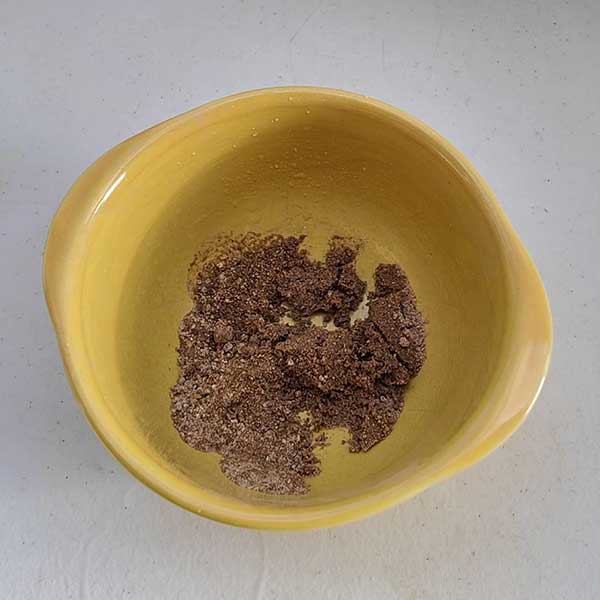
Step 1
Lightly moisten some clean sand. Make sure it is not too wet.
-
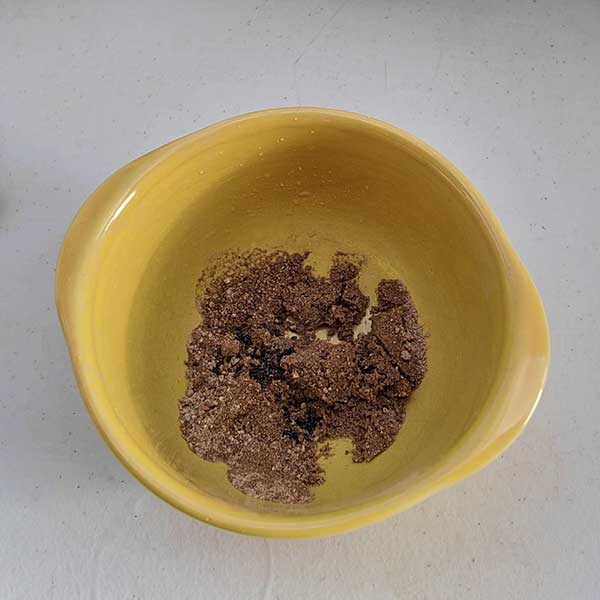
Step 2
Mix your seeds with the moist sand.
-
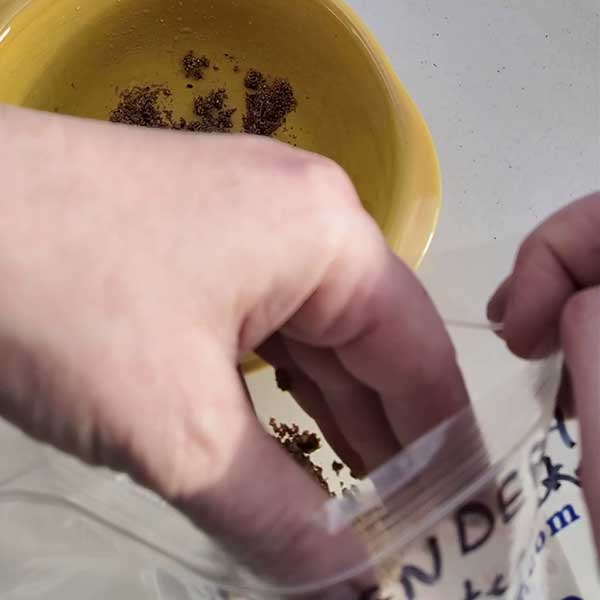
Step 3
Store your sand in an airtight container like a zip-top bag. Make sure to label and date your container.
-
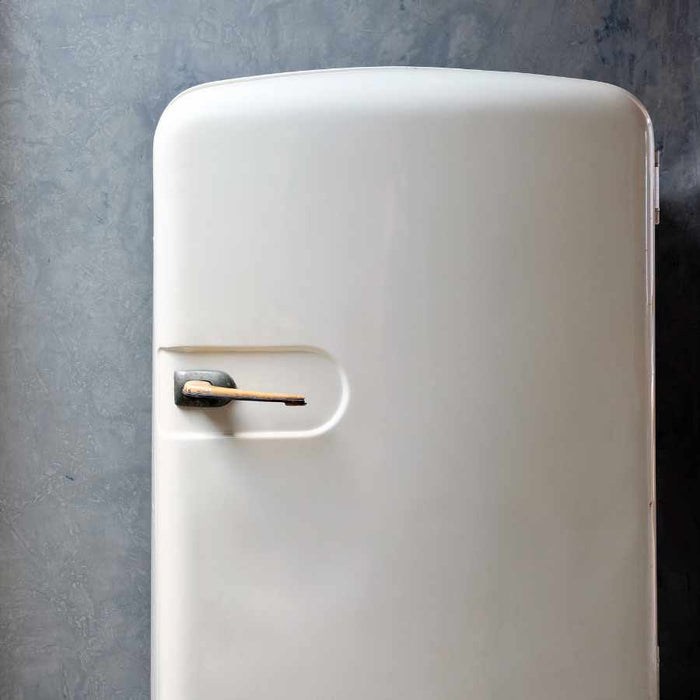
Step 4
Refrigerate your sand and seeds for 2 to 4 weeks (or more, depending on the information on your seed packet)
Support Native Habitats
- Supports Local Ecosystems and Biodiversity: Native plants are uniquely adapted to the local climate and soil conditions, forming the foundation of healthy ecosystems. They provide essential food, shelter, and breeding grounds for a wide array of native wildlife, including pollinators like bees and butterflies, birds, and beneficial insects, which helps to maintain and enhance local biodiversity.
- Requires Less Maintenance and Resources: Once established, native plants typically require significantly less water, fertilizer, and pesticides compared to non-native ornamental plants. Their deep root systems improve soil health and water penetration, reducing runoff and erosion, and their natural resistance to local pests and diseases minimizes the need for chemical interventions, saving time, money, and environmental impact.
- Contributes to Climate Resiliency and Conservation: By supporting a healthy native plant community, you are helping to create more resilient landscapes that can better withstand the impacts of climate change, such as extreme weather events. Growing native plants also plays a crucial role in conserving local plant genetics, preserving the natural heritage of a region, and providing critical habitat corridors for wildlife facing habitat loss.
- Detailed Growing Information: Paper seed packets include clear planting instructions, germination tips, and seed-saving info, great for beginner or experienced gardeners growing vegetables, herbs, flowers, or native plants.
- Trusted USA Seed Company: Family-owned business providing heirloom, non-GMO, open-pollinated seeds; always fresh, untreated, rigorously tested, and expertly packed for long-term storage and gardening success across all experience levels
Frequently Asked Questions
Are your seeds heirloom and open-pollinated?
Are your seeds heirloom and open-pollinated?
Yes. All of our seeds are heirloom, open-pollinated varieties, which means they can produce seeds that grow true to type and are suitable for seed saving.
You can learn more about open-pollinated, heirloom, and non-GMO seeds in our Survival Garden Training blog.
Are your seeds non-GMO?
Are your seeds non-GMO?
Yes. All Survival Garden Seeds are 100% non-GMO. Our seeds are open-pollinated heirloom varieties and are never genetically modified.
Are your seeds treated with chemicals?
Are your seeds treated with chemicals?
No. Our seeds are completely untreated and free from chemical coatings, fungicides, or synthetic treatments.
How do I know my seeds are fresh?
How do I know my seeds are fresh?
Every seed packet includes a packed-for date, and we germination-test each seed lot before packaging to ensure high viability.
What is the shelf life of your seeds?
What is the shelf life of your seeds?
Most seeds remain viable for 3 to 5 years or longer when stored properly in a cool, dry place away from light and moisture.
In what USDA hardiness zones can I grow your seeds?
In what USDA hardiness zones can I grow your seeds?
Our varieties are selected to grow successfully across USDA Hardiness Zones 3 through 10. Each packet includes variety-specific planting guidance and germination tips.