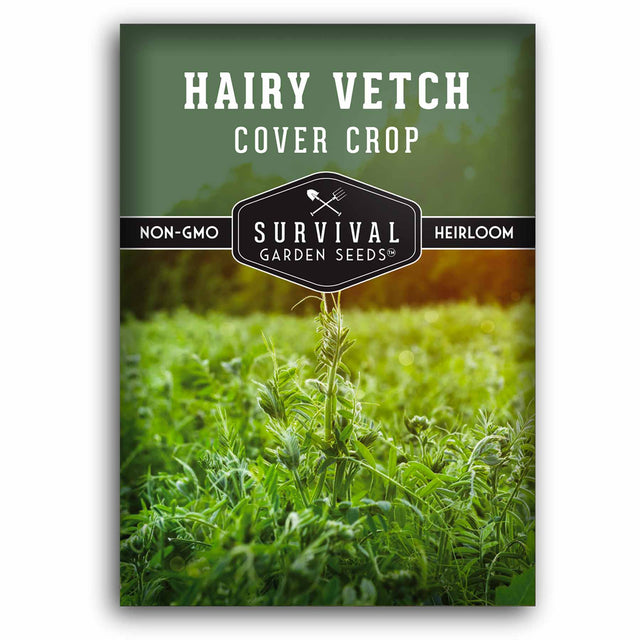
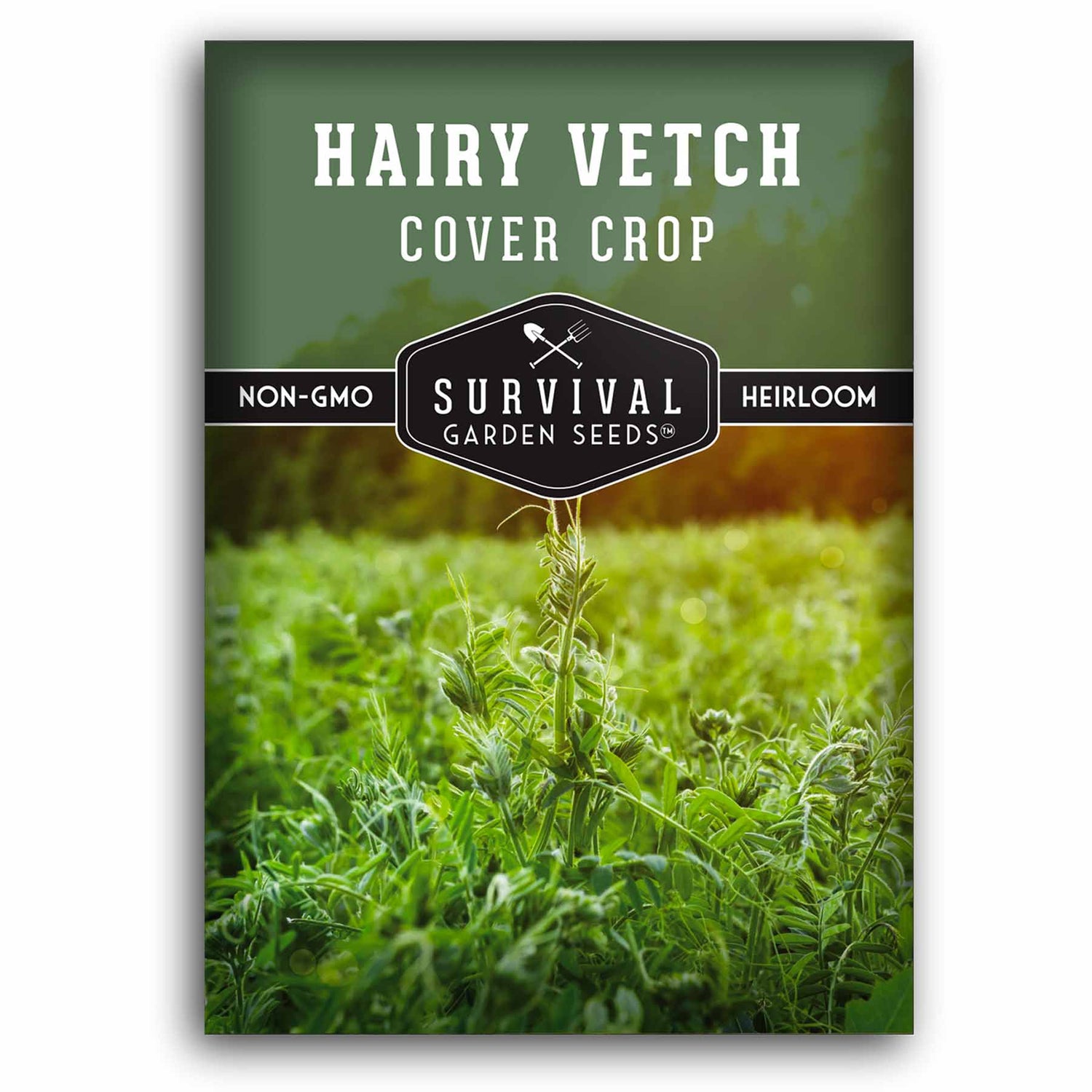
Hairy Vetch Seeds (Vicia villosa) – Nitrogen-Fixing Cover Crop for Soil Health, Forage & Pollinators
Heirloom - Non-GMO - Reliable Germination
Hairy Vetch Seeds (Vicia villosa) – Nitrogen-Fixing Cover Crop for Soil Health, Forage & Pollinators - 1 Packet is backordered and will ship as soon as it is back in stock.
Couldn't load pickup availability

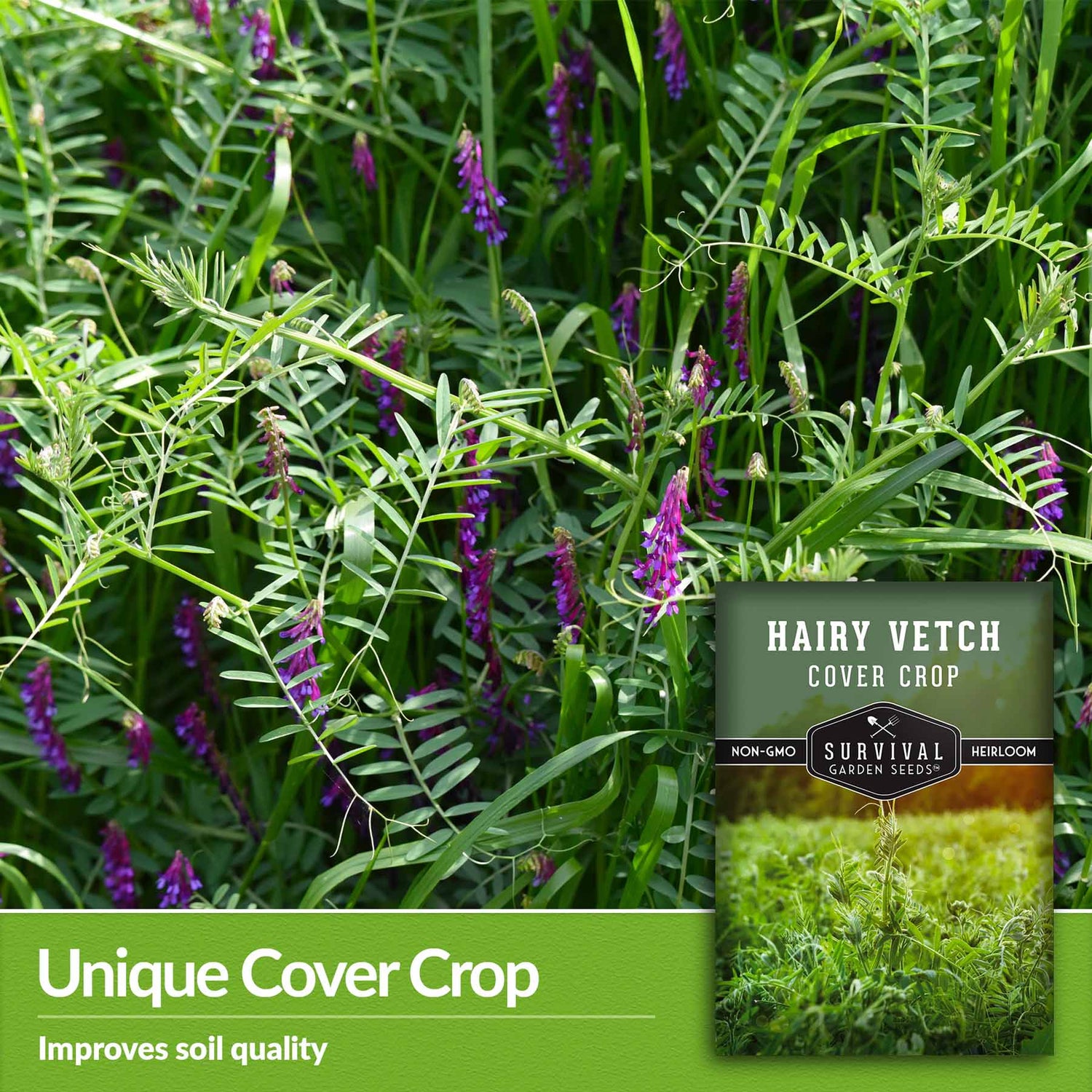
Hairy Vetch Seeds (Vicia villosa) grow into a fast-developing, resilient legume valued for its ability to improve soil health and support a thriving garden ecosystem. Commonly used as a cover crop, hairy vetch fixes atmospheric nitrogen into the soil, helping restore fertility and reduce the need for synthetic inputs. Its vigorous growth habit creates a dense ground cover that suppresses weeds and protects soil structure.
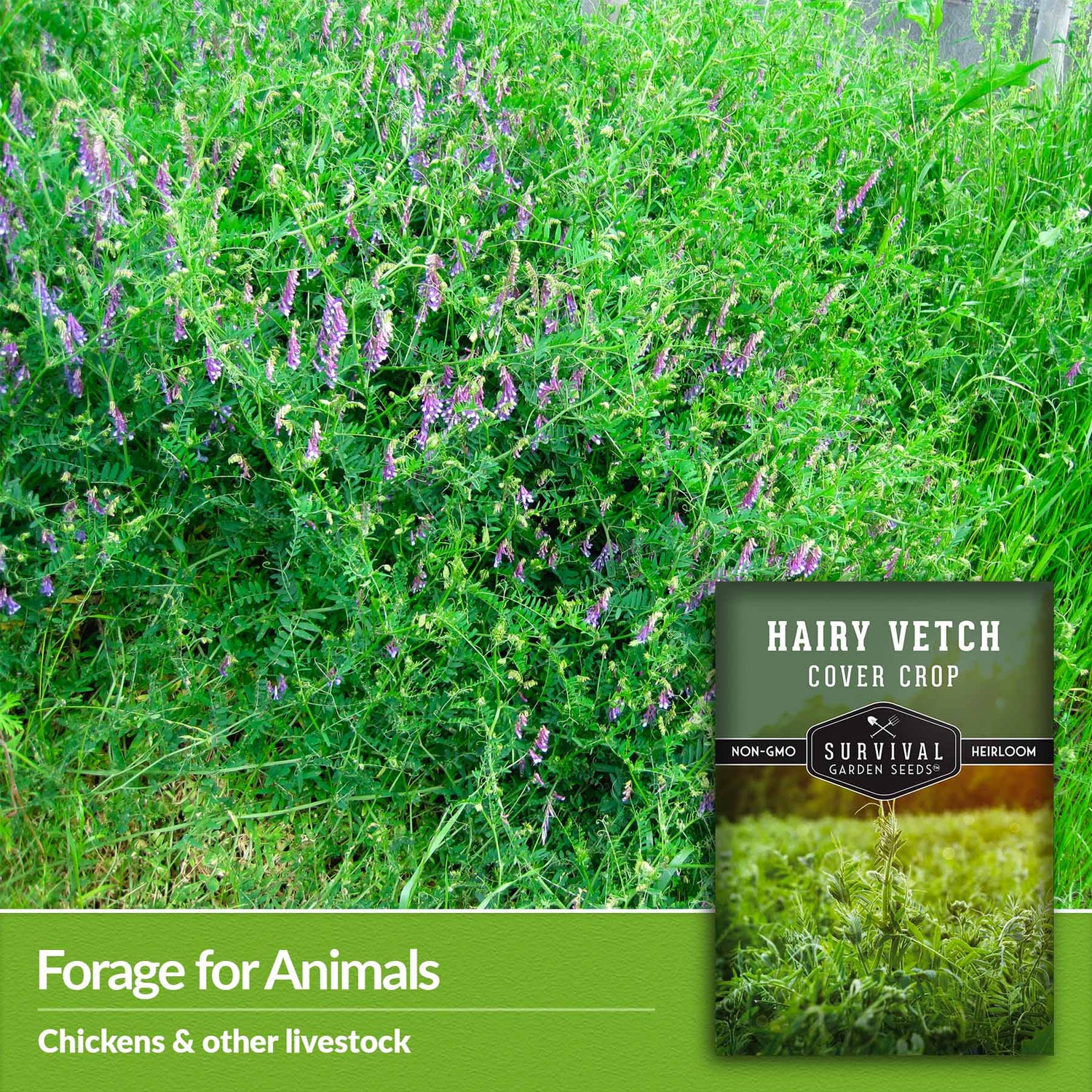
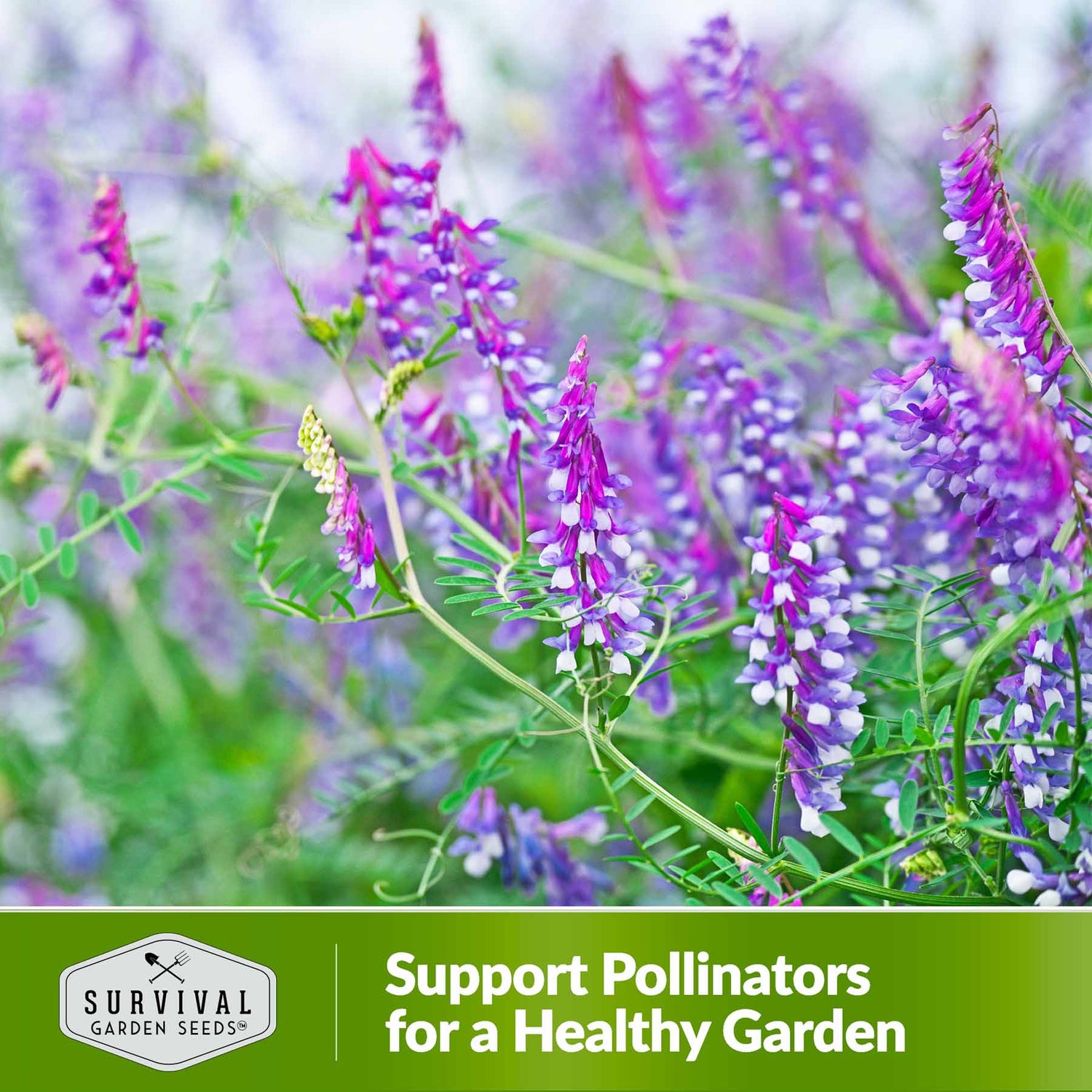
In addition to its soil-building benefits, hairy vetch produces attractive purple blooms that attract pollinators and beneficial insects. It is also widely used as high-protein forage for livestock and poultry, including chickens. Whether planted in garden beds, orchards, or mixed with other cover crops, hairy vetch is a practical and productive choice for regenerative and home-scale growing systems.
Soil-Building and Highly Adaptable:
- Nitrogen-fixing legume that improves soil fertility
- Fast-growing and resilient in a wide range of conditions
- Forms dense ground cover to reduce erosion and weeds
- Performs well alone or in cover crop mixes
Why Customers Love Hairy Vetch:
- Enhances long-term soil health naturally
- Supports pollinators with abundant purple flowers
- Useful as forage for chickens and other livestock
- Easy to integrate into vegetable gardens and rotations
How to Use / How to Grow:
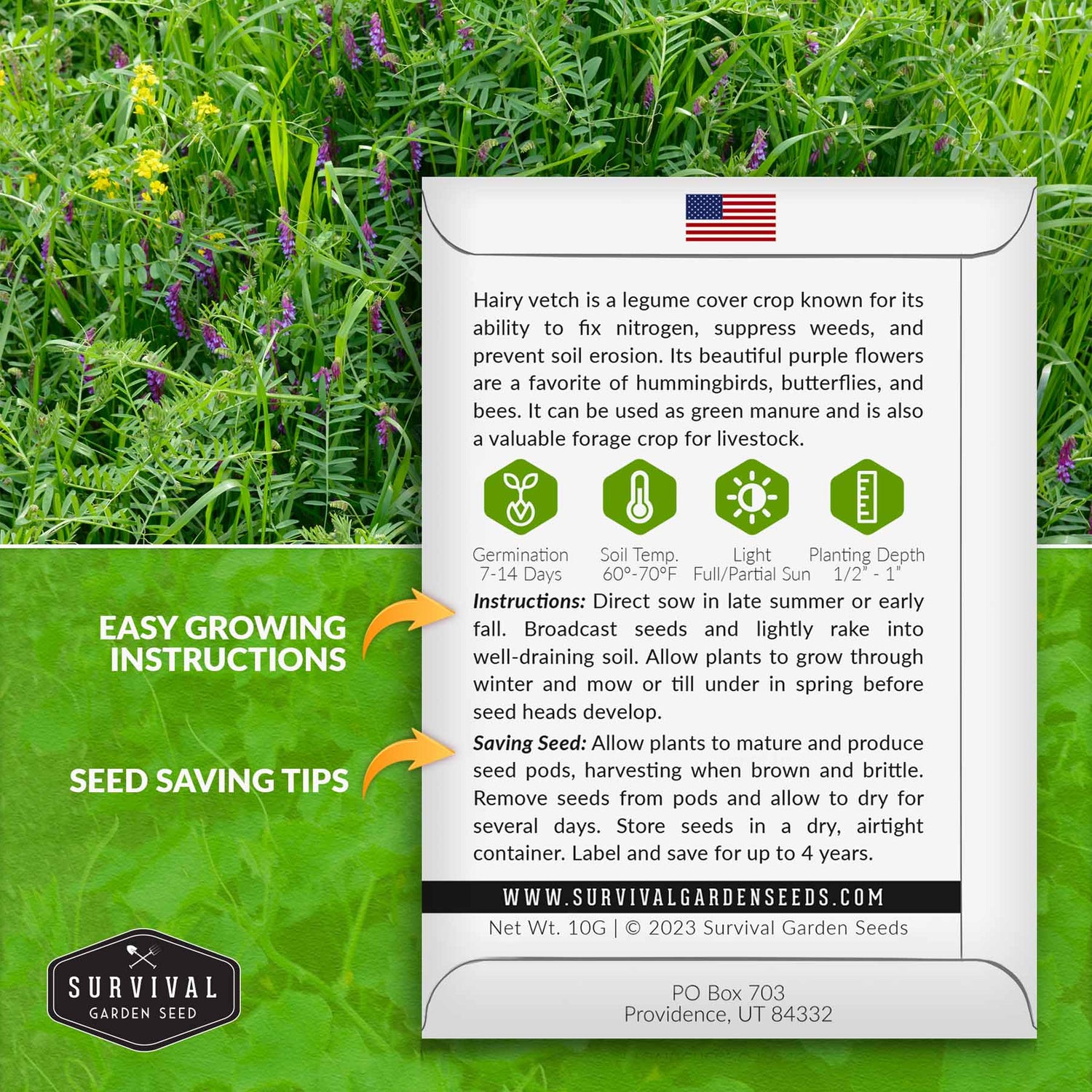
Sow hairy vetch seeds in prepared soil where a cover crop or living mulch is desired. It can be planted alone or combined with grains or other cover crops for balanced biomass and nutrient cycling. Provide regular moisture during establishment, then allow plants to grow and spread.
Hairy vetch may be mowed, cut, or turned under before flowering or seed set to return nutrients to the soil. It can also be allowed to bloom to support pollinators before termination. Timing and management depend on whether the goal is soil improvement, forage, or ecosystem support.
Net Wt. 10 G
Hairy Vetch Seeds (Vicia villosa) – Nitrogen-Fixing Cover Crop for ...
Heirloom Grain Seeds
All of our seeds are open-pollinated, non-GMO, heirloom varieties with tested germination rates
Specifications
Specifications
-
Botanical Name
-
Planting Zones
-
Light
-
Soil Temp for Germination
-
Germination Time
-
Planting Depth
-
Plant Size
-
Days to Harvest
-
Growing Instructions
-
Seed Saving Instructions
-
Approximate Number of Seeds Per Packet
Payment & Security
Your payment information is processed securely. We do not store credit card details nor have access to your credit card information.
Why Choose Survival Garden Seeds
At Survival Garden Seeds, we believe in preparing today for tomorrow’s peace of mind. That’s why we offer only heirloom, non-GMO, and untreated seeds you can trust to nourish your family and support a sustainable lifestyle. As a family-owned American company, we’re committed to providing seeds that grow strong and true—helping you cultivate health, resilience, and beauty in your garden.
Frequently Asked Questions
Are your seeds heirloom and open-pollinated?
Are your seeds heirloom and open-pollinated?
Yes. All of our seeds are heirloom, open-pollinated varieties, which means they can produce seeds that grow true to type and are suitable for seed saving.
You can learn more about open-pollinated, heirloom, and non-GMO seeds in our Survival Garden Training blog.
Are your seeds non-GMO?
Are your seeds non-GMO?
Yes. All Survival Garden Seeds are 100% non-GMO. Our seeds are open-pollinated heirloom varieties and are never genetically modified.
Are your seeds treated with chemicals?
Are your seeds treated with chemicals?
No. Our seeds are completely untreated and free from chemical coatings, fungicides, or synthetic treatments.
How do I know my seeds are fresh?
How do I know my seeds are fresh?
Every seed packet includes a packed-for date, and we germination-test each seed lot before packaging to ensure high viability.
What is the shelf life of your seeds?
What is the shelf life of your seeds?
Most seeds remain viable for 3 to 5 years or longer when stored properly in a cool, dry place away from light and moisture.
In what USDA hardiness zones can I grow your seeds?
In what USDA hardiness zones can I grow your seeds?
Our varieties are selected to grow successfully across USDA Hardiness Zones 3 through 10. Each packet includes variety-specific planting guidance and germination tips.