

Decorative Sunflower Seed Collection – Autumn Beauty, Dwarf Sungold, Lemon Queen & Chocolate Cherry for Vibrant Garden Color
Heirloom - Non-GMO - Reliable Germination
Decorative Sunflower Seed Collection – Autumn Beauty, Dwarf Sungold, Lemon Queen & Chocolate Cherry for Vibrant Garden Color is backordered and will ship as soon as it is back in stock.
Couldn't load pickup availability

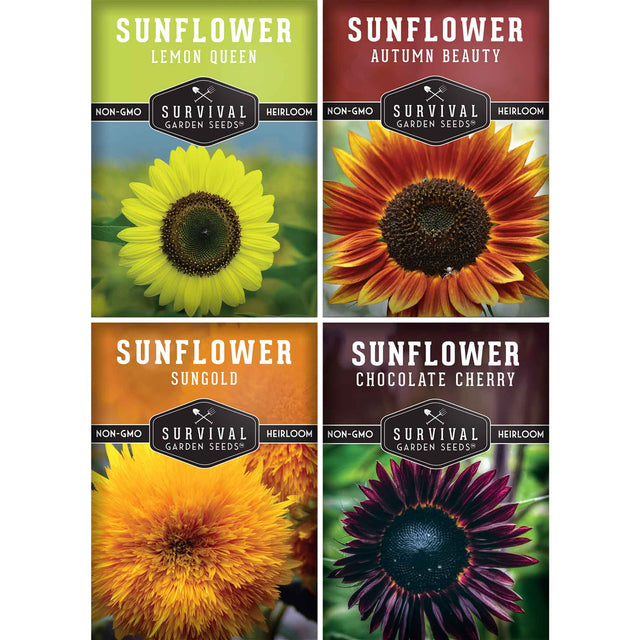
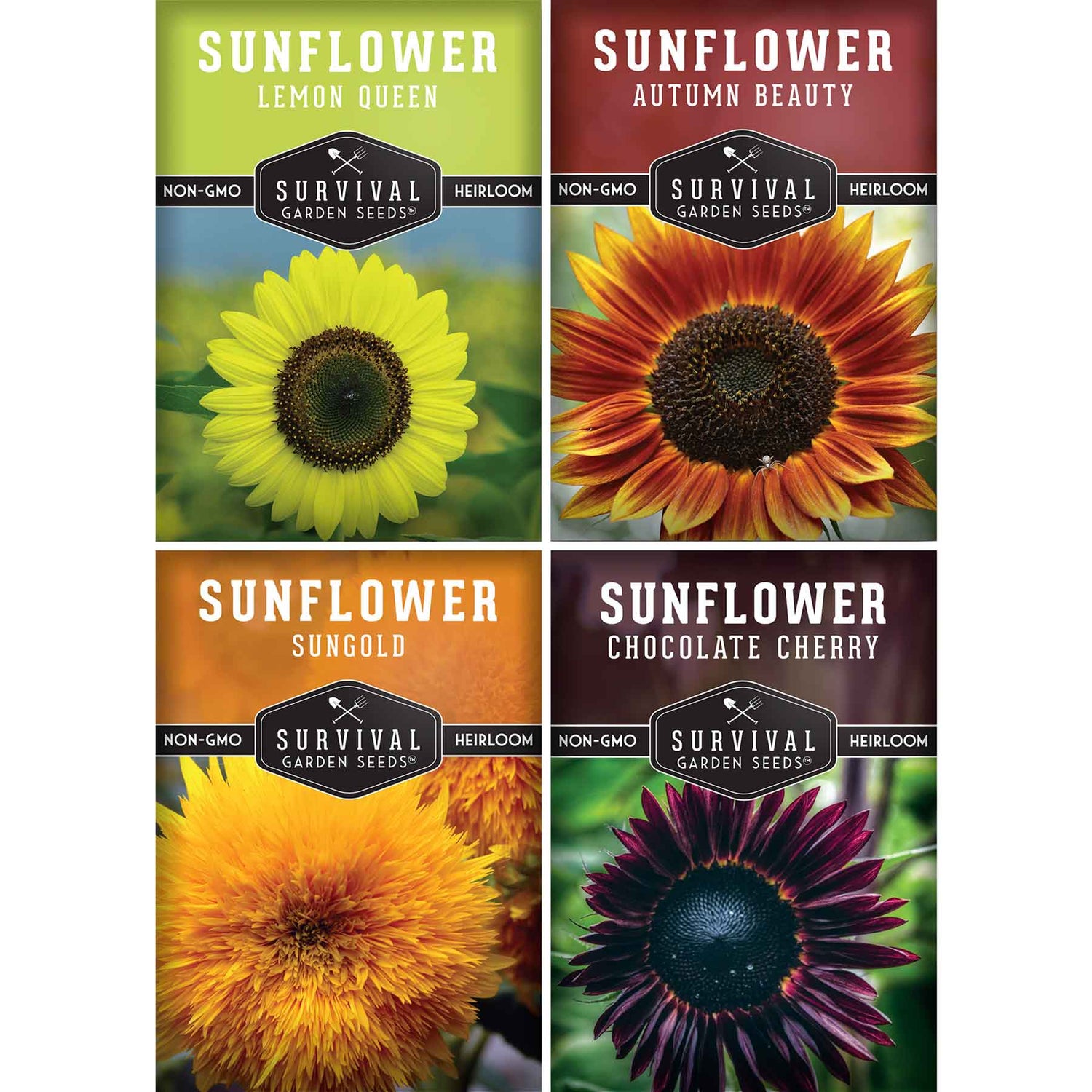
Bring bold color and lively pollinator activity to your garden with this Decorative Sunflower Seed Collection from Survival Garden Seeds. Featuring four stunning varieties—Autumn Beauty, Dwarf Sungold, Lemon Queen, and Chocolate Cherry—this mix offers a spectrum of warm hues, diverse plant heights, and abundant blooms. These decorative sunflowers are easy to grow in full sun and add beauty to borders, cut-flower beds, and wildlife-friendly landscapes.
Four Vibrant, Pollinator-Friendly Sunflower Varieties:
- Autumn Beauty produces tall, branching plants reaching 5–8 feet, each bearing multiple 6-inch blooms in shades of crimson, burgundy, yellow, and orange around a dark center. A reliable favorite for attracting bees and butterflies.
- Dwarf Sungold (Teddy Bear) grows 24–36 inches tall with fluffy, double 4-inch blooms. Compact and long-lasting as cut flowers, it’s ideal for beds, borders, and containers.
- Lemon Queen stands 5–7 feet tall with a central stalk and branching stems topped with 8-inch lemon-yellow blooms and deep brown centers. Highly attractive to birds, bees, and other pollinators.
- Chocolate Cherry offers rich burgundy petals with dark brown centers for a dramatic focal point in any garden. Excellent for cut-flower arrangements and pollinator plantings.
Why Customers Love the Decorative Sunflower Collection:
- Includes four complementary varieties for layered, colorful displays
- Attracts birds, bees, butterflies, and other beneficial pollinators
- Suitable for cut flowers, borders, cottage gardens, and wildlife habitats
- Easy to grow in full sun with minimal care
- Offers a mix of heights and bloom styles for diverse garden design
How to Grow:
Sow seeds directly outdoors after the last frost in full sun and well-drained soil. Space plants based on their mature height, giving tall varieties room to branch. Water consistently during early growth and provide support for taller plants if needed. Deadhead or harvest blooms to encourage continued flowering throughout the season.
Bloom & Use:
Cut fresh stems for bouquets, let seed heads mature to feed backyard birds, or enjoy the vibrant color in your garden beds. Combine the varieties for eye-catching mixed plantings or use individually for specific design effects.
Decorative Sunflower Seed Collection – Autumn Beauty, Dwarf Sungold...
Heirloom Garden Seeds
All of our seeds are open-pollinated, non-GMO, heirloom varieties with tested germination rates
Payment & Security
Payment methods
Your payment information is processed securely. We do not store credit card details nor have access to your credit card information.
Why Choose Survival Garden Seeds
At Survival Garden Seeds, we believe in preparing today for tomorrow’s peace of mind. That’s why we offer only heirloom, non-GMO, and untreated seeds you can trust to nourish your family and support a sustainable lifestyle. As a family-owned American company, we’re committed to providing seeds that grow strong and true—helping you cultivate health, resilience, and beauty in your garden.
Frequently Asked Questions
Are your seeds heirloom and open-pollinated?
Are your seeds heirloom and open-pollinated?
Yes. All of our seeds are heirloom, open-pollinated varieties, which means they can produce seeds that grow true to type and are suitable for seed saving.
You can learn more about open-pollinated, heirloom, and non-GMO seeds in our Survival Garden Training blog.
Are your seeds non-GMO?
Are your seeds non-GMO?
Yes. All Survival Garden Seeds are 100% non-GMO. Our seeds are open-pollinated heirloom varieties and are never genetically modified.
Are your seeds treated with chemicals?
Are your seeds treated with chemicals?
No. Our seeds are completely untreated and free from chemical coatings, fungicides, or synthetic treatments.
How do I know my seeds are fresh?
How do I know my seeds are fresh?
Every seed packet includes a packed-for date, and we germination-test each seed lot before packaging to ensure high viability.
What is the shelf life of your seeds?
What is the shelf life of your seeds?
Most seeds remain viable for 3 to 5 years or longer when stored properly in a cool, dry place away from light and moisture.
In what USDA hardiness zones can I grow your seeds?
In what USDA hardiness zones can I grow your seeds?
Our varieties are selected to grow successfully across USDA Hardiness Zones 3 through 10. Each packet includes variety-specific planting guidance and germination tips.