



Melon Seed Collection – 6 Heirloom Varieties of Watermelon, Cantaloupe & Honeydew for High-Yield Summer Gardens
Melon Seed Collection – 6 Heirloom Varieties of Watermelon, Cantaloupe & Honeydew for High-Yield Summer Gardens is backordered and will ship as soon as it is back in stock.
Couldn't load pickup availability

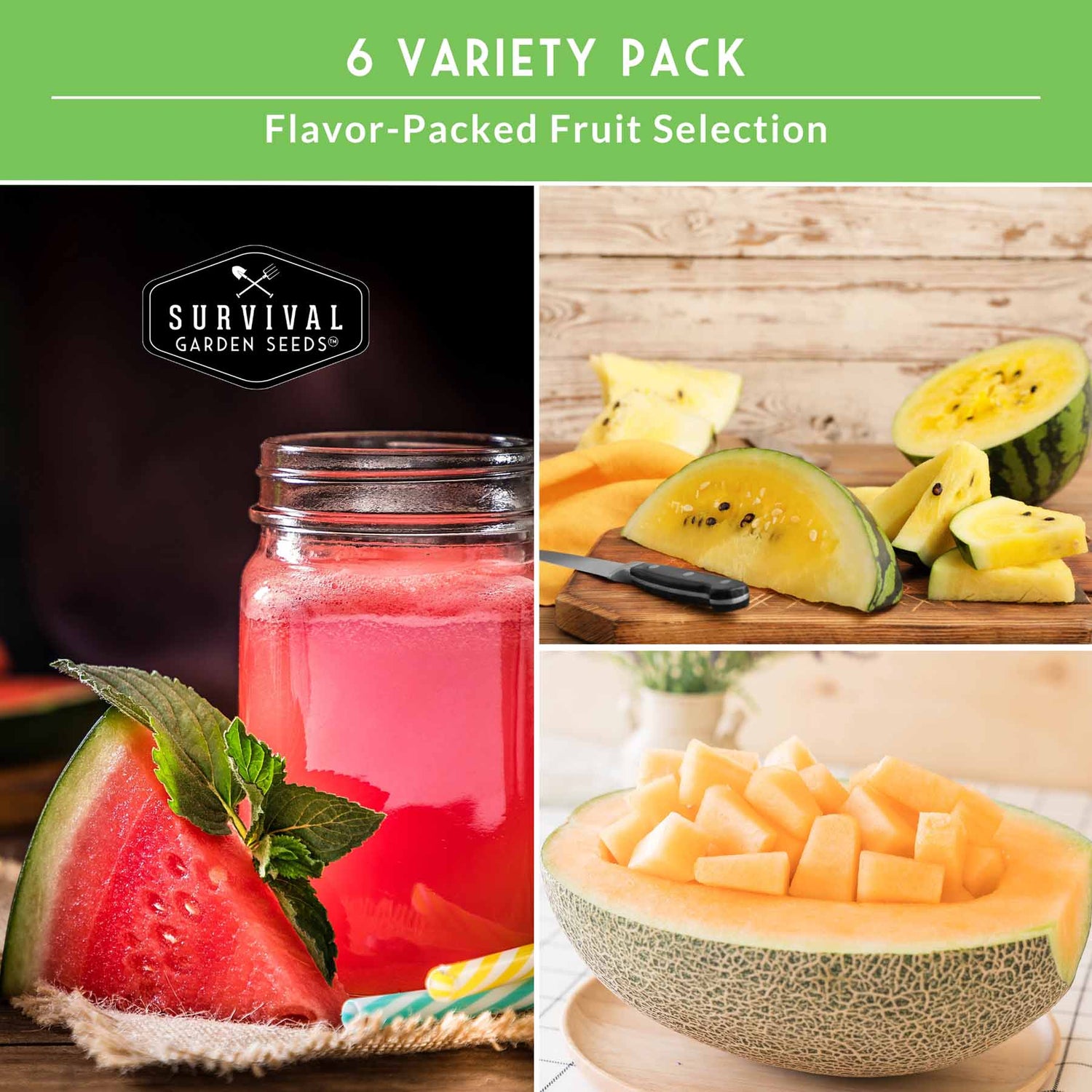
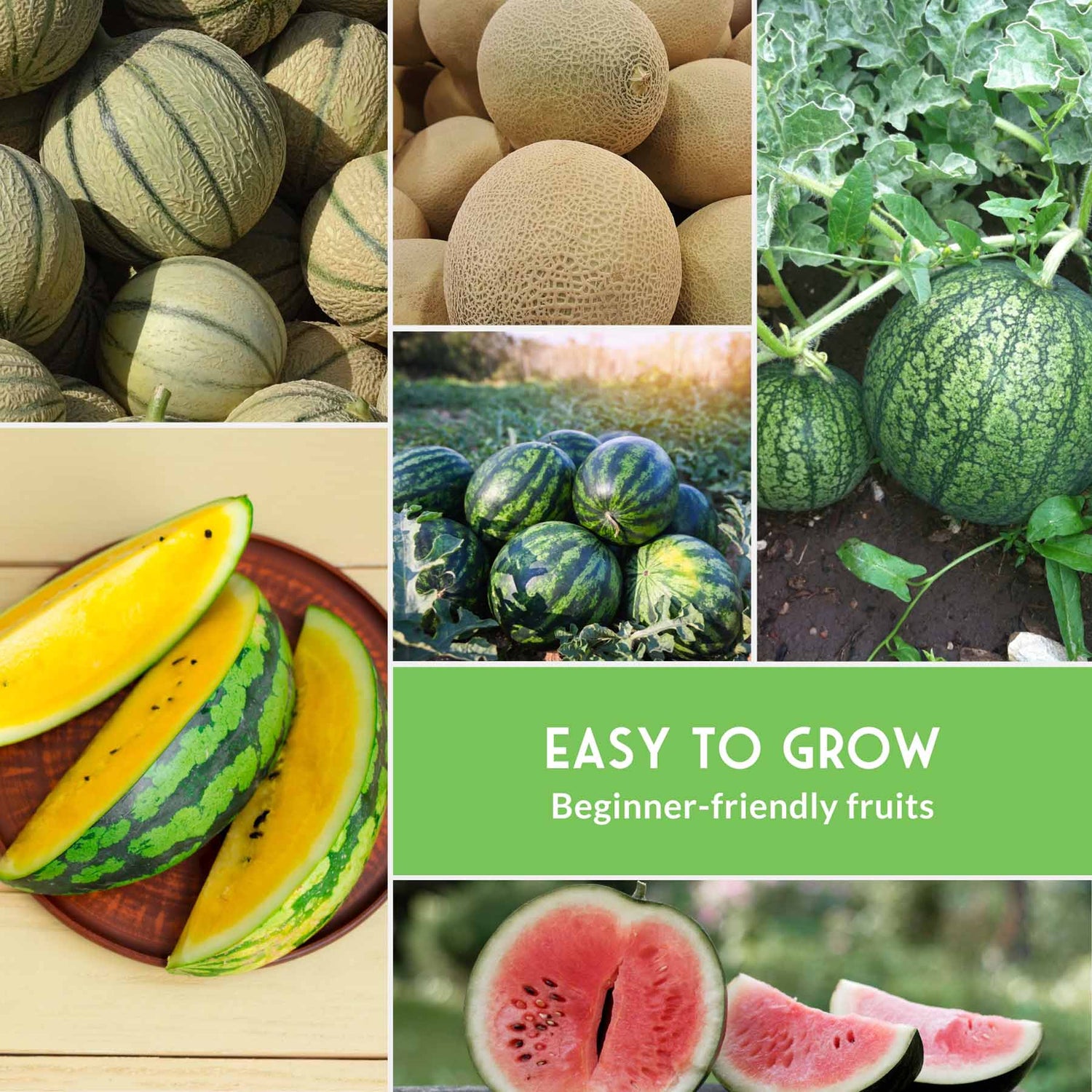
Enjoy the full spectrum of summer sweetness with the Melon Seed Collection from Survival Garden Seeds. This curated assortment features six beloved melon varieties—each chosen for flavor, productivity, and reliability in home gardens. From juicy cantaloupes to crisp honeydew and vibrant watermelons, this seed collection brings color and taste to your summer harvests.
Includes Six Heirloom Melon Varieties:
- Honey Rock Cantaloupe – Classic, aromatic melon with rich orange flesh and outstanding sweetness.
- Hale’s Best Melon – Early-producing heirloom cantaloupe known for flavorful, firm flesh and high yields.
- Honeydew – Smooth-skinned, pale-green melon with crisp, refreshing sweetness.
- Yellow Petite Watermelon – Compact 5–7 lb variety with bright yellow, honey-sweet flesh.
- Tendersweet Orange Watermelon – Large, juicy melons with rich orange flesh and thick rind for easy storage.
- Georgia Rattlesnake Watermelon – Historic Southern heirloom producing big 25–35 lb striped melons with sweet red flesh.
Abundant, Flavorful, and Easy to Grow:
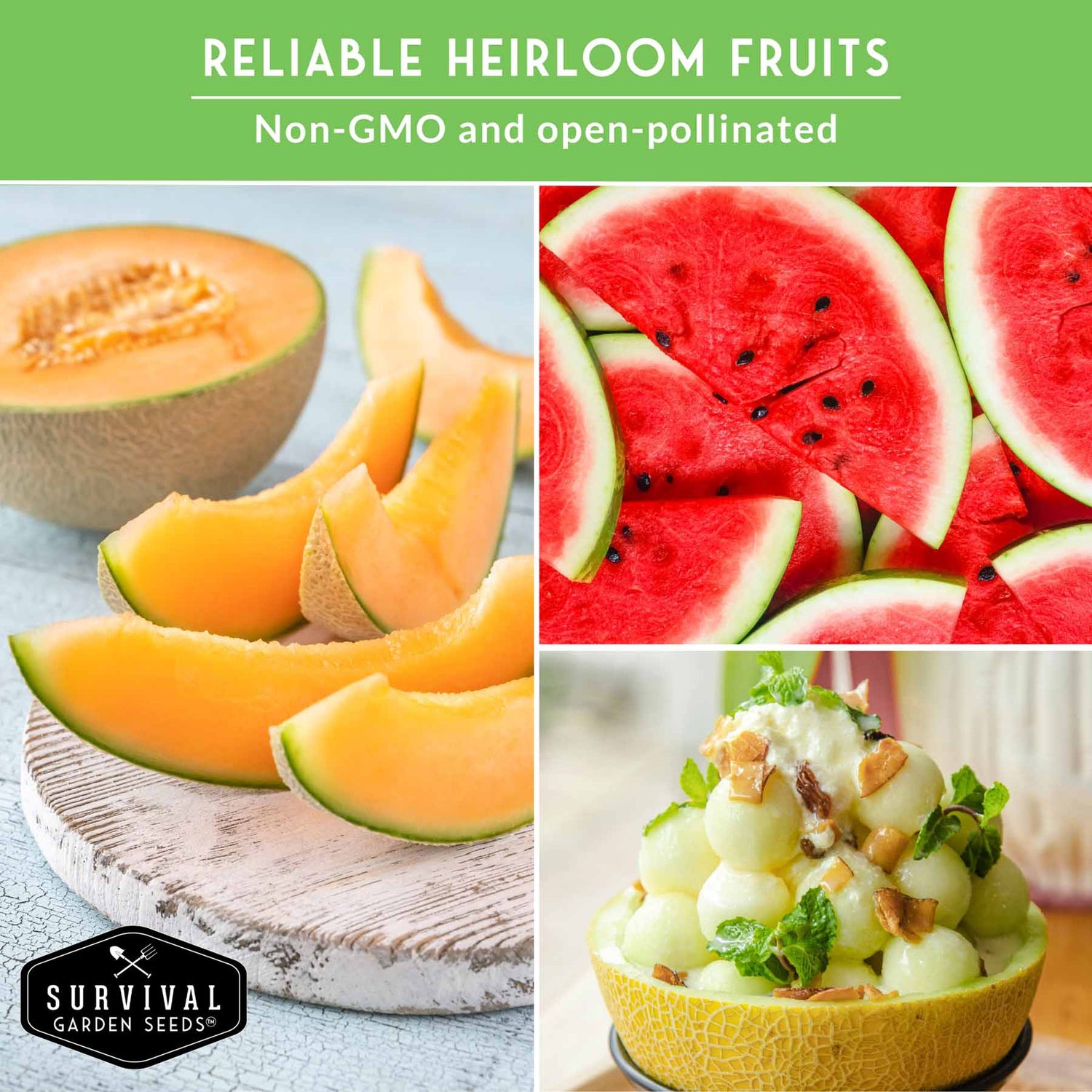
Perfect for beginner and experienced gardeners alike, these warm-season annuals thrive in full sun and well-drained soil. Each variety is non-GMO, open-pollinated, and selected for high yields and dependable germination. With proper care, you’ll enjoy continuous harvests of sweet, aromatic melons all summer long.
Why Gardeners Love the Melon Seed Collection:
- Six diverse melon varieties with distinct flavors and colors
- High-yielding plants ideal for warm, sunny gardens
- Non-GMO heirloom seeds with reliable germination
- Suitable for raised beds, backyard patches, or homestead gardens
- Easy-to-follow planting instructions included
- Great gift for gardeners or home growers who love fresh fruit
How to Grow:
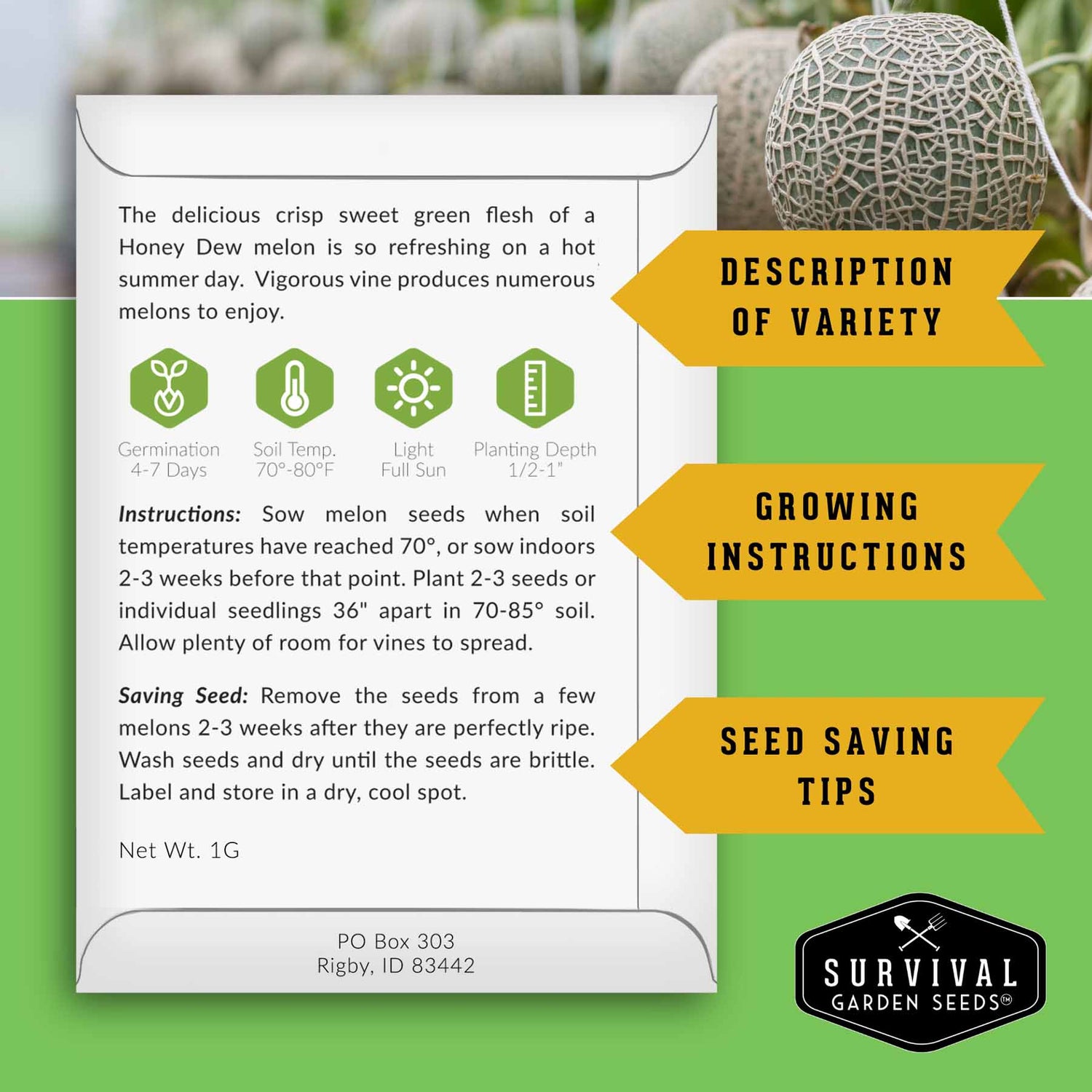
Start melon seeds indoors 2–4 weeks before your last frost, or direct-sow once soil reaches 70°F. Provide full sun, rich, well-drained soil, and consistent watering (without waterlogging). Space vining plants generously—about 3–4 feet apart—to allow healthy growth and airflow. Harvest when fruits have full color, sweet aroma, and a gentle “slip” from the vine.
Harvest & Enjoy:
Slice, chill, and enjoy your homegrown melons fresh from the garden. Perfect for fruit salads, smoothies, and summer desserts—or for sharing at family picnics and farmers’ markets.

Melon Seed Collection – 6 Heirloom Varieties of Watermelon, Cantalo...
Heirloom Garden Seeds
All of our seeds are open-pollinated, non-GMO, heirloom varieties with tested germination rates
Payment & Security
Payment methods
Your payment information is processed securely. We do not store credit card details nor have access to your credit card information.
Why Choose Survival Garden Seeds
At Survival Garden Seeds, we believe in preparing today for tomorrow’s peace of mind. That’s why we offer only heirloom, non-GMO, and untreated seeds you can trust to nourish your family and support a sustainable lifestyle. As a family-owned American company, we’re committed to providing seeds that grow strong and true—helping you cultivate health, resilience, and beauty in your garden.
Frequently Asked Questions
Are your seeds heirloom and open-pollinated?
Are your seeds heirloom and open-pollinated?
Yes. All of our seeds are heirloom, open-pollinated varieties, which means they can produce seeds that grow true to type and are suitable for seed saving.
You can learn more about open-pollinated, heirloom, and non-GMO seeds in our Survival Garden Training blog.
Are your seeds non-GMO?
Are your seeds non-GMO?
Yes. All Survival Garden Seeds are 100% non-GMO. Our seeds are open-pollinated heirloom varieties and are never genetically modified.
Are your seeds treated with chemicals?
Are your seeds treated with chemicals?
No. Our seeds are completely untreated and free from chemical coatings, fungicides, or synthetic treatments.
How do I know my seeds are fresh?
How do I know my seeds are fresh?
Every seed packet includes a packed-for date, and we germination-test each seed lot before packaging to ensure high viability.
What is the shelf life of your seeds?
What is the shelf life of your seeds?
Most seeds remain viable for 3 to 5 years or longer when stored properly in a cool, dry place away from light and moisture.
In what USDA hardiness zones can I grow your seeds?
In what USDA hardiness zones can I grow your seeds?
Our varieties are selected to grow successfully across USDA Hardiness Zones 3 through 10. Each packet includes variety-specific planting guidance and germination tips.
