

6 Onion Seed Collection – Red, White, Yellow, Bunching & Storage Varieties for Every Growing Region
Heirloom - Non-GMO - Reliable Germination
6 Onion Seed Collection – Red, White, Yellow, Bunching & Storage Varieties for Every Growing Region is backordered and will ship as soon as it is back in stock.
Couldn't load pickup availability

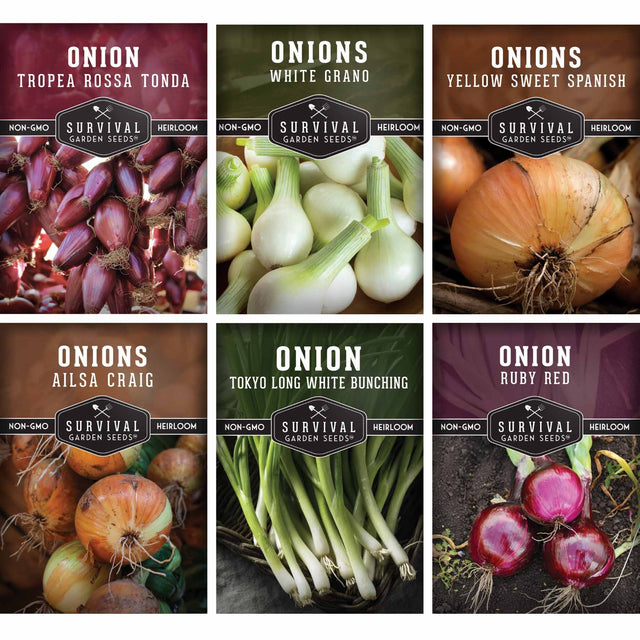
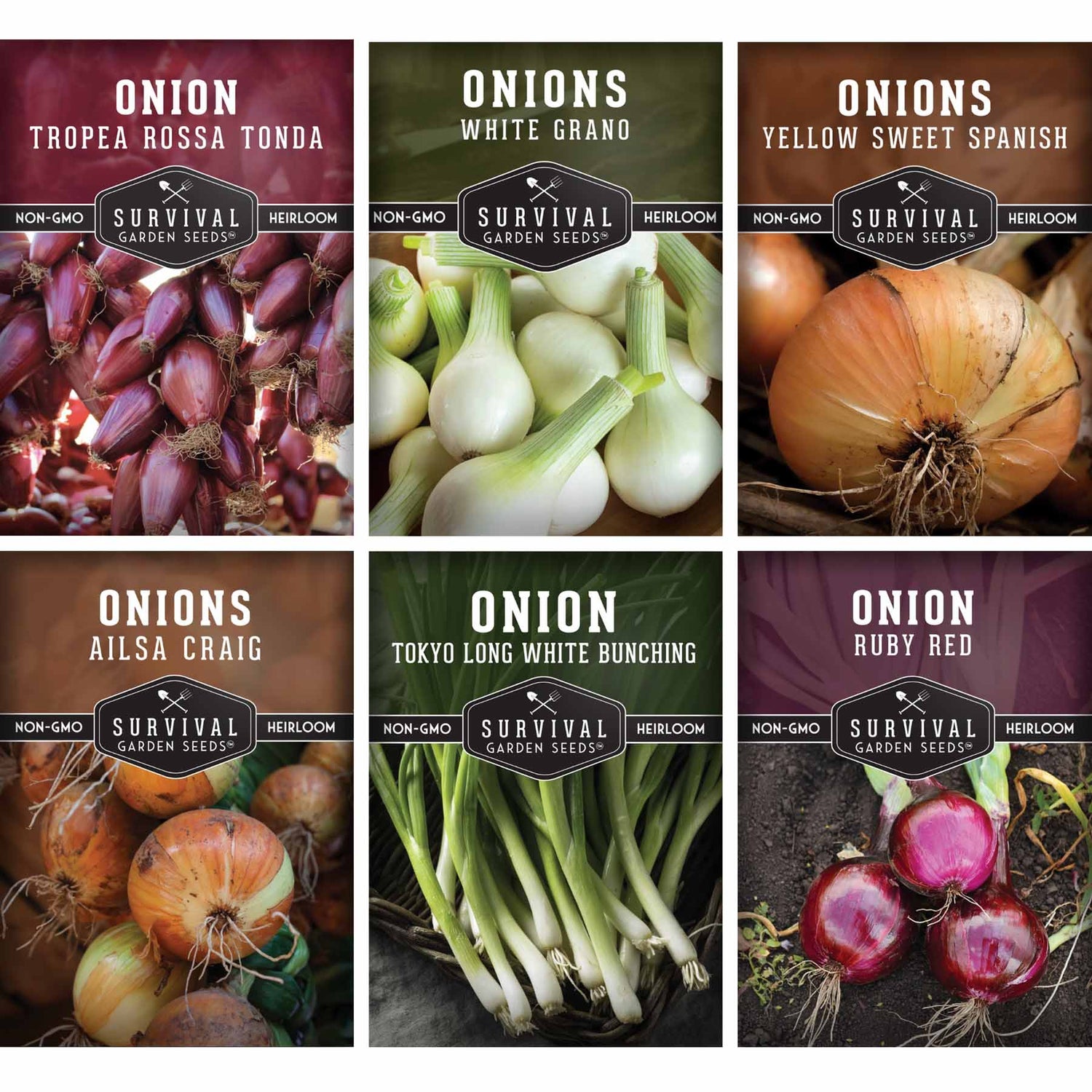
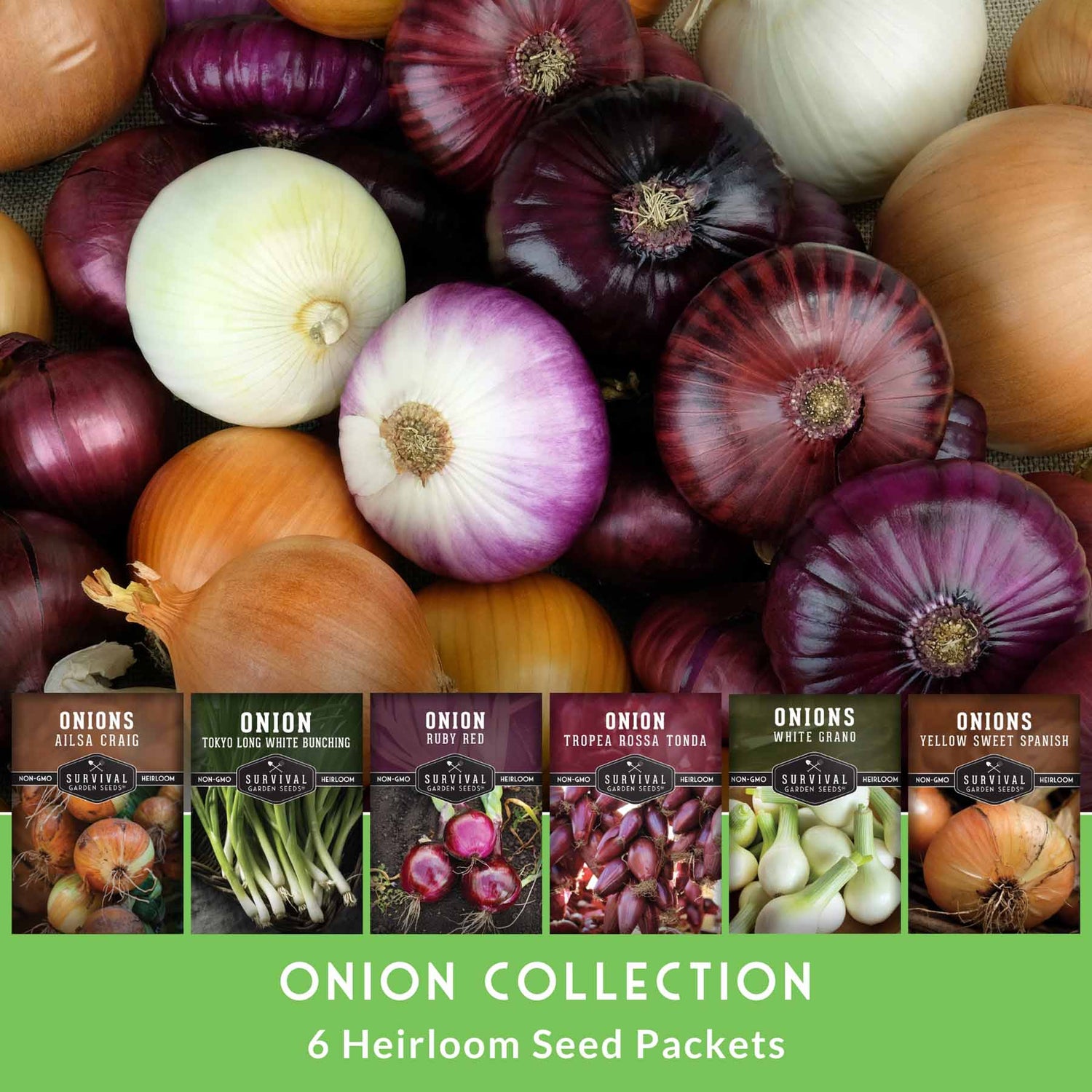
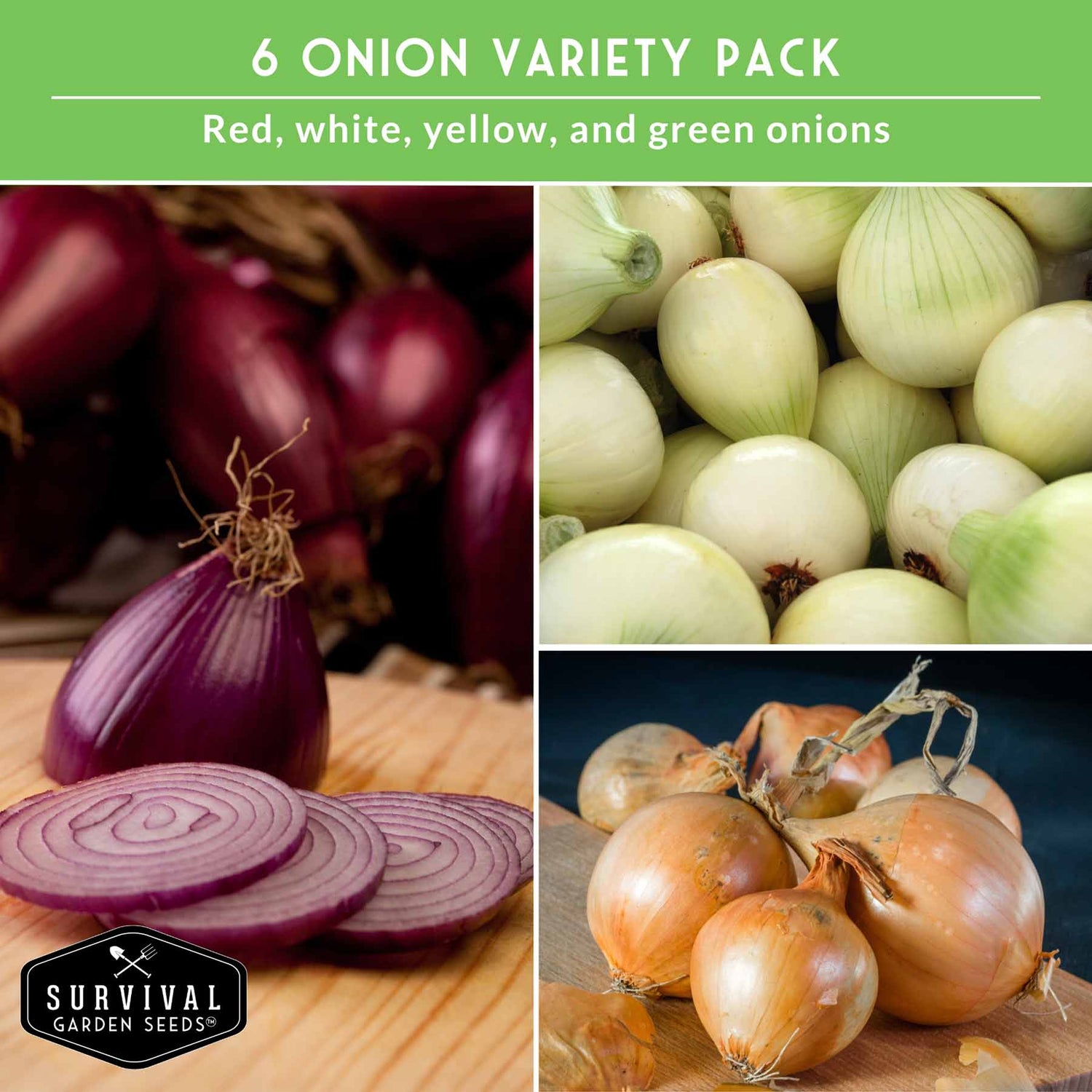
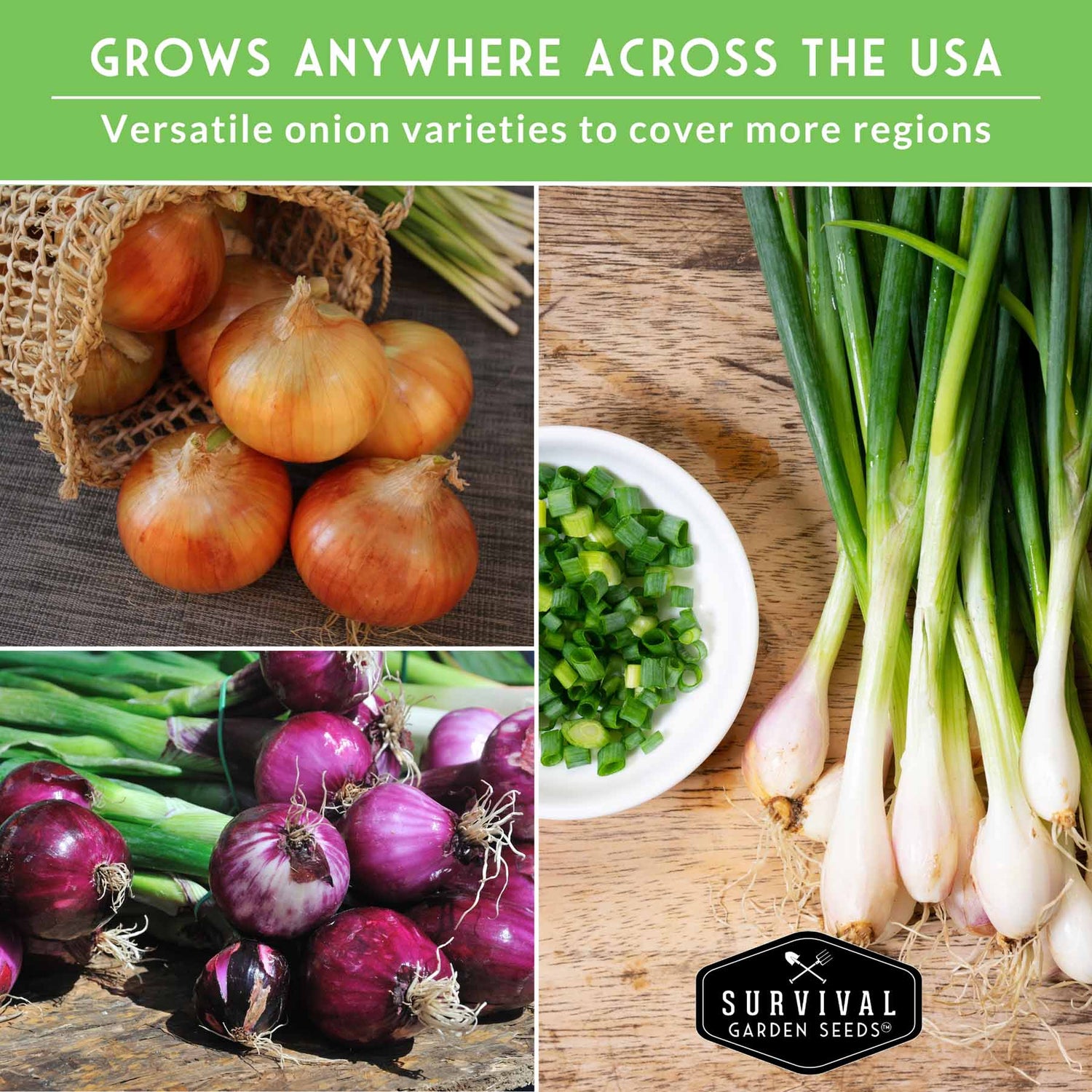
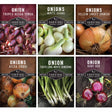
Grow a full spectrum of fresh, flavorful onions with this 6 Onion Seed Collection from Survival Garden Seeds. This curated assortment includes Ruby Red, Tropea Rossa Tonda, Tokyo Long White, Yellow Sweet Spanish, White Grano, and Ailsa Craig—covering red, white, yellow, bunching, storage, short-day, and long-day types. Whether you’re gardening in the North or the South, this mix ensures dependable growth and abundant harvests across climates.
Versatile Varieties for Every Kitchen:
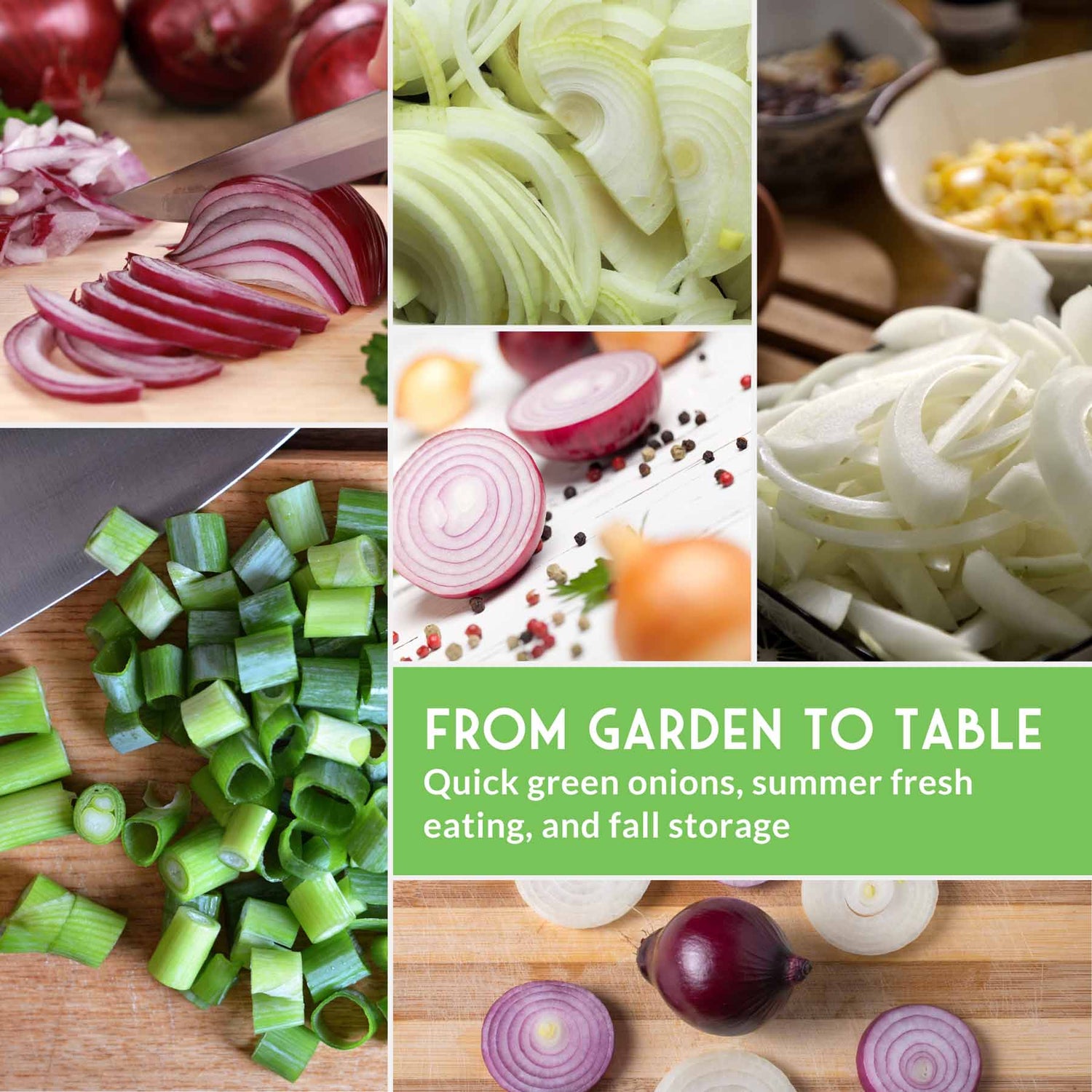
From crisp reds to mild bunching onions and sweet storage bulbs, these six heirloom varieties offer a balanced mix of flavors, colors, and uses. Enjoy quick green onions for spring cooking, aromatic summer onions for grilling and fresh eating, and long-storing yellows to keep winter meals well stocked. This collection supports homegrown self-reliance with both fast results and pantry-friendly keepers.
Six Onion Varieties Included:
- Ruby Red – A vibrant red onion ideal for fresh slicing, grilling, and adding color to salads.
- Tropea Rossa Tonda – An Italian-style red onion known for its mild, sweet flavor and versatility in raw or cooked dishes.
- Tokyo Long White – A reliable bunching onion that provides quick, tender green stalks for soups, stir-fries, and garnishes.
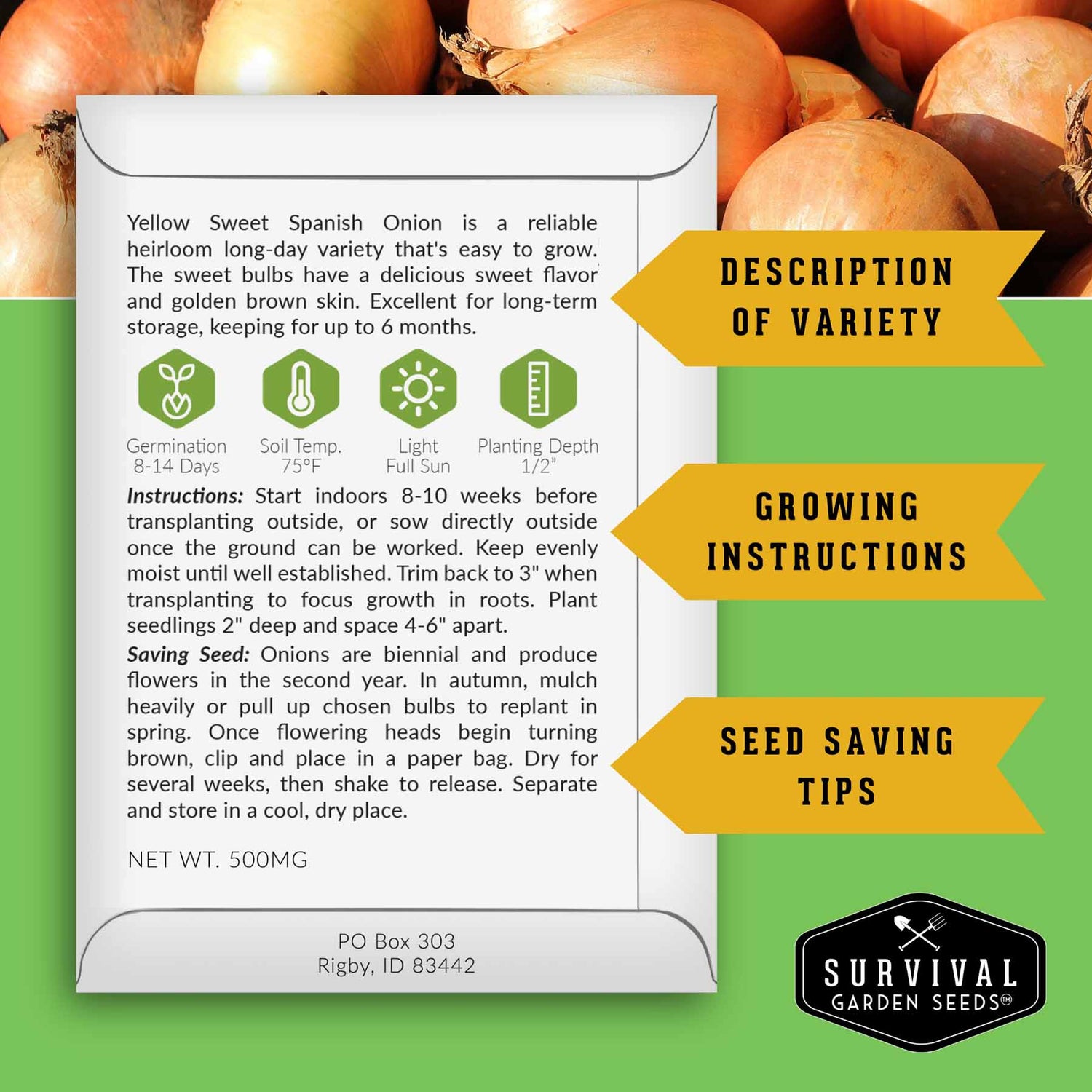
- Yellow Sweet Spanish – A classic long-day yellow onion prized for its mild, sweet flavor and excellent potential for storage.
- White Grano – A short-day white onion with a balanced flavor, suitable for raw use, cooking, or short-term storage.
- Ailsa Craig – A well-loved heirloom known for producing large, mild bulbs perfect for summer meals and fresh use.
Why Customers Love the 6 Onion Seed Collection:
- Six complementary varieties offering year-round culinary flexibility
- Short-day, long-day, and intermediate types for nationwide growing success
- Quick-harvest bunching onions plus long-storing yellow varieties
- Supports food security, frugal cooking, and flavorful homemade meals
- Easy to grow in raised beds, containers, and traditional rows
How to Grow:
Start seeds indoors 8–12 weeks before your planting date or sow directly outdoors in early spring in full sun. Transplant seedlings into loose, well-drained soil, spacing according to whether the variety forms bulbs or bunching stalks. Keep soil consistently moist and weed-free to encourage healthy growth. Harvest bunching onions as needed, and lift bulb varieties when tops fall over. Cure storage onions thoroughly before placing them in a cool, dry location.
Harvest & Use:
Slice Ruby Red or Tropea Rossa Tonda for fresh dishes, grill Ailsa Craig for sweet caramelization, and save Yellow Sweet Spanish for long-term winter storage. Use Tokyo Long White for quick meals, and enjoy White Grano in everyday cooking.
6 Onion Seed Collection – Red, White, Yellow, Bunching & Storag...
Heirloom Garden Seeds
All of our seeds are open-pollinated, non-GMO, heirloom varieties with tested germination rates
Payment & Security
Payment methods
Your payment information is processed securely. We do not store credit card details nor have access to your credit card information.
Why Choose Survival Garden Seeds
At Survival Garden Seeds, we believe in preparing today for tomorrow’s peace of mind. That’s why we offer only heirloom, non-GMO, and untreated seeds you can trust to nourish your family and support a sustainable lifestyle. As a family-owned American company, we’re committed to providing seeds that grow strong and true—helping you cultivate health, resilience, and beauty in your garden.
Frequently Asked Questions
Are your seeds heirloom and open-pollinated?
Are your seeds heirloom and open-pollinated?
Yes. All of our seeds are heirloom, open-pollinated varieties, which means they can produce seeds that grow true to type and are suitable for seed saving.
You can learn more about open-pollinated, heirloom, and non-GMO seeds in our Survival Garden Training blog.
Are your seeds non-GMO?
Are your seeds non-GMO?
Yes. All Survival Garden Seeds are 100% non-GMO. Our seeds are open-pollinated heirloom varieties and are never genetically modified.
Are your seeds treated with chemicals?
Are your seeds treated with chemicals?
No. Our seeds are completely untreated and free from chemical coatings, fungicides, or synthetic treatments.
How do I know my seeds are fresh?
How do I know my seeds are fresh?
Every seed packet includes a packed-for date, and we germination-test each seed lot before packaging to ensure high viability.
What is the shelf life of your seeds?
What is the shelf life of your seeds?
Most seeds remain viable for 3 to 5 years or longer when stored properly in a cool, dry place away from light and moisture.
In what USDA hardiness zones can I grow your seeds?
In what USDA hardiness zones can I grow your seeds?
Our varieties are selected to grow successfully across USDA Hardiness Zones 3 through 10. Each packet includes variety-specific planting guidance and germination tips.