

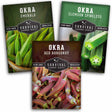
Okra Seed Collection – Red Burgundy, Clemson Spineless, and Emerald for Heat-Loving, High-Yield Summer Harvests
Heirloom - Non-GMO - Reliable Germination
Okra Seed Collection – Red Burgundy, Clemson Spineless, and Emerald for Heat-Loving, High-Yield Summer Harvests is backordered and will ship as soon as it is back in stock.
Couldn't load pickup availability

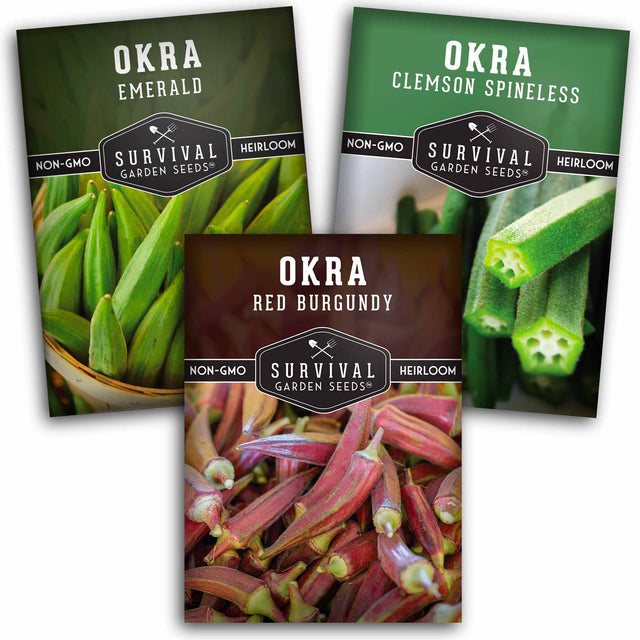
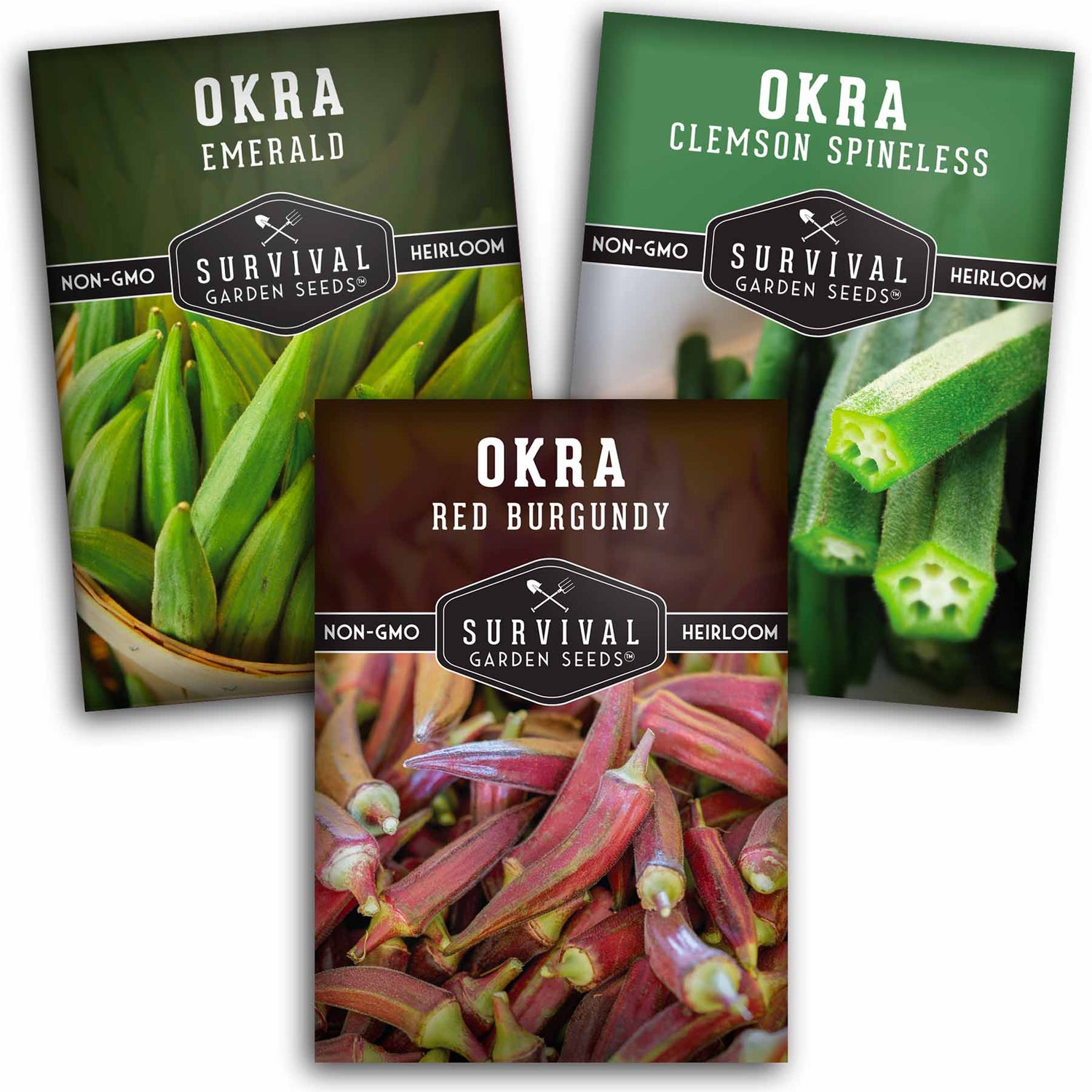
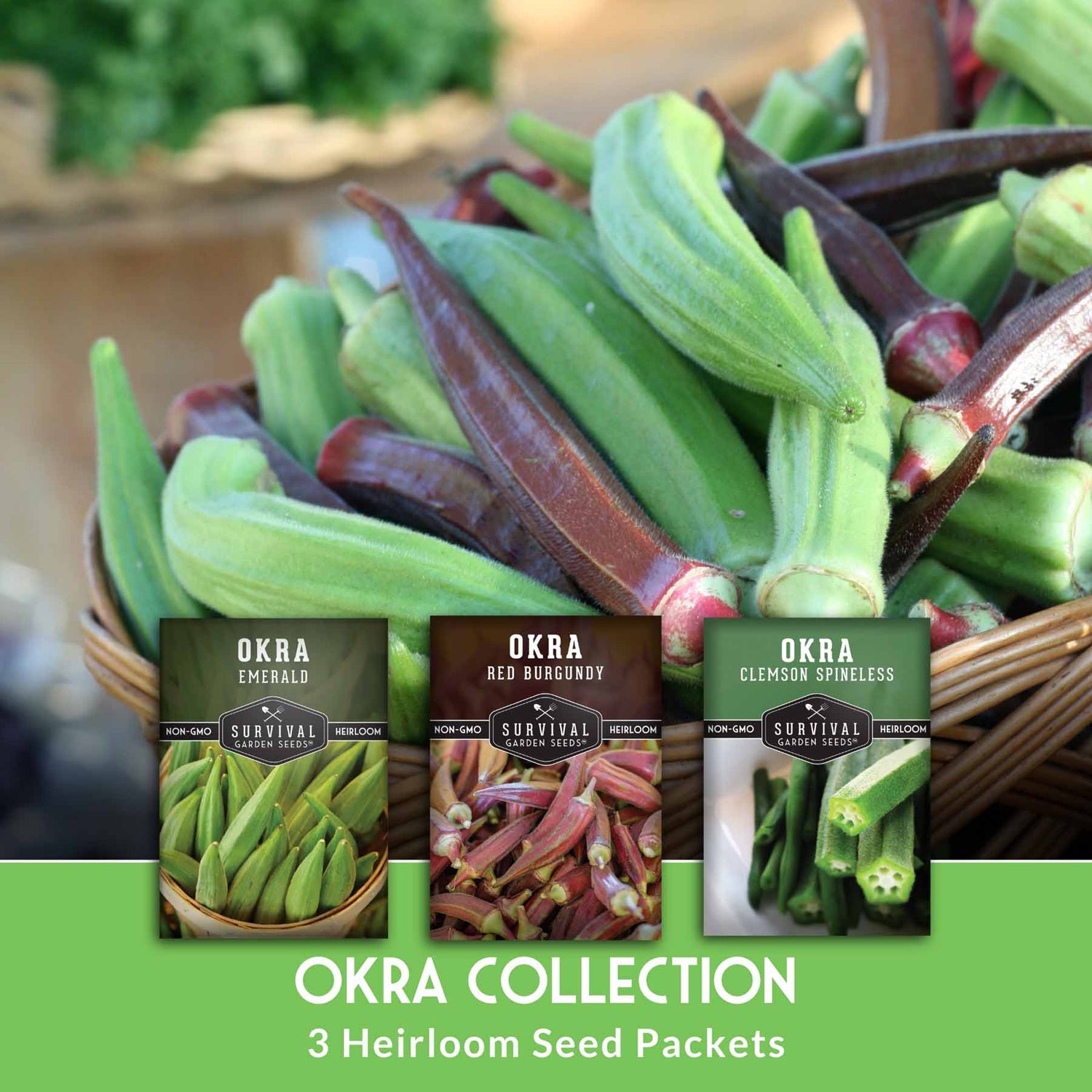
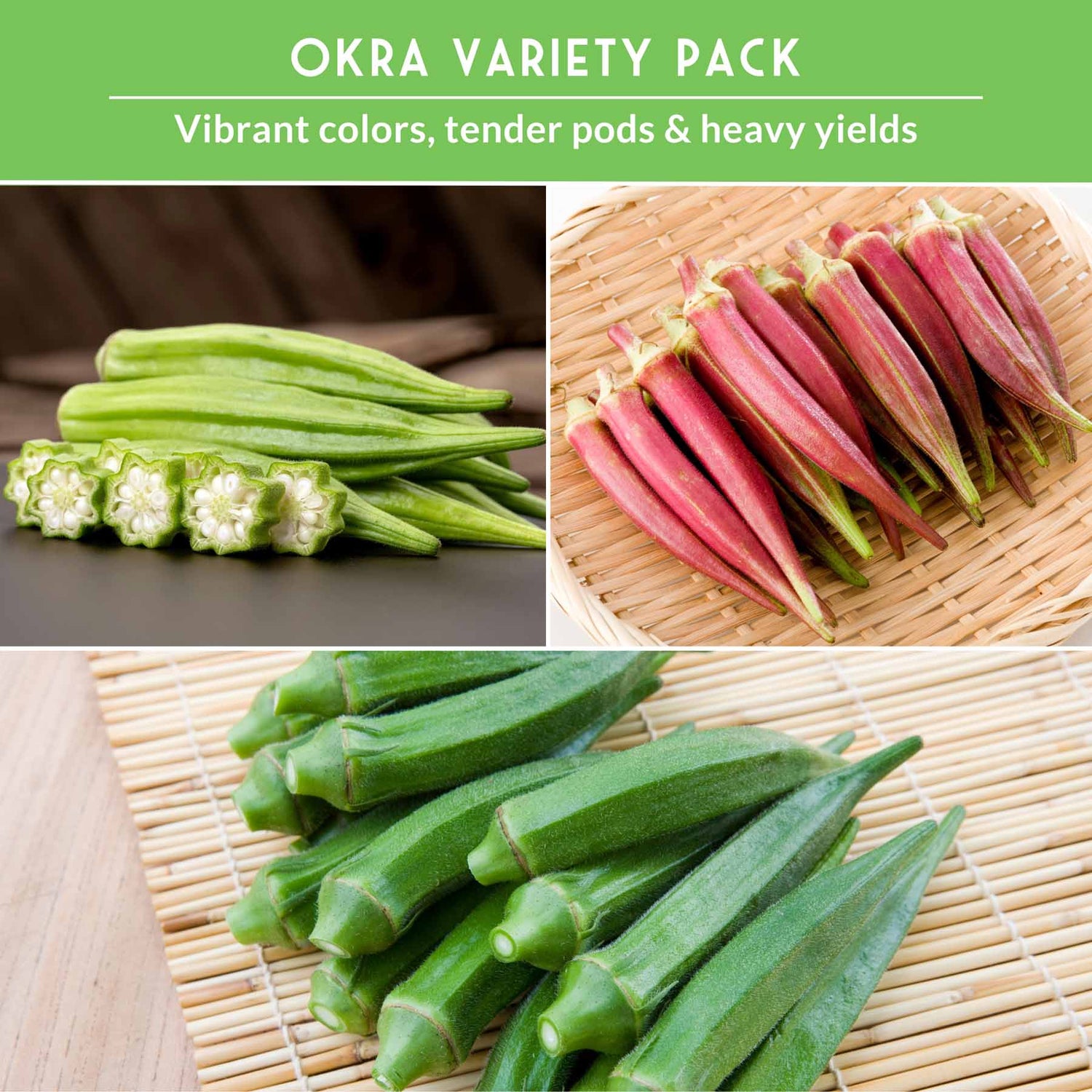
Grow vigorous, heat-loving vegetables with this Okra Seed Collection from Survival Garden Seeds. Featuring three standout varieties—Red Burgundy, Clemson Spineless, and Emerald—this mix offers exceptional productivity, drought tolerance, and reliable summer harvests. Each plant produces tropical-style flowers followed by crisp, flavorful pods that are best picked young for tenderness. With daily yields in hot weather, these varieties provide steady harvest potential throughout the growing season.
Three Productive, Garden-Favorite Okra Varieties:
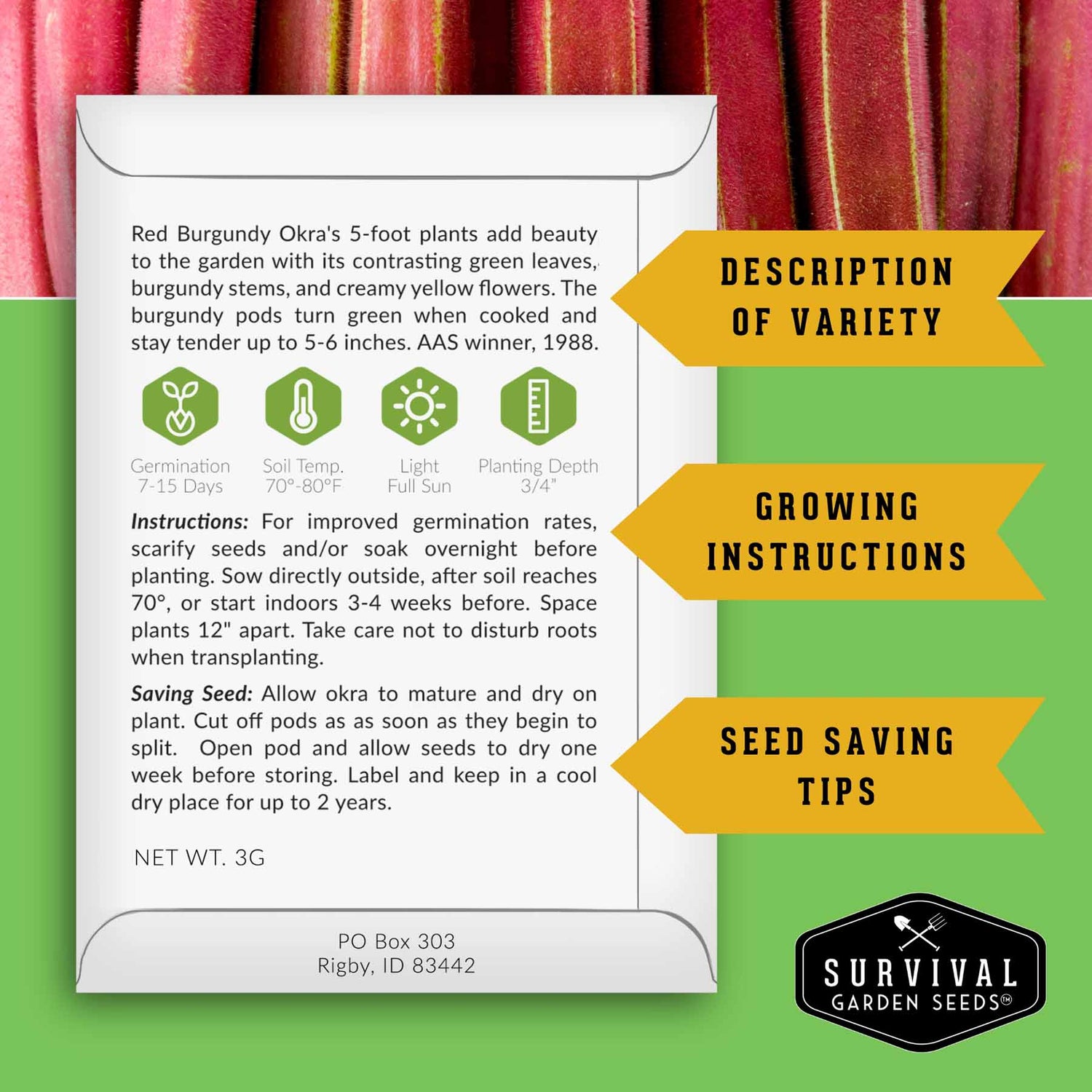
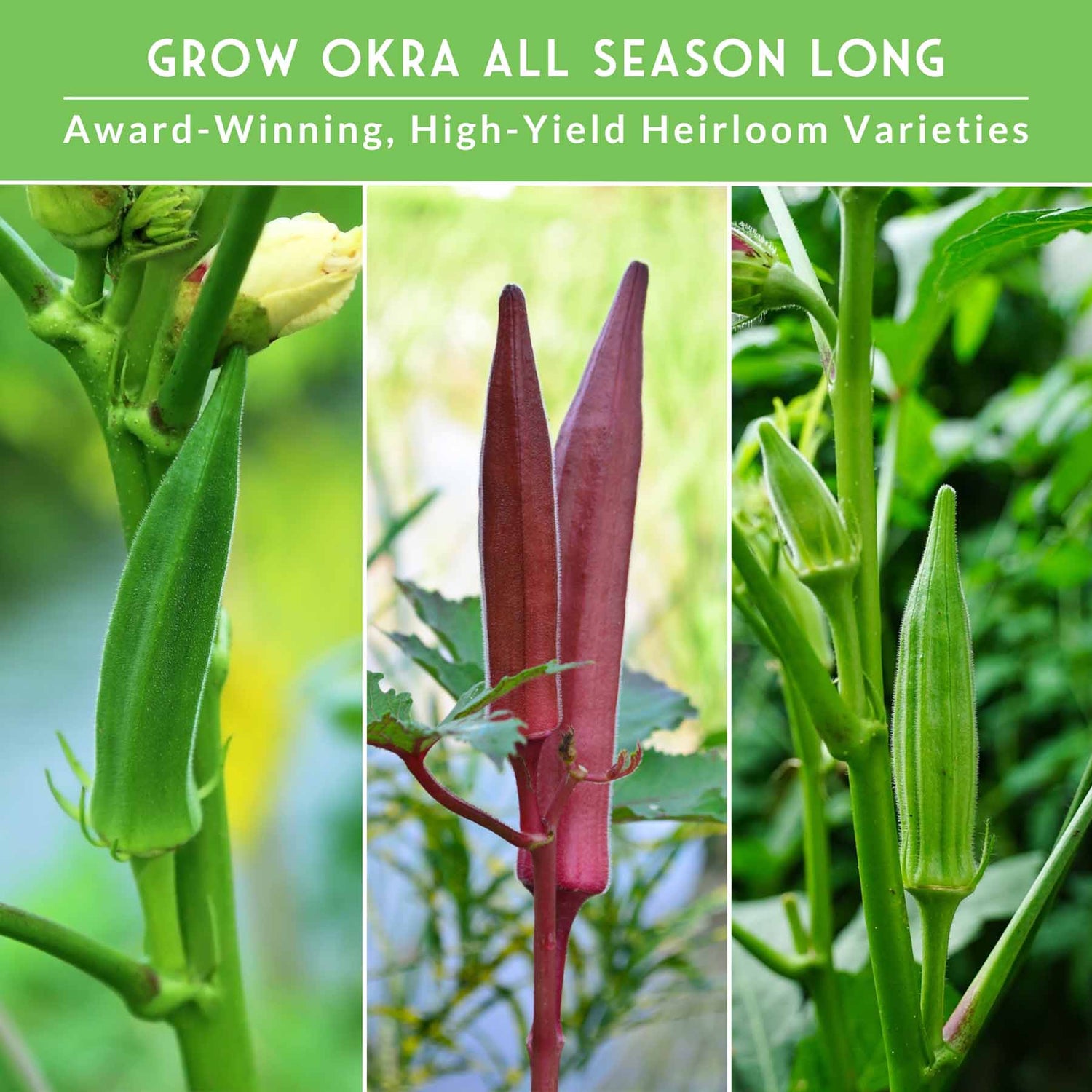
- Red Burgundy Okra (AAS 1998) grows up to 5 feet tall with striking green leaves, burgundy stems, and pale yellow blooms. Its ribbed burgundy pods stay tender to 5–6 inches when harvested frequently.
- Clemson Spineless (AAS 1939) is a trusted classic known for its smooth, spineless green pods and dependable heavy yields.
- Emerald Okra offers an extended harvest window, producing early and continuing until frost. Its bright green pods maintain good texture even at larger sizes when picked promptly.
Why Customers Love the Okra Seed Collection:
- Three distinct varieties for diverse flavor, color, and harvest patterns
- Thrives in full sun, heat, and drought conditions
- Attractive plants with hibiscus-like flowers that brighten summer gardens
- Consistent daily harvests during peak heat
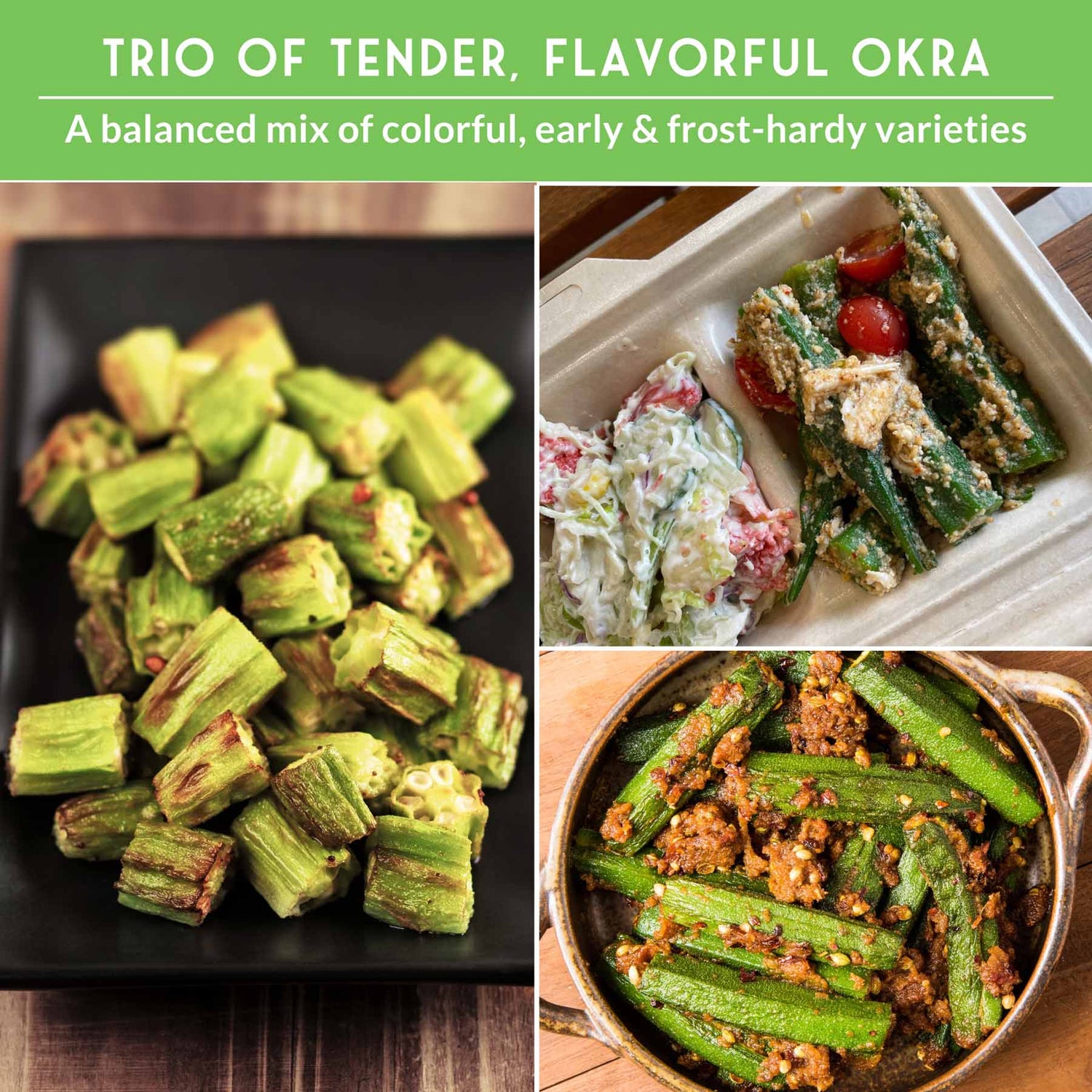
- Suitable for frying, gumbo, stews, pickling, and freezing
How to Grow:
Okra seeds benefit from scarification before planting. Gently nick or sand the seed coat, or soak seeds prior to sowing to improve germination. Plant in full sun once soil has thoroughly warmed. Provide well-drained soil and space plants to allow for strong branching. Harvest pods frequently while young and tender to encourage continuous production.
Harvest & Use:
Enjoy okra in a wide range of dishes, including gumbo, curries, and stir-fries. Slice and fry for a classic Southern preparation, or pickle pods for long-term enjoyment. Pods can also be dried and ground to thicken soups and stews. Freeze whole or sliced pods for year-round use.
Okra Seed Collection – Red Burgundy, Clemson Spineless, and Emerald...
Heirloom Garden Seeds
All of our seeds are open-pollinated, non-GMO, heirloom varieties with tested germination rates
Payment & Security
Payment methods
Your payment information is processed securely. We do not store credit card details nor have access to your credit card information.
Why Choose Survival Garden Seeds
At Survival Garden Seeds, we believe in preparing today for tomorrow’s peace of mind. That’s why we offer only heirloom, non-GMO, and untreated seeds you can trust to nourish your family and support a sustainable lifestyle. As a family-owned American company, we’re committed to providing seeds that grow strong and true—helping you cultivate health, resilience, and beauty in your garden.
Frequently Asked Questions
Are your seeds heirloom and open-pollinated?
Are your seeds heirloom and open-pollinated?
Yes. All of our seeds are heirloom, open-pollinated varieties, which means they can produce seeds that grow true to type and are suitable for seed saving.
You can learn more about open-pollinated, heirloom, and non-GMO seeds in our Survival Garden Training blog.
Are your seeds non-GMO?
Are your seeds non-GMO?
Yes. All Survival Garden Seeds are 100% non-GMO. Our seeds are open-pollinated heirloom varieties and are never genetically modified.
Are your seeds treated with chemicals?
Are your seeds treated with chemicals?
No. Our seeds are completely untreated and free from chemical coatings, fungicides, or synthetic treatments.
How do I know my seeds are fresh?
How do I know my seeds are fresh?
Every seed packet includes a packed-for date, and we germination-test each seed lot before packaging to ensure high viability.
What is the shelf life of your seeds?
What is the shelf life of your seeds?
Most seeds remain viable for 3 to 5 years or longer when stored properly in a cool, dry place away from light and moisture.
In what USDA hardiness zones can I grow your seeds?
In what USDA hardiness zones can I grow your seeds?
Our varieties are selected to grow successfully across USDA Hardiness Zones 3 through 10. Each packet includes variety-specific planting guidance and germination tips.