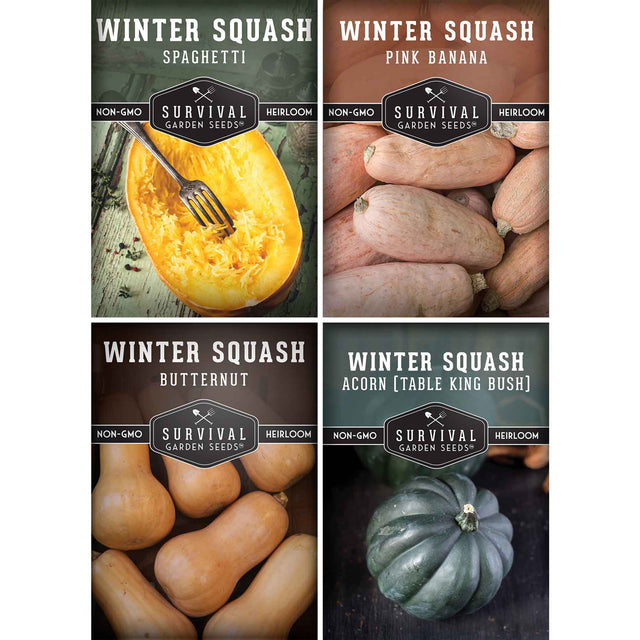
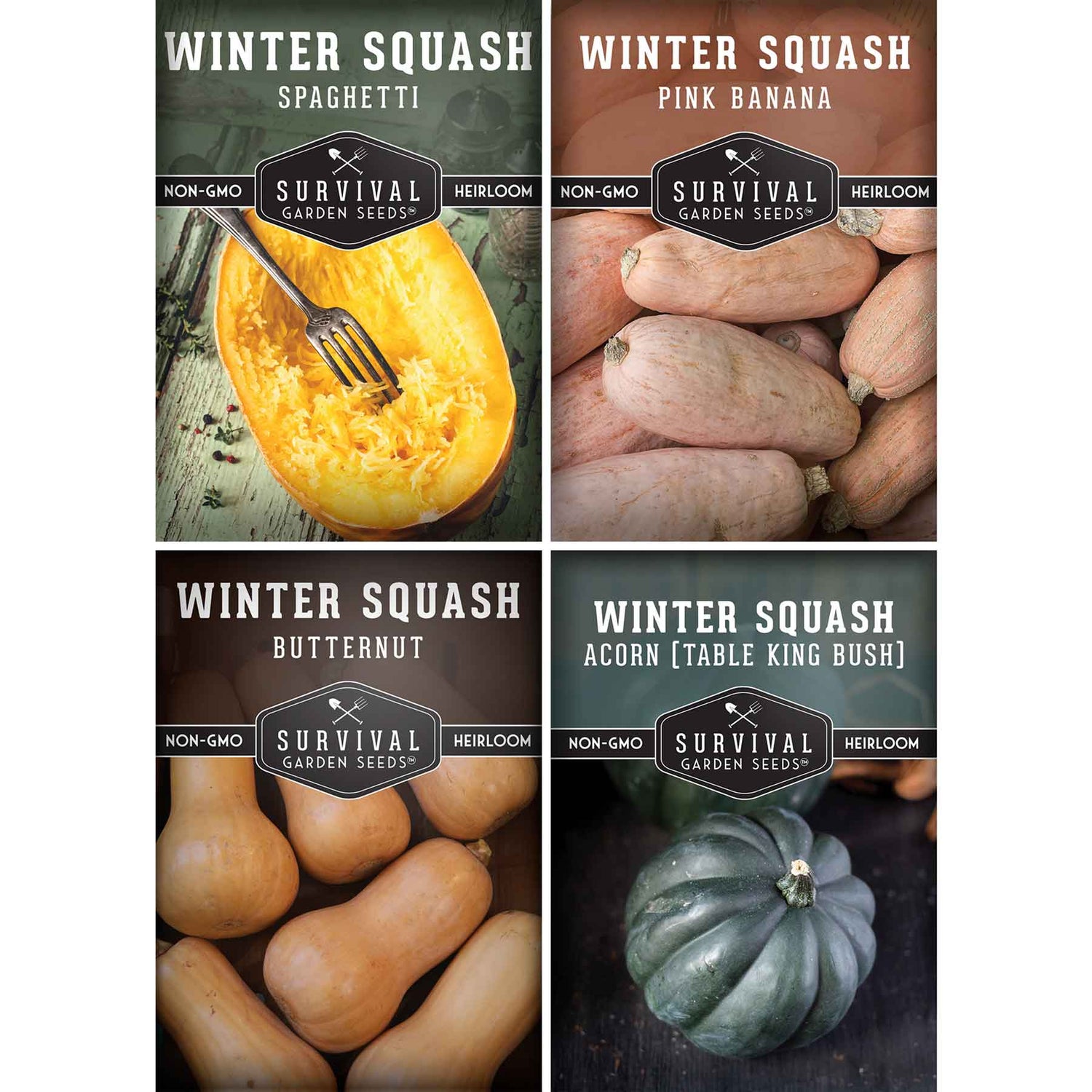
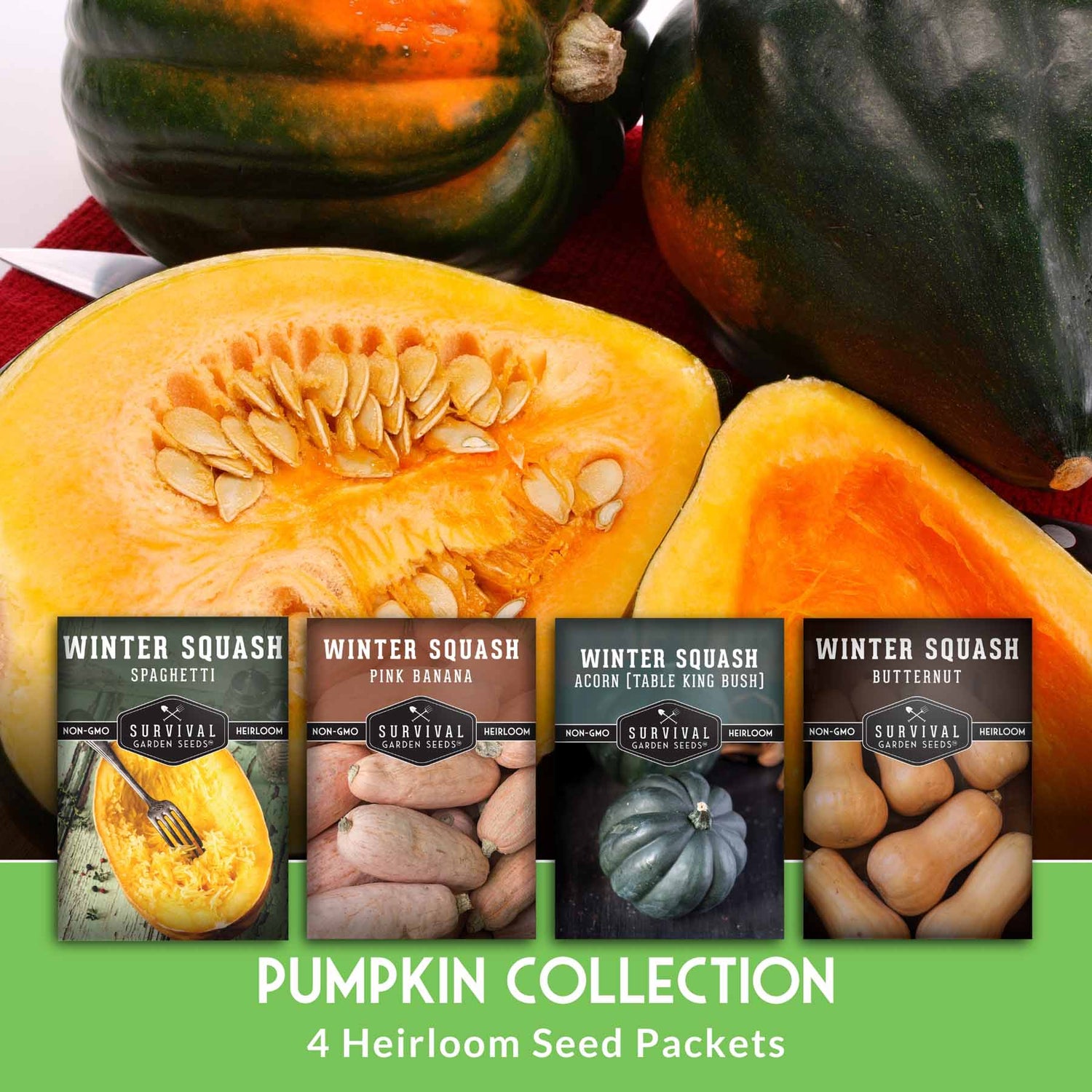


Winter Squash Seed Collection – Acorn, Butternut, Pink Banana & Spaghetti for Long-Storing, Cold-Season Nutrition
Heirloom - Non-GMO - Reliable Germination
Winter Squash Seed Collection – Acorn, Butternut, Pink Banana & Spaghetti for Long-Storing, Cold-Season Nutrition is backordered and will ship as soon as it is back in stock.
Couldn't load pickup availability

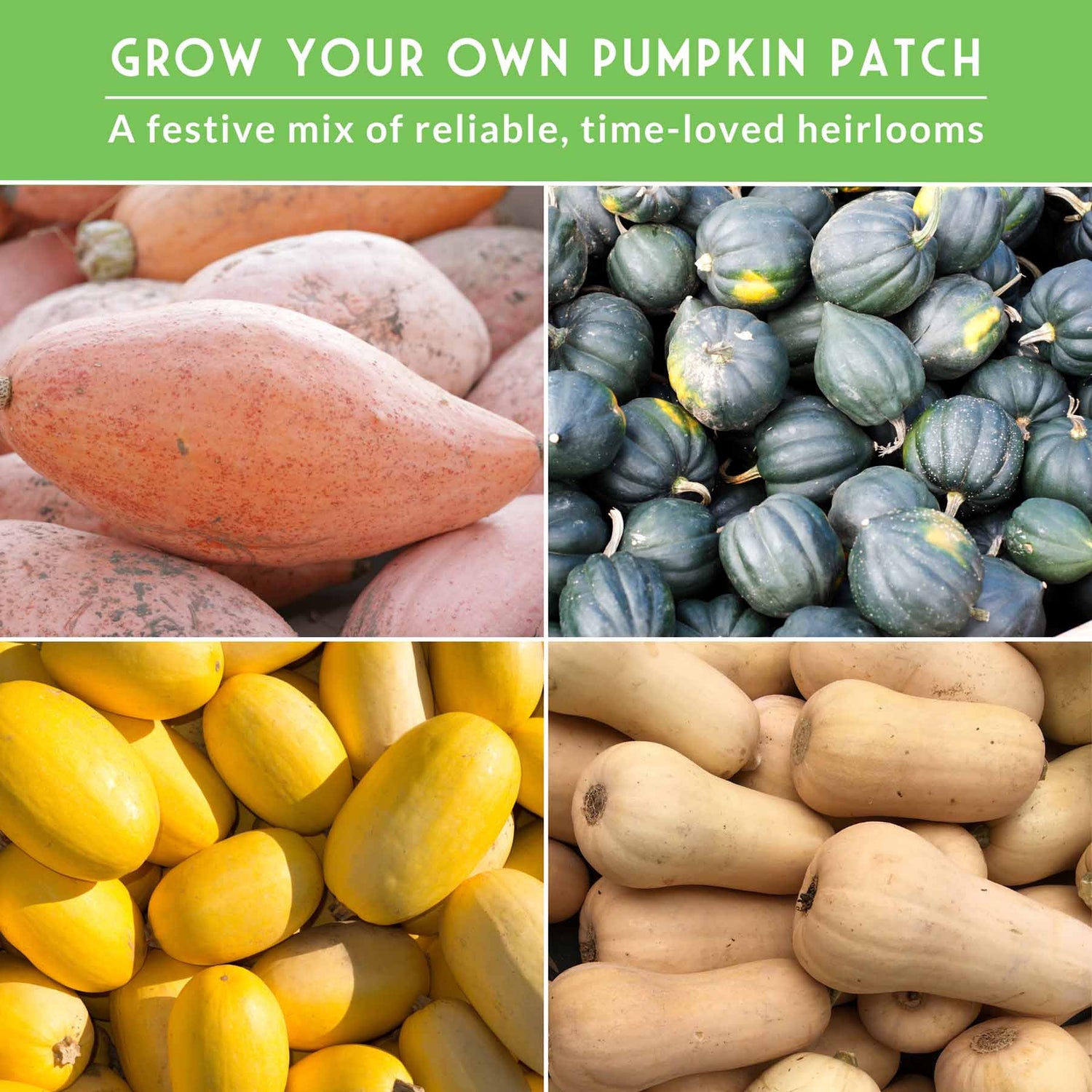
Grow dependable, long-storing harvests with this Winter Squash Seed Collection from Survival Garden Seeds. Featuring four flavorful and versatile varieties—Acorn, Pink Banana, Spaghetti, and Butternut—this set provides an excellent foundation for winter cooking and cold-season food security. These full sun annuals yield firm, nutrient-rich fruits with thick rinds that allow for extended storage, making them a reliable choice for stocking your pantry.
Four Nutritious and Flavorful Winter Squash Varieties:
- Acorn Squash produces compact, dark green fruits with sweet, tender flesh. Once cured, acorn squash stores exceptionally well and is delicious when roasted or stuffed.
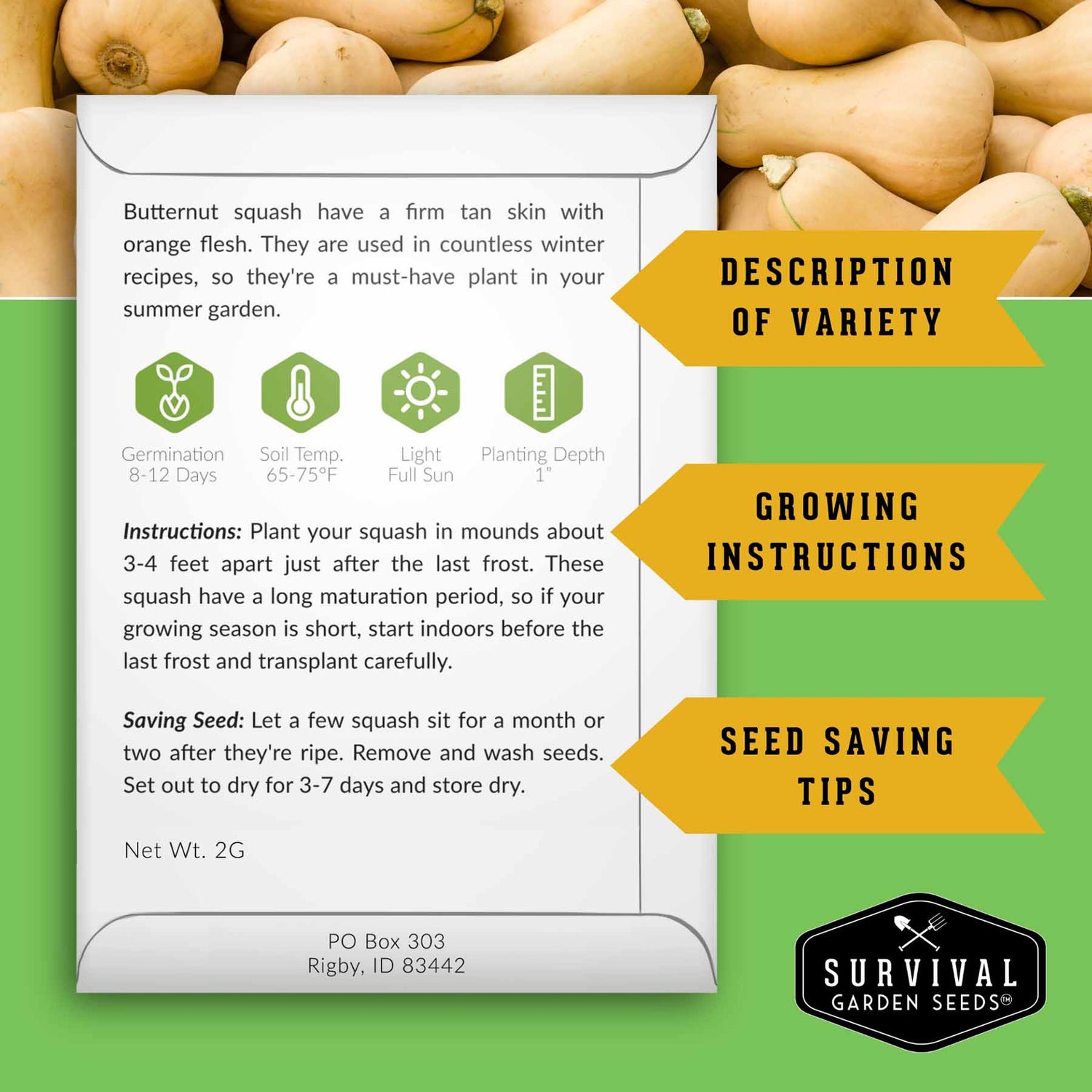
- Butternut Squash offers tan-skinned fruits with deep orange flesh and a familiar sweet, nutty flavor. A staple in winter soups, stews, bakes, and pies, it is one of the most versatile squash varieties for home gardeners.
- Pink Banana Squash grows large, cylindrical fruits that can reach remarkable sizes. For best flavor and texture, harvest when fruits are 2–3 feet long. Its smooth, sweet flesh works beautifully in baked dishes, purées, and desserts.
- Spaghetti Squash produces abundant 3–4 pound oblong yellow fruits with mild flavor and a unique stringy texture. When cooked, the flesh separates into tender strands often used as a low-carb substitute for pasta.
Why Customers Love the Winter Squash Collection:
- Includes four distinct varieties for diverse flavors and kitchen uses
- Thick-rinded fruits offer excellent long-term storage for cold months
- Reliable, productive plants that thrive in warm, sunny conditions
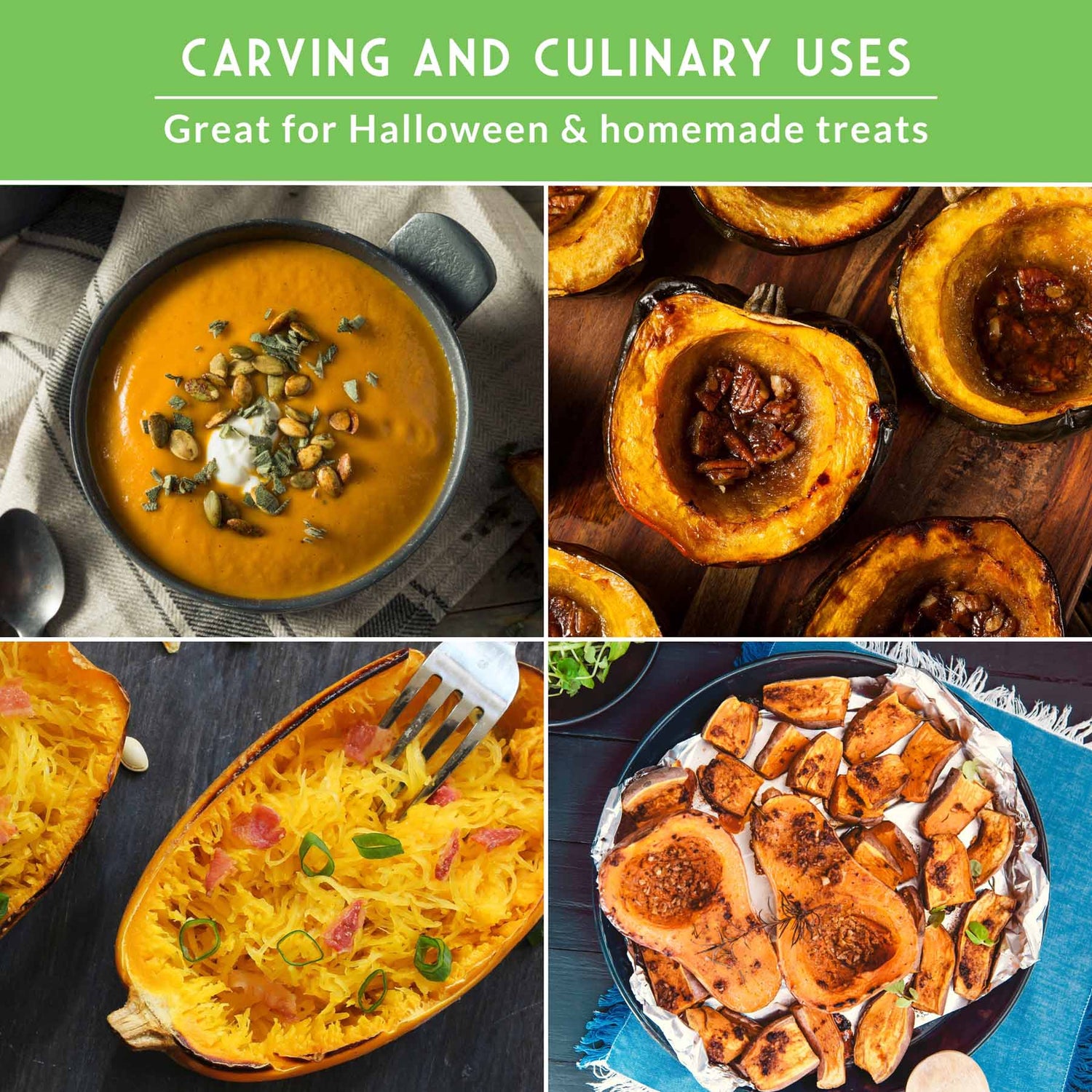
- Suitable for roasting, stuffing, baking, puréeing, sweet dishes, and savory meals
- Seeds can be roasted for an additional nutritious snack
How to Grow:
Plant winter squash seeds outdoors in full sun after the final frost when soil has warmed. Provide rich, well-drained soil and ample space for vines to spread, especially for Pink Banana and Spaghetti squash. Maintain even moisture during flowering and fruit development. Allow fruits to fully mature on the vine before harvesting and cure them in a warm, dry location to improve storage life.
Harvest & Use:
Cured winter squash can last for months when stored in a cool, dry area. Use acorn for stuffing, butternut for soups and roasting, spaghetti for noodle-style dishes, and pink banana for baked goods or hearty entrées. Save seeds for roasting or future planting seasons as desired.
Winter Squash Seed Collection – Acorn, Butternut, Pink Banana &...
Heirloom Garden Seeds
All of our seeds are open-pollinated, non-GMO, heirloom varieties with tested germination rates
Payment & Security
Payment methods
Your payment information is processed securely. We do not store credit card details nor have access to your credit card information.
Why Choose Survival Garden Seeds
At Survival Garden Seeds, we believe in preparing today for tomorrow’s peace of mind. That’s why we offer only heirloom, non-GMO, and untreated seeds you can trust to nourish your family and support a sustainable lifestyle. As a family-owned American company, we’re committed to providing seeds that grow strong and true—helping you cultivate health, resilience, and beauty in your garden.
Frequently Asked Questions
Are your seeds heirloom and open-pollinated?
Are your seeds heirloom and open-pollinated?
Yes. All of our seeds are heirloom, open-pollinated varieties, which means they can produce seeds that grow true to type and are suitable for seed saving.
You can learn more about open-pollinated, heirloom, and non-GMO seeds in our Survival Garden Training blog.
Are your seeds non-GMO?
Are your seeds non-GMO?
Yes. All Survival Garden Seeds are 100% non-GMO. Our seeds are open-pollinated heirloom varieties and are never genetically modified.
Are your seeds treated with chemicals?
Are your seeds treated with chemicals?
No. Our seeds are completely untreated and free from chemical coatings, fungicides, or synthetic treatments.
How do I know my seeds are fresh?
How do I know my seeds are fresh?
Every seed packet includes a packed-for date, and we germination-test each seed lot before packaging to ensure high viability.
What is the shelf life of your seeds?
What is the shelf life of your seeds?
Most seeds remain viable for 3 to 5 years or longer when stored properly in a cool, dry place away from light and moisture.
In what USDA hardiness zones can I grow your seeds?
In what USDA hardiness zones can I grow your seeds?
Our varieties are selected to grow successfully across USDA Hardiness Zones 3 through 10. Each packet includes variety-specific planting guidance and germination tips.