

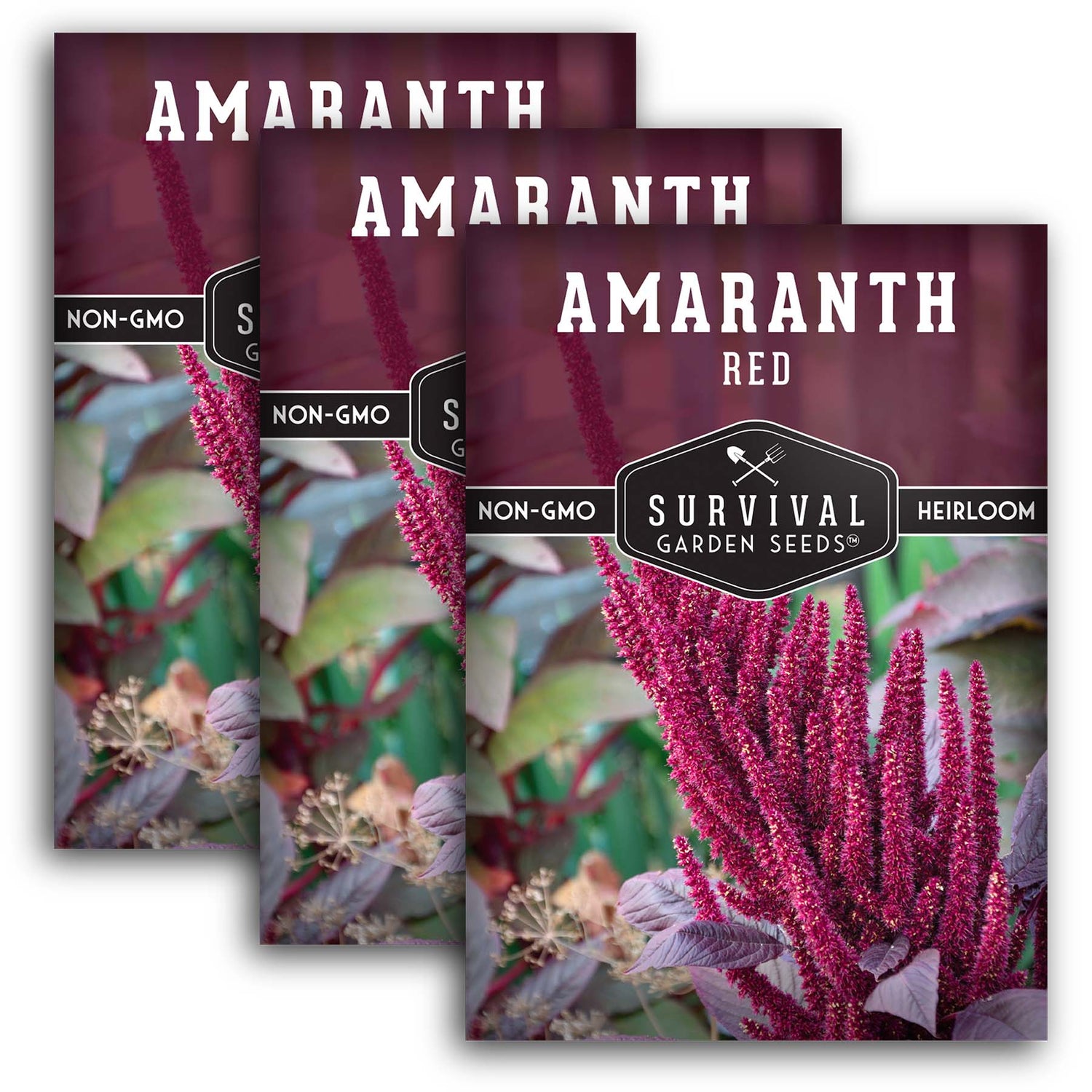
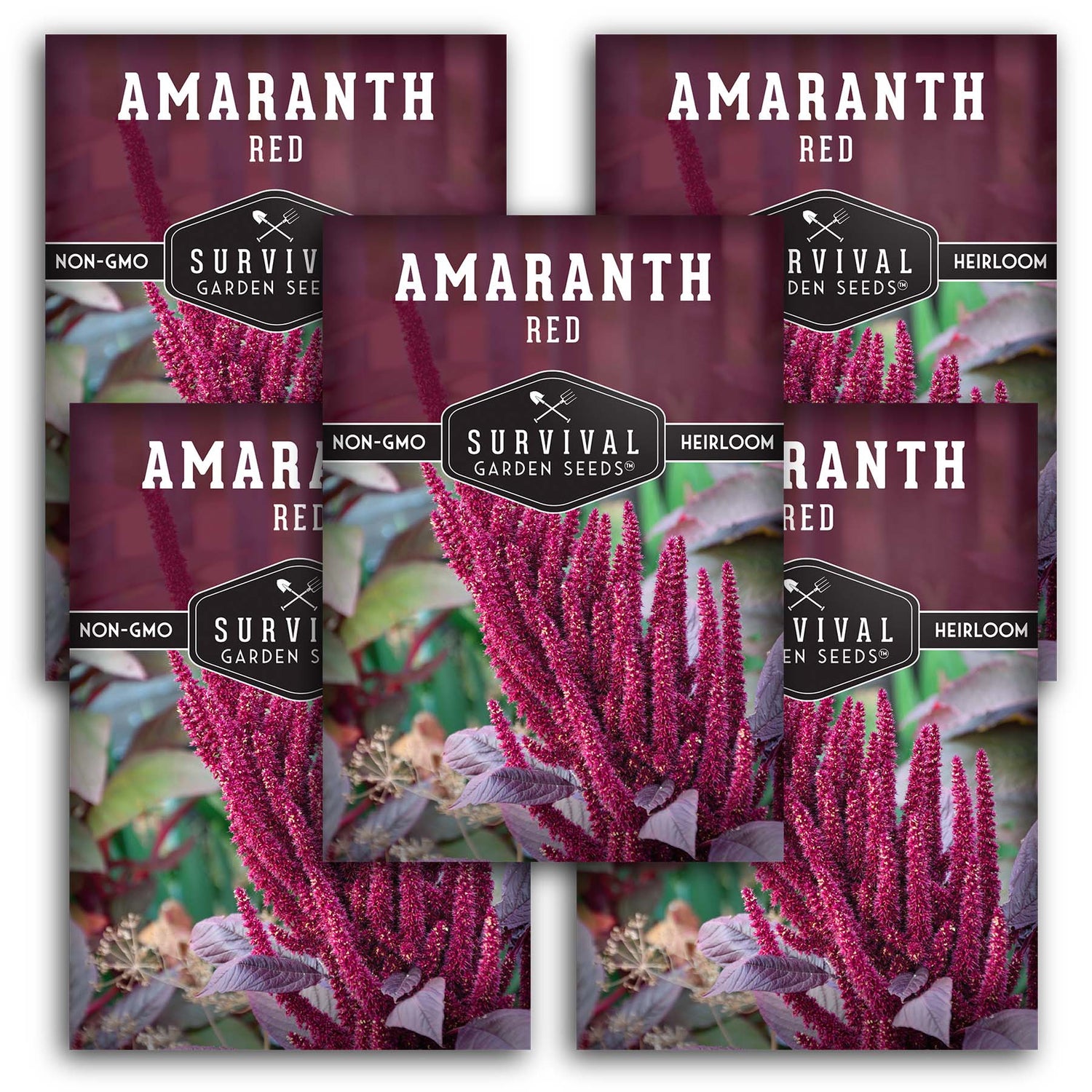
Red Amaranth Seeds – Heirloom Dual-Purpose Grain & Leafy Green for Nutritious Harvests and Ornamental Gardens
Heirloom - Non-GMO - Reliable Germination
Red Amaranth Seeds – Heirloom Dual-Purpose Grain & Leafy Green for Nutritious Harvests and Ornamental Gardens - 1 Packet is backordered and will ship as soon as it is back in stock.
Couldn't load pickup availability

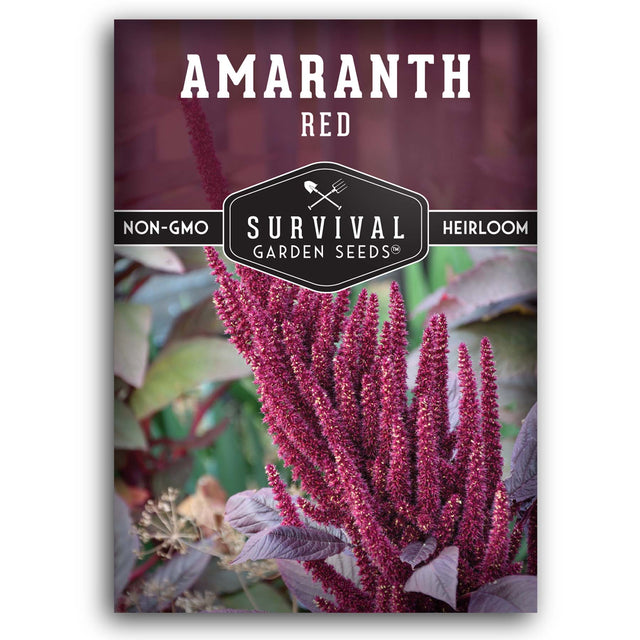
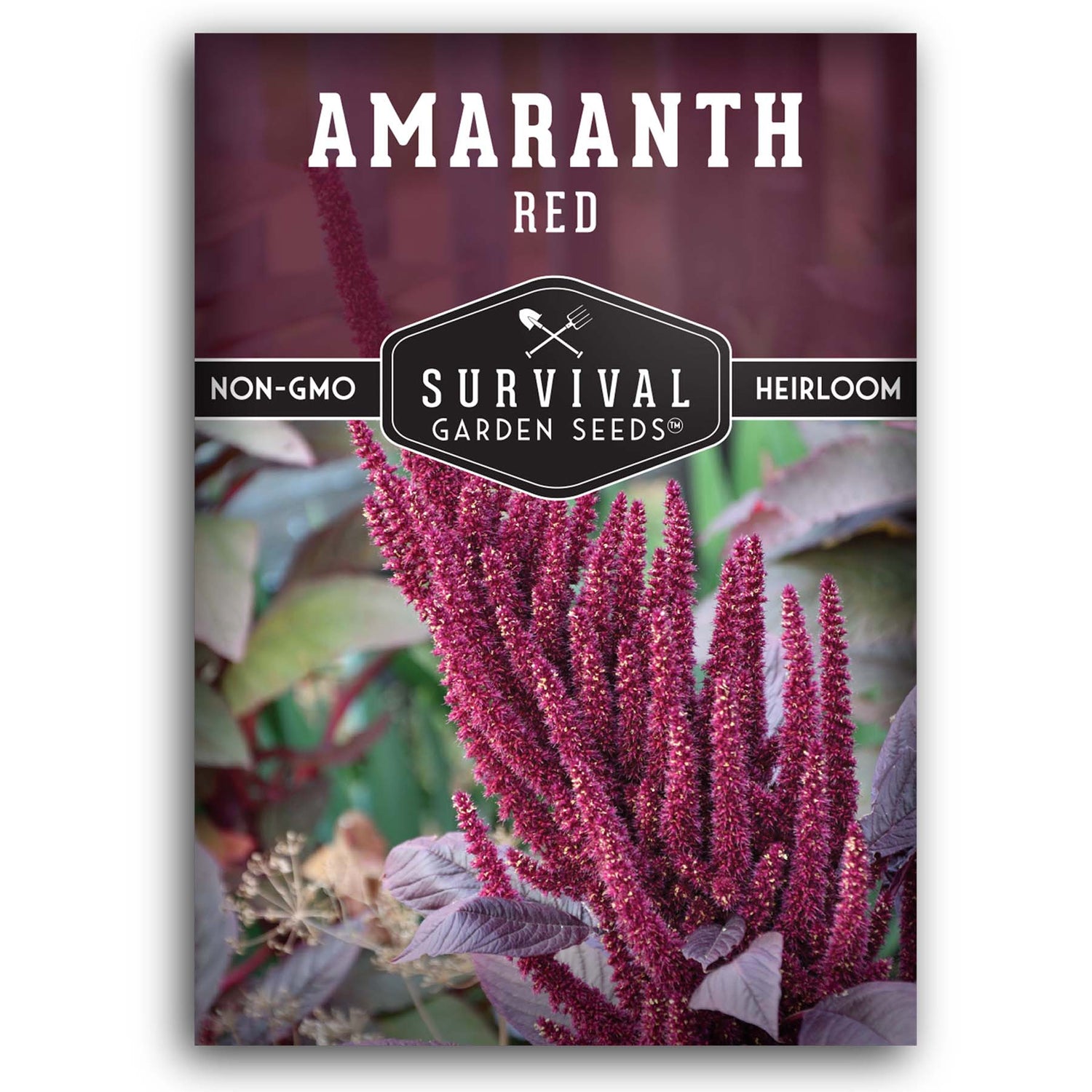
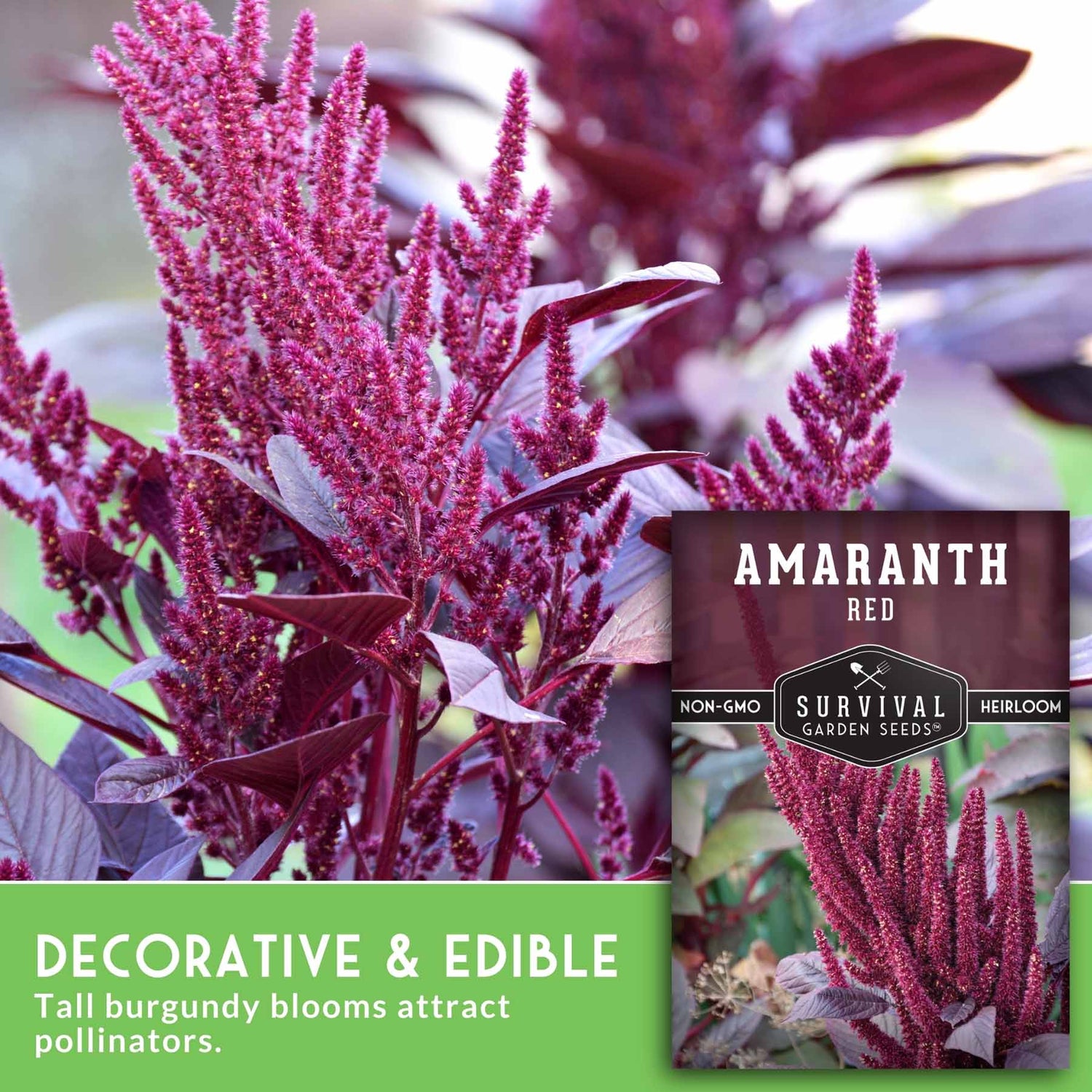
Red Amaranth Seeds from Survival Garden Seeds grow into a tall, striking plant that combines ornamental beauty with reliable food production. Reaching up to 6 feet tall, red amaranth produces deep burgundy seed heads that stand out in the garden while delivering a highly nutritious, ancient grain. Its vibrant leaves are also edible, making this heirloom variety a true dual-purpose crop for home gardeners and homesteaders.
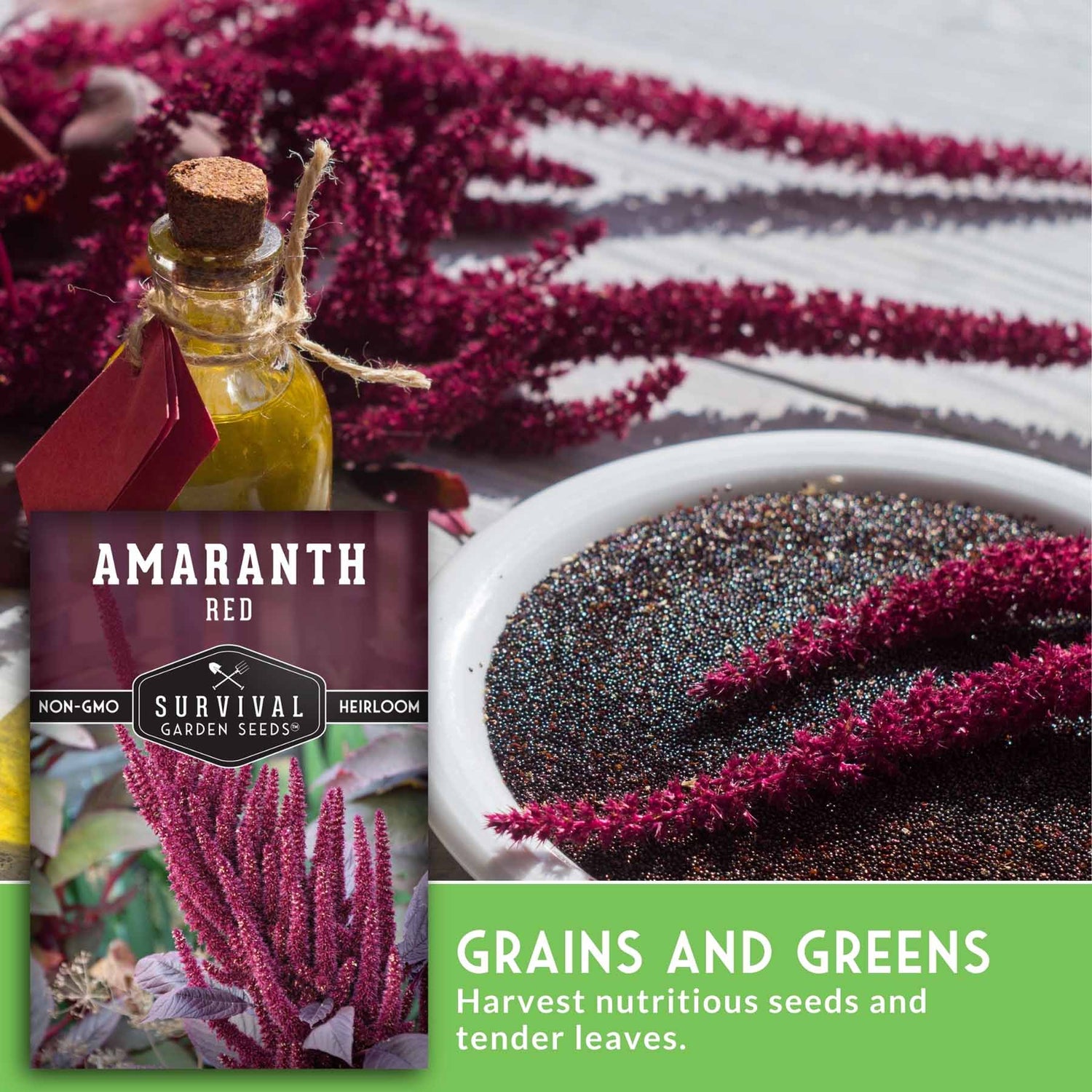
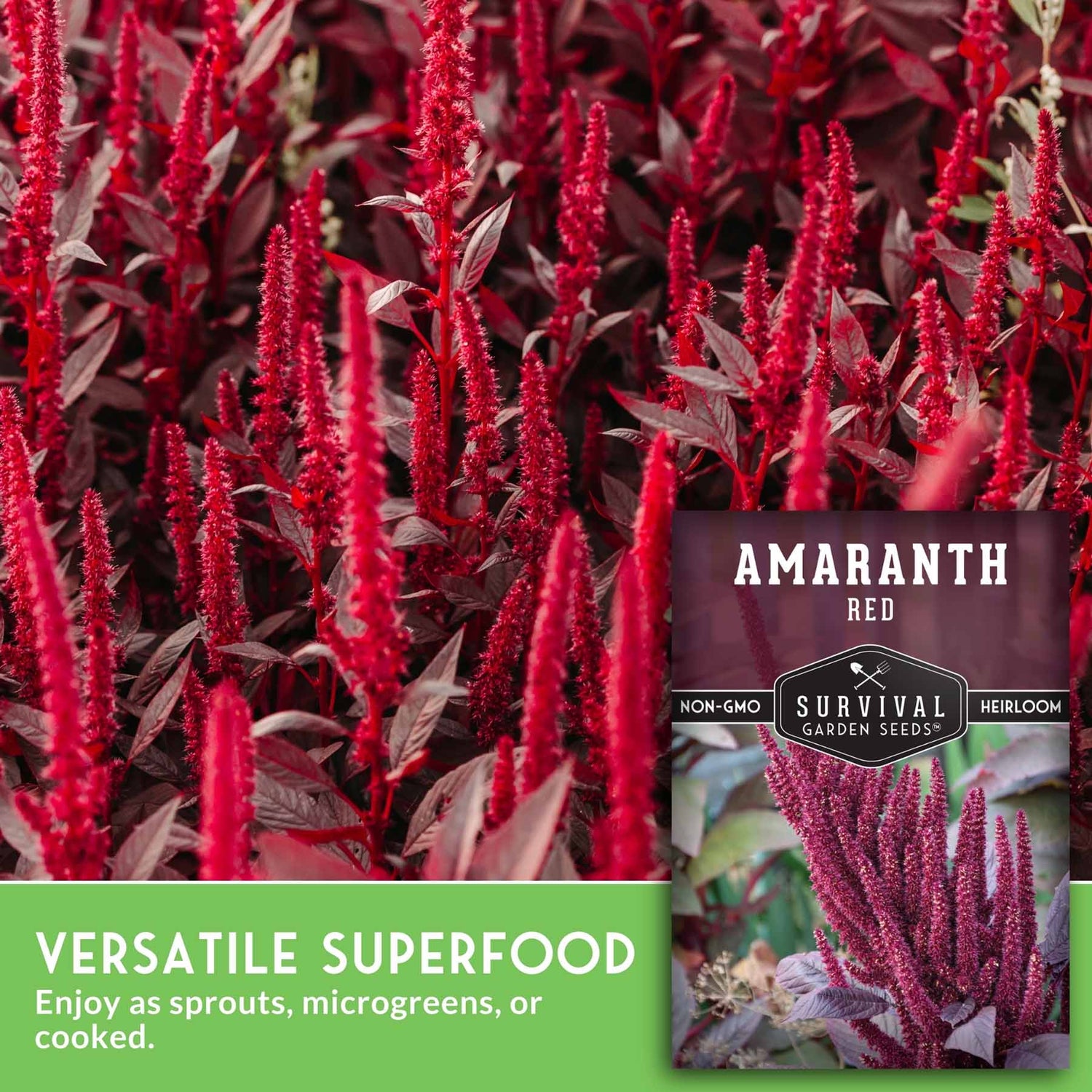
Amaranth has been cultivated for centuries as both a staple food and a valued garden plant. The leaves can be harvested as tender greens or allowed to mature for deeper flavor, while the abundant seed heads produce small grains known for their nutritional density. Seeds may also be sprouted as microgreens, offering another way to enjoy this versatile plant.
Attractive & Garden-Friendly:
- Tall, dramatic plants reaching up to 6 feet
- Deep red seed heads add ornamental interest
- Produces showy flowers that attract pollinators
- Suitable for edible landscapes and decorative garden beds
Grain & Leafy Greens in One Plant:
- Produces nutritious grain rich in fiber and plant protein
- Grain is a natural source of iron and manganese
- Leaves are edible and can be harvested at multiple stages
- Seeds can also be grown as nutrient-rich microgreens
Why Customers Love Red Amaranth Seeds:
- Dual-purpose crop for both beauty and food production
- Provides greens, grain, and microgreens from one planting
- Easy to grow and well-suited to warm-season gardens
- Time-tested heirloom variety with global culinary use
- Ideal for self-sufficiency and diverse harvests
How to Use / How to Grow:
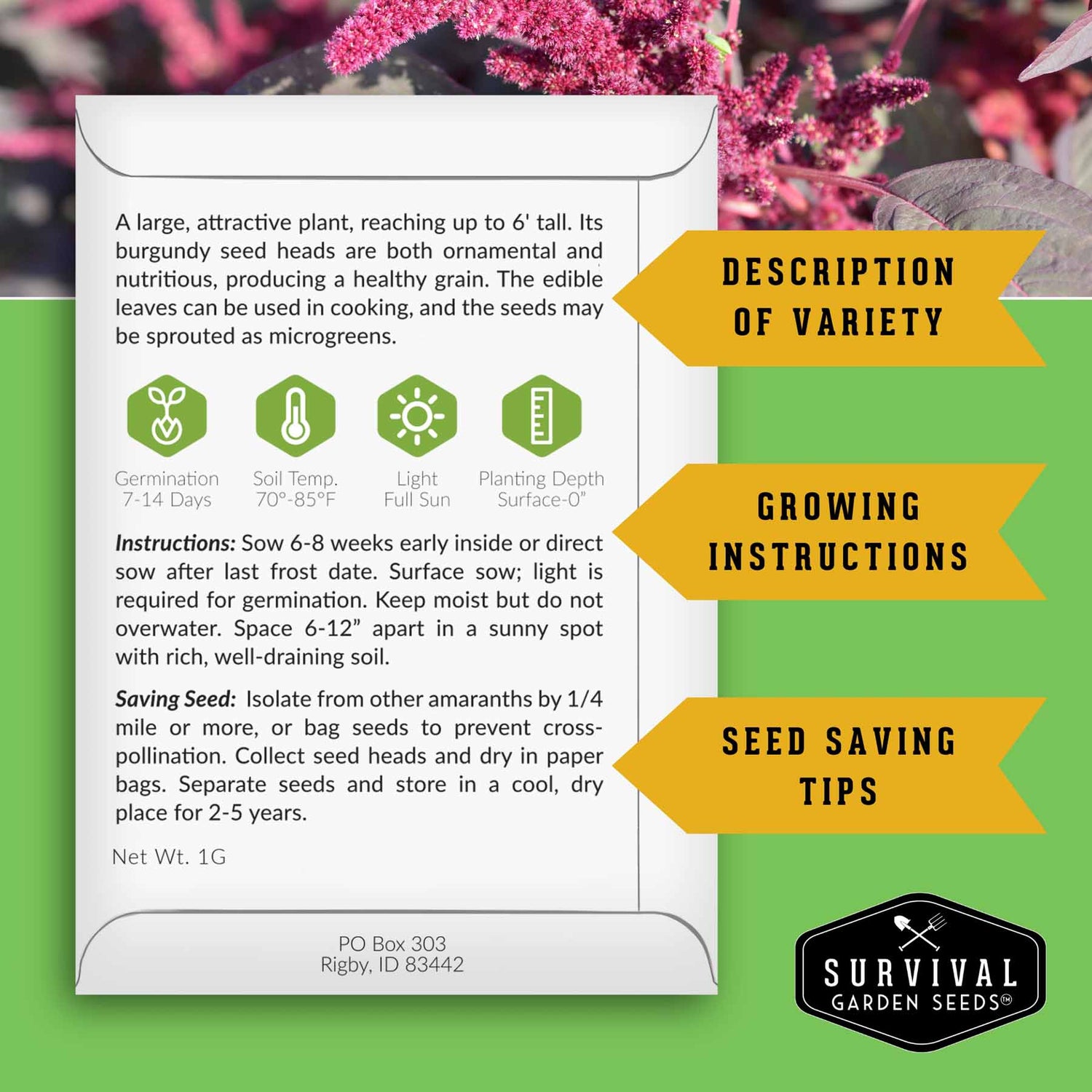
Sow red amaranth seeds after the last frost in full sun and well-drained soil. Plant seeds shallowly and keep soil evenly moist during germination. Young leaves can be harvested early for tender greens, while mature leaves offer stronger flavor for cooking. Allow seed heads to fully mature for grain harvest, or cut earlier for ornamental use. Seeds can also be sprouted indoors for microgreens using standard sprouting methods.
Net Wt. 1G
Red Amaranth Seeds – Heirloom Dual-Purpose Grain & Leafy Green ...
Heirloom Grain Seeds
All of our seeds are open-pollinated, non-GMO, heirloom varieties with tested germination rates
Specifications
Specifications
-
Botanical Name
-
Planting Zones
-
Light
-
Soil Temp for Germination
-
Germination Time
-
Planting Depth
-
Plant Size
-
Days to Harvest
-
Growing Instructions
-
Seed Saving Instructions
-
Approximate Number of Seeds Per Packet
Payment & Security
Your payment information is processed securely. We do not store credit card details nor have access to your credit card information.
Why Choose Survival Garden Seeds
At Survival Garden Seeds, we believe in preparing today for tomorrow’s peace of mind. That’s why we offer only heirloom, non-GMO, and untreated seeds you can trust to nourish your family and support a sustainable lifestyle. As a family-owned American company, we’re committed to providing seeds that grow strong and true—helping you cultivate health, resilience, and beauty in your garden.
Frequently Asked Questions
Are your seeds heirloom and open-pollinated?
Are your seeds heirloom and open-pollinated?
Yes. All of our seeds are heirloom, open-pollinated varieties, which means they can produce seeds that grow true to type and are suitable for seed saving.
You can learn more about open-pollinated, heirloom, and non-GMO seeds in our Survival Garden Training blog.
Are your seeds non-GMO?
Are your seeds non-GMO?
Yes. All Survival Garden Seeds are 100% non-GMO. Our seeds are open-pollinated heirloom varieties and are never genetically modified.
Are your seeds treated with chemicals?
Are your seeds treated with chemicals?
No. Our seeds are completely untreated and free from chemical coatings, fungicides, or synthetic treatments.
How do I know my seeds are fresh?
How do I know my seeds are fresh?
Every seed packet includes a packed-for date, and we germination-test each seed lot before packaging to ensure high viability.
What is the shelf life of your seeds?
What is the shelf life of your seeds?
Most seeds remain viable for 3 to 5 years or longer when stored properly in a cool, dry place away from light and moisture.
In what USDA hardiness zones can I grow your seeds?
In what USDA hardiness zones can I grow your seeds?
Our varieties are selected to grow successfully across USDA Hardiness Zones 3 through 10. Each packet includes variety-specific planting guidance and germination tips.