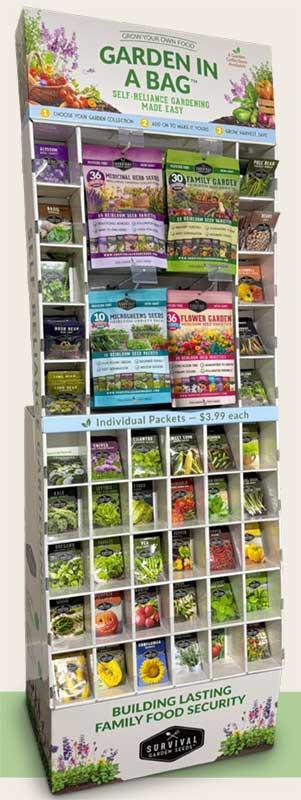
Garden in a Bag™ - The Self-Reliance Gardening™ Display Built for Retail
A ready-to-sell 2027 seed display, customizable by region.
2027 RETAIL SEED DISPLAY - CUSTOMIZE FOR YOUR REGION
See Details Below
Recognized as Idaho Small Business of the Month
by U.S. Senator Jim Risch.
Bring Garden in a Bag™ to Your Store
Garden in a Bag™ is our flagship self-reliance gardening system, a complete, pre-merchandised seed display that lets your customers start growing their own food in minutes, no experience required. Built around the principles of Self-Reliance Gardening™, each Garden in a Bag™ unit combines our best-selling heirloom collections into a single, high-turning retail display.
Request program details and ordering options.
Call 208-261-2070, email orders@survivalgardenseeds.com, or submit an inquiry above.
Share your info to receive program details — no login or application required.
Garden in a Bag™: Retail-Ready Self-Reliance Gardening™
Garden In a Bag™ replaces cluttered seed racks with a single, faster-turning display - built on the Self-Reliance Gardening™ approach your customers are already asking for.
Why retailers choose Garden in a Bag™:
-
Proven in-store performance at Walmart & regional retailers
-
Fewer SKUs
-
Stronger sell-through
-
Higher basket size
-
Easy merchandising
Ordering Snapshot:
-
Case packs: 4 units per collection
-
Programs designed for easy on-shelf display
-
Seasonal and year-round ordering available
-
Order by November 15, 2026
Inside the Garden in a Bag™ Collection
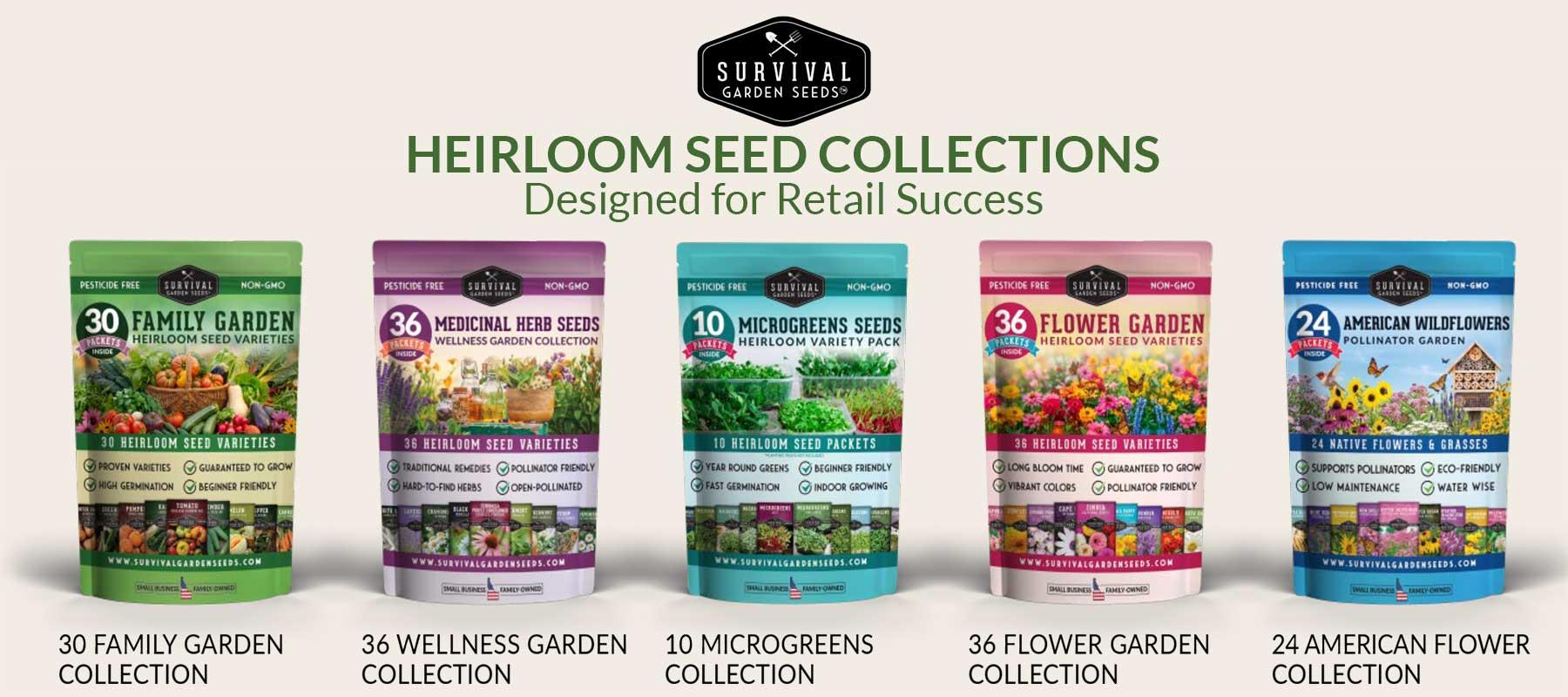
Garden in a Bag™ Retail Display Program
Add regional seeds to your Self-Reliance Gardening™ core collection
Core Display Collection - 30 Varieties
Basil, Genovese
Bean, Bush Provider
Bean, Pole Kentucky Wonder
Beet, Detroit Dark Red
Carrot, Rainbow Blend
Cilantro
Corn, Sweet Golden Bantam
Cucumber, Muncher
Lettuce, Iceberg
Marigold, French Sparky Mix
Melon, Honeydew
Oregano
Parsley, Italian Giant
Pea, Sugar Daddy Snap
Pepper, Bell Rainbow Mix
Pepper, Cayenne
Pepper, Jalapeño
Pumpkin, Jack O'Lantern
Radish, Champion
Spinach, Bloomsdale
Squash, Summer Straightneck
Squash, Winter Spaghetti
Sunflower, Mammoth
Thyme, Common
Tomato, Beefsteak Indeterminate
Tomato, Red Cherry
Tomato, Roma
Watermelon, Sugar Baby
Zinnia, California Giants
Zucchini, Black Beauty
Regional Options
SOUTHEAST
Bean, Pole Rattlesnake
Collards, Georgia Southern
Cowpeas, Black-eyed peas
Cucumber Beit Alpha
Melon Hales Best
Mustard Greens, Southern Giant
Okra Clemson Spineless
Onion White Grano
Pepper Habanero Orange
Watermelon Crimson Sweet
NORTHWEST
Arugula
Broccoli, Green Sprouting Calabrese
Chives, Common
Dahlia, Dwarf Single Mix
Kale, Red Russian
Lettuce, Oakleaf
Onion, Walla Walla
Swiss Chard, Rainbow
Tomato, Ace 55-VF
Watercress
WEST
Bean, Bush Blue Lake
Broccoli, Waltham 29
Cabbage, Red Acre
Carrot, Danvers
Dill, Compact
Kale, Lacinato
Onion, Yellow Sweet Spanish
Pea, Sugar Ann Dwarf
Spinach, Viroflay
Swiss Chard, Rainbow
MIDWEST
Bean, Lima Henderson
Chives, Common
Cucumber, National Pickling
Melon, Hearts of Gold
Onion, Yellow Sweet Spanish
Popcorn, Japanese Hulless
Squash, Waltham Butternut
Sunflower, Mixed
Tomato, San Marzano
Watermelon, Moon and Stars
NORTHEAST
Asparagus, Mary Washington
Aster, New England
Brussels Sprouts, Long Island Improved
Cabbage, Early Round Dutch
Carrot, Danvers
Onion, Yellow Sweet Spanish
Pumpkin, Small Sugar
Rhubarb, Victoria
Squash, Waltham Butternut
Turnip, Snowball
SOUTHWEST
Amaranth, Red
Bean, Pinto
Corn, Blue Hopi
Cucumber, Armenian Pale
Jicama
Okra, Emerald
Onion, White Grano
Pepper, Anaheim
Pepper, Serrano
Tomatillo, Toma Verde
The Self-Reliance Gardening™ Approach
Self-Reliance Gardening™ Guide
Garden in a Bag™ is part of our Self-Reliance Gardening™ approach. Our goal is to help gardeners do more than simply purchase seeds. We provide gardening information that helps people choose the right garden, select seeds suited to their growing conditions, plant successfully, harvest what they grow, and save seeds for future seasons.
Choosing the Right Garden in a Bag™
Every Garden in a Bag™ collection is built around a different Self-Reliance Gardening™ goal - food, wellness, fast harvests, beauty, or habitat. Use the guide below to find the collection that matches what you're trying to grow toward.
| Collection | Varieties | Best For | Space Needed | Experience Level | Time to First Harvest |
|---|---|---|---|---|---|
| Family Garden Collection | 30 | Everyday food on the table — vegetables, herbs, a staple mix for feeding a household | In-ground bed or large raised bed | Beginner-friendly | 30–90 days, varies by crop |
| Wellness Garden Collection | 36 | Herbal teas, tinctures, home remedies, and medicinal self-reliance | Bed, border, or large containers | Intermediate — some herbs need patience | Many perennial/slow-establishing; some annuals ready in 60–90 days |
| Microgreens Collection | 10 | Fast, year-round, indoor food production in any climate | Windowsill or countertop tray | Beginner-friendly, fastest results | 7–21 days |
| Flower Garden Collection | 36 | Cut flowers, pollinator support, curb appeal | Bed, border, or containers | Beginner-friendly | 60–90 days to bloom, varies |
| American Wildflowers Collection | 24 | Native habitat restoration, low-maintenance perennial beds, pollinator corridors | Open ground, meadow area, or naturalized bed | Beginner-friendly but requires patience (natives establish slowly) | Often minimal bloom year one; strong bloom year two+ |
Quick Decision Guide
| If you want... | Choose... |
|---|---|
| Food on the table this season | Family Garden Collection |
| Herbal remedies and wellness crops | Wellness Garden Collection |
| A harvest in under 3 weeks, indoors | Microgreens Collection |
| Color, cut flowers, and pollinators | Flower Garden Collection |
| A low-maintenance native pollinator bed that comes back every year | American Wildflowers Collection |
Planting & Growing Your Garden in a Bag™
Family Garden Collection
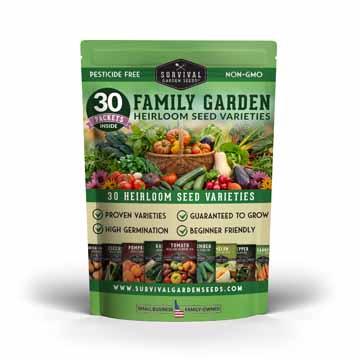
The Family Garden Collection is a Garden in a Bag™ starter set of 30 heirloom, open-pollinated, non-GMO varieties. These are everyday vegetables and culinary herbs chosen to put real food on the table, from quick-growing greens to long-season winter squash. Because every variety is open-pollinated, it's also a seed-saving collection in disguise: grow it once, and you can keep growing it for free. Direct sow cool-season crops like lettuce, kale, and radish in early spring, and warm-season crops like tomatoes, peppers, and squash after your last frost; keep soil consistently moist and harvest continuously as crops mature, from 25-day radishes to 90-day winter squash.
Each packet contains variety specific growing instructions, but here is some general planting information for this Family Garden in a Bag™.
-
Method: Mix of direct sow (root crops, beans-family, squash) and transplant-friendly starts (tomatoes, peppers, eggplant, cabbage family).
-
Timing: Split into cool-season crops (arugula, kale, lettuce, spinach, radish, turnip, broccoli, cabbage) planted early spring or fall, and warm-season crops (tomato, pepper, cucumber, melon, squash, zucchini, watermelon, eggplant, okra) planted after last frost.
-
Spacing: Ranges widely by crop — root vegetables and greens can go 2–4" apart; vining crops like melon, squash, and cucumber need 24–36" of room.
-
Depth: General rule of thumb — plant seeds roughly twice as deep as the seed is wide; large seeds (squash, beans, melon) go deeper (~1"), fine seeds (lettuce, carrot) barely covered.
Your location and weather will have a big effect on the growth and harvest timing, but here are some general guidelines:
-
Sun: Full sun (6+ hours) for most crops; leafy greens tolerate partial shade.
-
Water: Consistent moisture, especially for fruiting crops (tomato, cucumber, squash) — irregular watering causes cracking/blossom-end rot.
-
Common issues: Watch for squash vine borers, tomato hornworms, and cabbage moths; crop rotation year to year helps reduce pest and disease buildup.
-
Days to maturity: Wide range — radishes in ~25 days, winter squash and watermelon closer to 90–100 days.
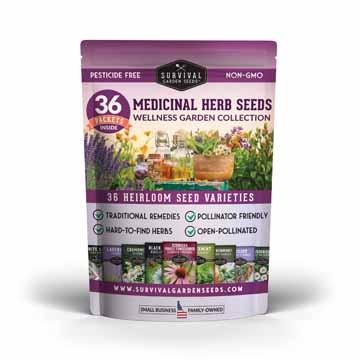
Wellness Garden Collection
The Wellness Garden Collection brings 36 heirloom, open-pollinated herbs and medicinal plants into one Garden in a Bag™ set. This contains everything from culinary staples like oregano and holy basil to traditional wellness herbs like echinacea, chamomile, and yarrow. It's built for the Self-Reliance Gardening™ gardener who wants their own home apothecary, not just a spice rack. Most annual herbs go in after last frost, while hardy perennials benefit from an early indoor start; expect a mix of quick-growing herbs ready within a couple of months and slower-establishing perennials worth the wait, harvested by leaf, flower, or root depending on the variety.
Each packet contains variety specific growing instructions, but here is some general planting information for this Wellness Garden in a Bag™.
-
Method: Many herbs (holy basil, calendula, chamomile, borage, dill-family) do well direct sown; slower perennials (echinacea, lavender, yarrow, hyssop, marsh mallow) benefit from starting indoors 6–8 weeks before last frost.
-
Timing: Most annual herbs go in after last frost; hardy perennials can often be fall-planted or started early indoors.
-
Spacing: Herbs generally need less room than vegetables — 6–12" is typical, though larger perennials like elecampane and angelica need 2–3 ft.
-
Note on stratification: A few perennials in this collection (echinacea, some wildflower-family herbs) germinate better with a cold period before planting — a short stint in the refrigerator (cold stratification) can improve results.
Your location and weather will have a big effect on the growth and harvest timing, but here are some general guidelines:
-
Sun: Most herbs prefer full sun; a few (angelica, sweet cicely-type shade herbs) tolerate partial shade.
-
Water: Many Mediterranean-origin herbs (lavender, oregano, hyssop) prefer to dry out between waterings — overwatering is the top cause of loss in this collection.
-
Common issues: Powdery mildew in humid climates (bee balm/bergamot, calendula); slow, uneven germination is normal for several perennials — patience matters more than troubleshooting here.
-
Harvest note: Many of these are grown for leaves/flowers rather than a single harvest — regular light harvesting often encourages more growth.
Microgreens Collection
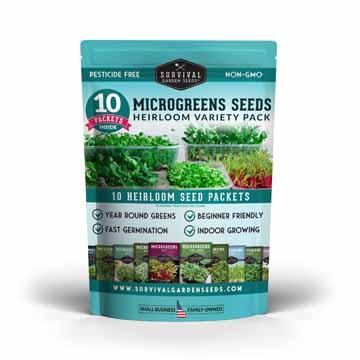
The Microgreens Collection packs 10 heirloom, non-GMO varieties into a Garden In a Bag™ set built for speed. This collection is a way to grow real, nutrient-dense food indoors, year-round, regardless of climate or season. No yard, garden bed, or outdoor space required, just a shallow tray and a sunny counter. Sow seed densely across a thin layer of soil, keep it consistently moist with light misting, and harvest with scissors at the soil line once the first true leaves appear. Most varieties are ready in 7 to 21 days.
Each seed packet contains variety-specific instructions for soaking, darkness periods, and other planting information, but here is some general guidance for this Garden in a Bag™.
-
Method: Grown in shallow trays with a thin soil layer (or hydroponic mat), indoors, no garden bed required.
-
Timing: Year-round — this is the collection built specifically to sidestep seasonal planting windows.
-
Spacing: Seeds are broadcast densely across the tray surface rather than individually spaced.
-
Depth: Not buried — pressed lightly into the surface or barely covered, since microgreens are harvested as seedlings, not mature plants.
Each variety has different growing periods before harvestability, but here is some general growing information.
-
Light: Bright indirect light or a grow light; a sunny windowsill often isn't quite enough for even growth.
-
Water: Bottom-watering or misting keeps the thin soil layer moist without disturbing shallow roots.
-
Common issues: Mold is the main risk — good airflow and avoiding overwatering are the best prevention.
-
Harvest: Cut at the soil line once first true leaves appear, typically 7–21 days depending on variety (radish and pea fastest, sunflower and beet a bit slower).
Flower Garden Collection
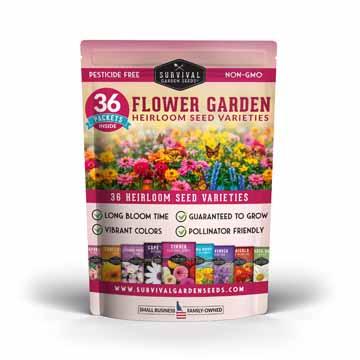
The Flower Garden Collection is a Garden in a Bag™ set of 36 heirloom, open-pollinated flowering varieties, from classic cutting-garden favorites like zinnia and cosmos to pollinator magnets like coneflower and milkweed. It's an easy way to fill a bed with color while supporting the bees and butterflies your food garden depends on. Most varieties direct sow easily after last frost in full sun; keep young plants watered while they establish, and deadhead spent blooms regularly to keep the display going all season.
Each packet contains variety specific growing instructions, but here is some general planting information for this Flower Garden in a Bag™.
-
Method: Most annuals (zinnia, cosmos, marigold, sunflower, nasturtium) direct sow easily; a few (pansy, snapdragon) prefer an indoor head start.
-
Timing: After last frost for most annuals; a handful of cool-tolerant varieties (pansy, poppy, sweet pea) can go in earlier.
-
Spacing: Varies by mature height — low border flowers (sweet alyssum-type, dwarf varieties) 6–8", tall sunflowers 18–24"+.
-
Depth: Fine flower seed is typically surface-sown or barely covered; larger seed (sunflower, sweet pea) planted about 1" deep.
Your location and weather will have a big effect on the growth and bloom timing, but here are some general guidelines:
-
Sun: Full sun for the majority of varieties; a few (pansy, forget-me-not) tolerate light shade and cooler conditions.
-
Water: Regular watering while establishing; many drought-tolerant natives in the mix (California poppy, blanket flower) need less once mature.
-
Common issues: Deadheading spent blooms extends flowering season significantly, especially for zinnia, cosmos, and marigold.
-
Pollinators: This collection is deliberately pollinator-friendly — expect (and welcome) bee and butterfly activity.
American Wildflowers Collection
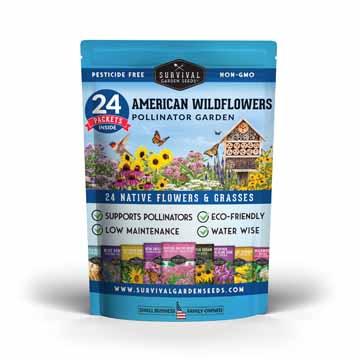
The American Wildflowers Collection gathers 24 native prairie and meadow varieties into a Garden in a Bag™ set designed for low-maintenance, long-term pollinator habitat. It contains species like black-eyed Susan, common milkweed, and little bluestem that belong in North American landscapes. Once established, it needs little upkeep, making it one of the lowest-effort ways to practice Self-Reliance Gardening™ on a larger scale. Direct sow into prepared, weed-free ground, ideally in fall so seed gets the natural cold period many natives need to germinate; water regularly the first season while roots establish, then expect modest growth year one, with fuller bloom returning stronger in year two and beyond.
Each packet contains variety specific growing instructions, but here is some general planting information for this American Wildflowers Garden in a Bag™.
-
Method: Direct sow into prepared, weed-free ground — natives generally resist transplanting.
-
Timing: Fall planting is often ideal, since many native seeds need a natural winter cold period to germinate well in spring; early spring planting also works with manual cold stratification.
-
Spacing: Broadcast rather than row-planted, mimicking a natural meadow density.
-
Depth: Most native wildflower and grass seed is surface-sown and lightly pressed in — burying too deep is the most common mistake with this collection.
Your location and weather will have a big effect on the growth and bloom timing, but here are some general guidelines:
-
Sun: Full sun — nearly all varieties in this collection are prairie/meadow natives that need it.
-
Water: Minimal once established; the first season is the exception, when regular watering helps roots establish.
-
Common issues: Patience is the biggest factor — natives often put energy into root development before showing much top growth ("first year sleep, second year creep, third year leap" is a common native-planting rule of thumb).
-
Maintenance: Low — this collection is designed to naturalize and largely take care of itself once established, which is part of its appeal for a low-effort, long-term Self-Reliance Gardening™ planting.
Saving Seeds From Your Garden in a Bag™
Every Garden In a Bag™ collection is grown from open-pollinated heirloom seed, which means, unlike hybrid varieties, the seed you save this year will grow true to type next year. Seed saving is the foundation of Self-Reliance Gardening™: grow once, and you'll always have fresh, healthy seeds for future seasons.
Selecting Healthy Plants
Start with your strongest, most true-to-type plants; not the first ones ready to harvest, and not the ones struggling with pests or disease. The plant you save seed from passes its traits to next year's crop, so it pays to be selective. Look for plants with good vigor, typical size and color for the variety, and no signs of disease. For cross-pollinating crops (like squash, corn, or many flowers and brassicas), save from several healthy plants rather than just one. This keeps the seed line genetically diverse and productive over time.
Allowing Seeds to Mature
Seeds need more time on the plant than the vegetable does for eating. A cucumber picked for the table is harvested young and green; a cucumber left for seed needs to grow large, dull, and yellow. The same is true across the board — beans and peas should rattle dry in the pod, lettuce and herbs need to fully bolt and flower, and fruiting crops like tomatoes and peppers are picked for seed at full, often overripe, maturity. Rushing this step is the most common reason home-saved seed fails to germinate.
Harvesting Seed at the Correct Stage
-
Dry-seeded crops (beans, peas, lettuce, brassicas, most flowers, herbs, and grains): wait until pods, seed heads, or flower heads are fully dry and brittle on the plant, then harvest before they shatter and drop seed on their own.
-
Wet-seeded crops (tomatoes, cucumbers, squash, melons): harvest the fruit when fully ripe (past the point you'd normally eat it), then scoop out the seed and pulp for processing.
-
Harvest on a dry day whenever possible — seed collected in damp conditions is more prone to mold before it's fully dried.
Cleaning Seeds
-
Dry seeds: thresh by hand (rubbing pods or seed heads between your palms) or in a bag, then winnow — pouring seed between containers in front of a fan or breeze — to separate seed from chaff.
-
Wet seeds: scoop seed and pulp into a jar with a little water and let it sit for 2–4 days to ferment. This breaks down the gel coating (especially important for tomatoes) and kills many seed-borne diseases in the process. Viable seed sinks; pulp and non-viable seed float and can be poured off. Rinse the sunk seed well in a fine strainer.
Drying Seeds
Spread cleaned seed in a single layer on a paper plate, coffee filter, or screen — not paper towels, which seeds stick to. Dry in a well-ventilated spot out of direct sun for 1–2 weeks, stirring occasionally for even drying. Seed is fully dry when it snaps rather than bends (for larger seeds like beans) or crumbles rather than smears (for smaller seeds). Never dry seed in an oven or under direct heat — high heat can kill embryos.
Labeling Varieties and Harvest Year
Label every batch the moment it's dry and packaged — not later, when memory gets unreliable. Include:
-
Variety name (exactly as it appears on the original Garden in a Bag™ packet)
-
Harvest year
-
Any notes worth remembering (especially strong plant, early producer, etc.)
Unlabeled seed is one of the most common ways home seed savers lose track of a variety they meant to keep.
Proper Storage
Store cleaned, fully dry seed in airtight containers — paper envelopes inside a sealed jar, resealable bags, or dedicated seed storage boxes all work well. Adding a small silica gel packet or a few tablespoons of dry rice wrapped in cloth helps absorb any residual moisture.
Keeping Seeds Cool and Dry
Seed longevity comes down to two conditions above all else: cool and dry. A stable spot like a closet, drawer, or refrigerator holds up far better than a garage or shed subject to temperature swings and humidity. As a rule of thumb, the combined numbers of the temperature (°F) and humidity percentage in storage should stay under 100 for the best long-term viability. Most vegetable seed stored well stays viable for 3–5 years; some, like onion and parsley, are shorter-lived and are best used within a year or two.
Following Variety-Specific Instructions
General seed-saving principles apply broadly, but every crop has its own quirks — some need isolation distance from other varieties to prevent cross-pollination, some are biennial and need to overwinter before they'll flower and set seed, and some have specific fermentation or drying times. Check the back of each Garden in a Bag™ seed packet for variety-specific seed-saving instructions before you get started — they're written to match exactly what's in that packet.
Garden In a Bag™ and Self-Reliance Gardening™ are trademarks of Survival Garden Seeds. All rights reserved.