

Sage Seed Collection – White Sage, Culinary Sage & Victoria Blue for Aromatic Gardens and Pollinator Support
Heirloom - Non-GMO - Reliable Germination
Sage Seed Collection – White Sage, Culinary Sage & Victoria Blue for Aromatic Gardens and Pollinator Support is backordered and will ship as soon as it is back in stock.
Couldn't load pickup availability

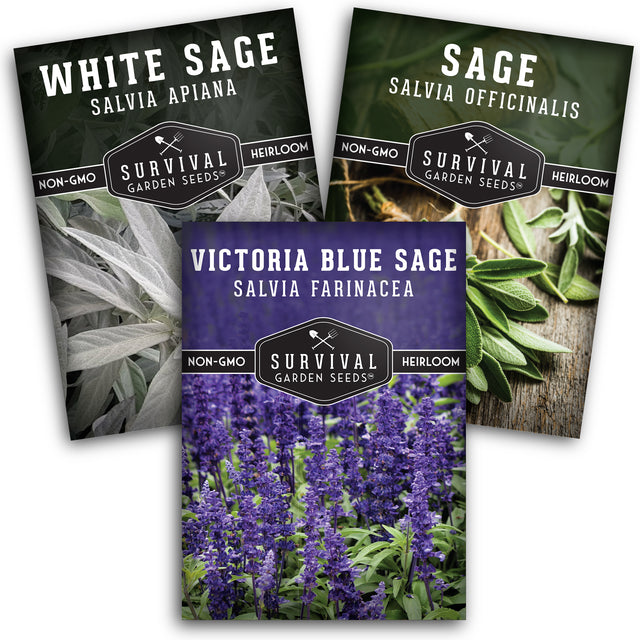
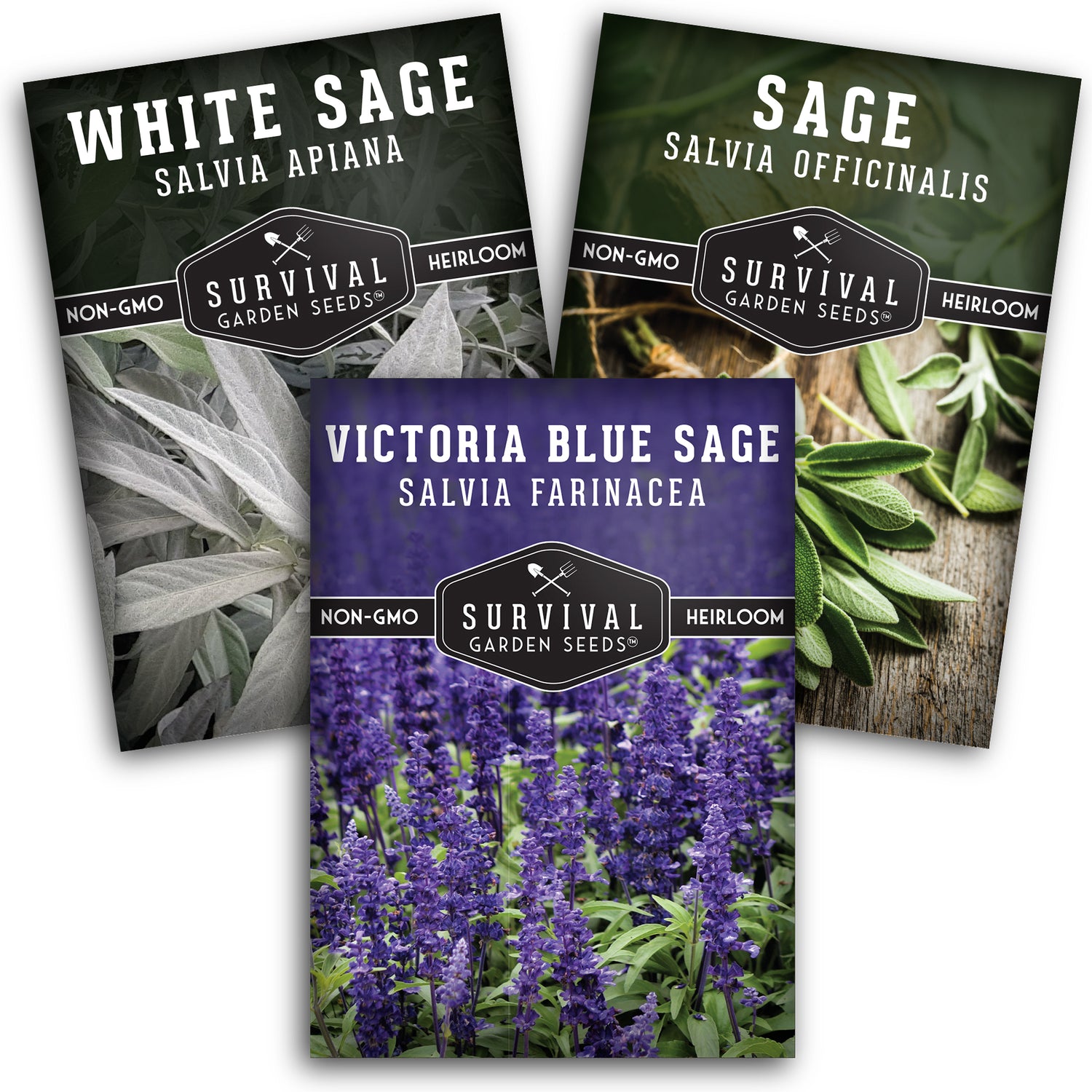
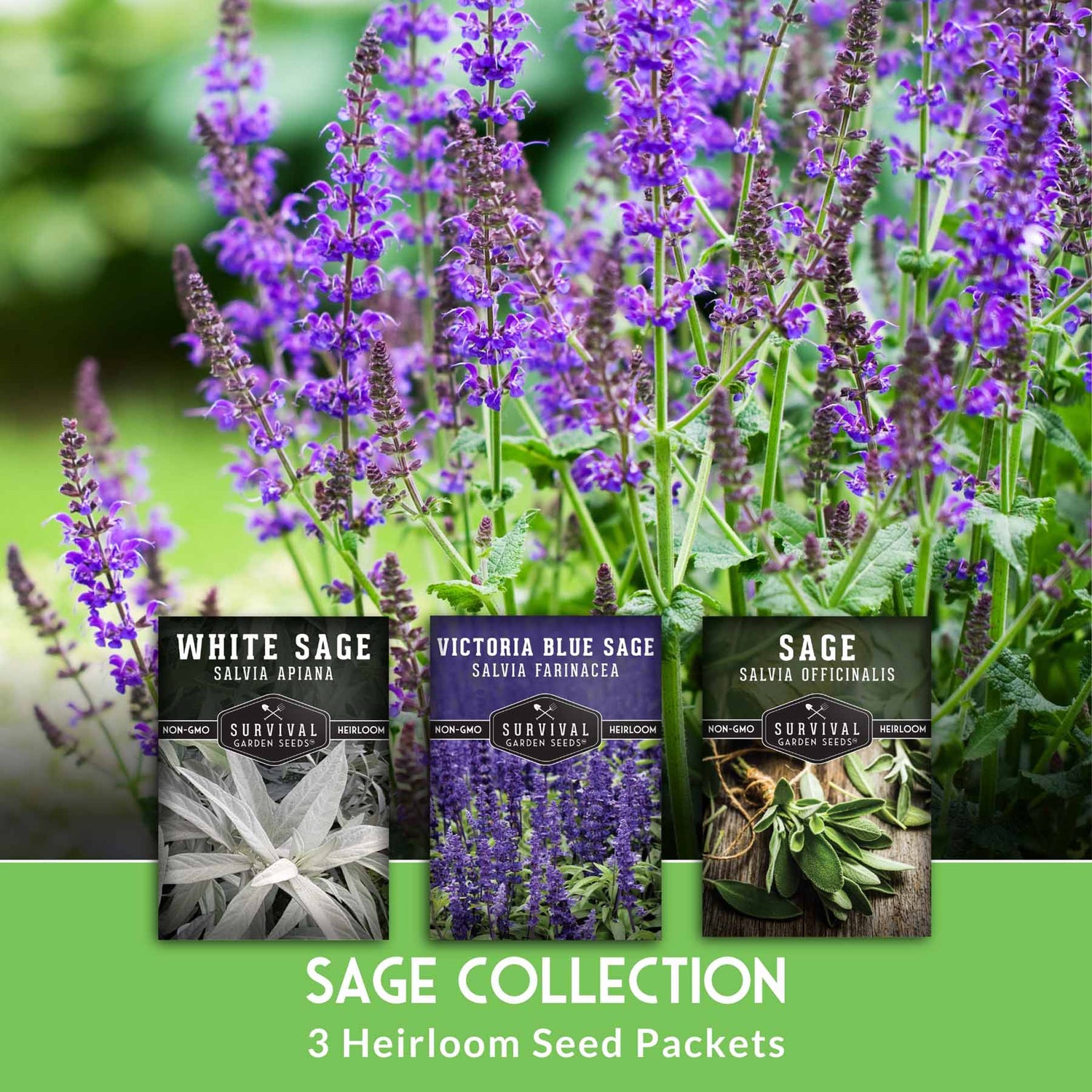
Create a fragrant, pollinator-friendly garden with this Sage Seed Collection from Survival Garden Seeds. Featuring three complementary varieties—White Sage, Culinary Sage, and Victoria Blue (Mealycup) Sage—this mix offers aromatic foliage, distinctive blooms, and practical uses in the kitchen and home. These sages thrive in full sun and are well suited to low-maintenance, drought-tolerant landscapes.
Three Distinctive Sage Varieties:
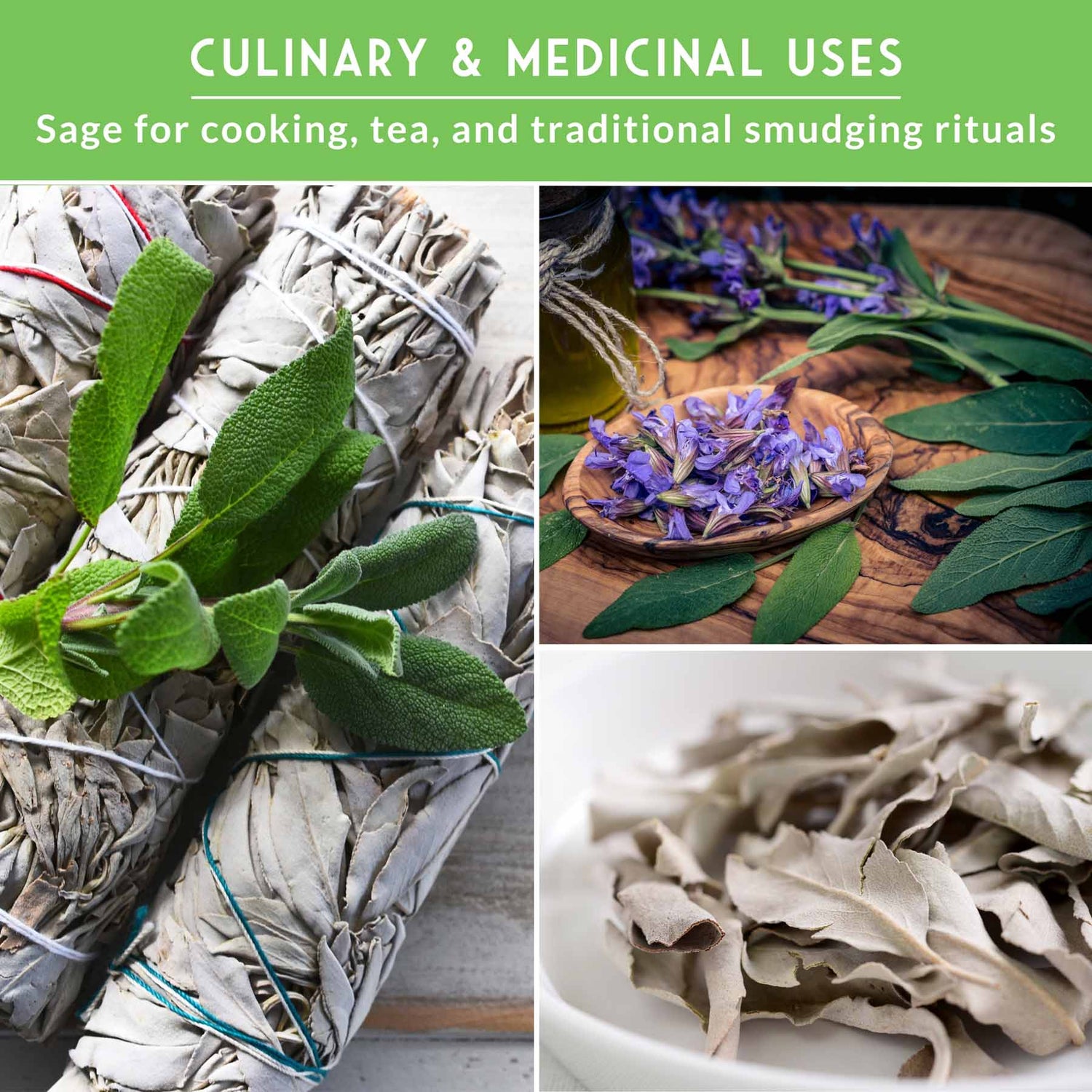
- White Sage is a traditional herb valued for its strong aroma and ceremonial use in smudging. Its silvery leaves can also be brewed into a mild herbal tea. When dried and bundled, the leaves produce a clean, refreshing scent when burned.
- Culinary Sage is a must-have kitchen herb with dusty green leaves and a robust flavor. Ideal for seasoning vegetables, stuffing, sausages, roasted dishes, and Thanksgiving recipes, it offers excellent fresh-picked aroma and taste.
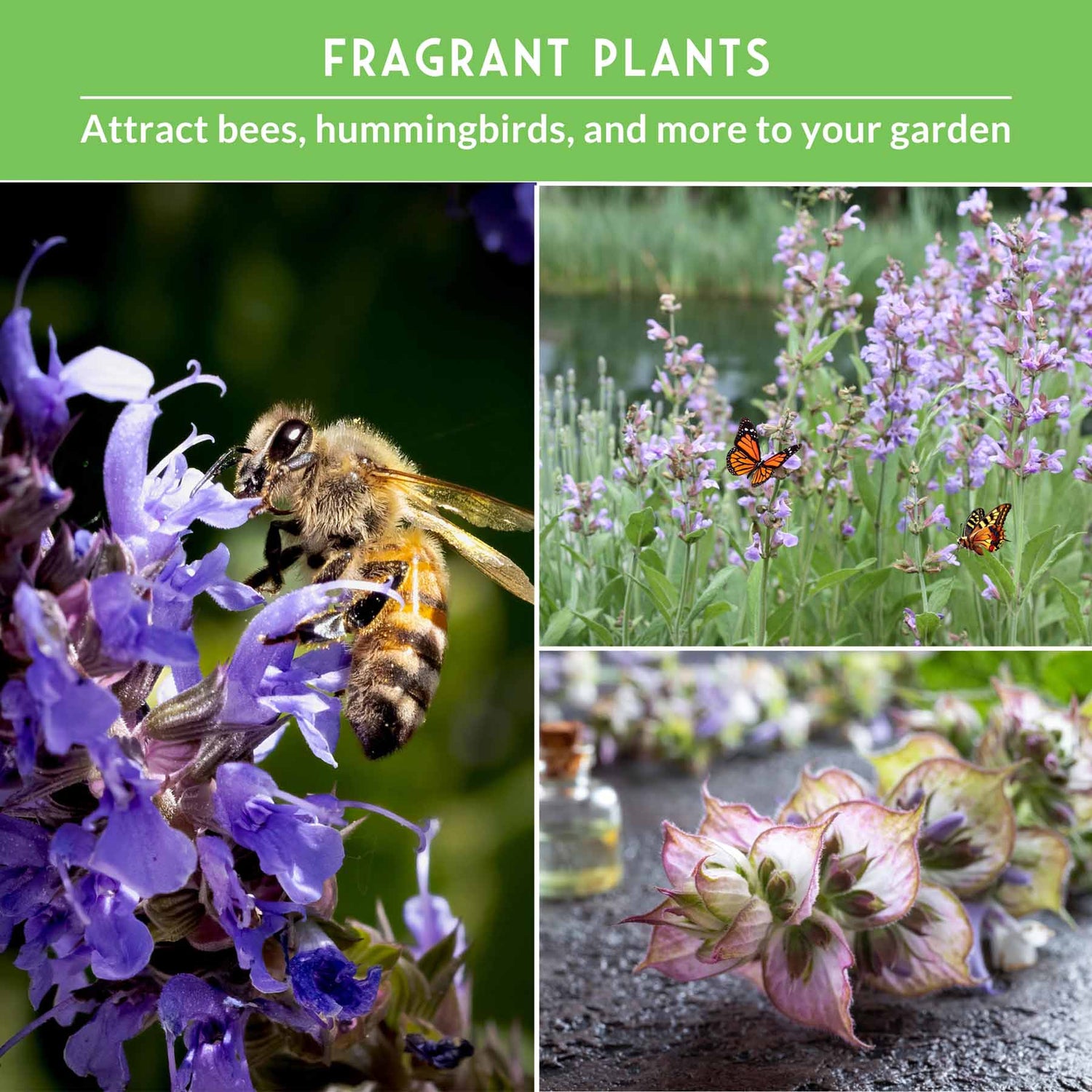
- Victoria Blue (Mealycup) Sage is a native perennial wildflower known for its purple, cup-shaped blooms dusted with white. Easy to grow and highly attractive to bees, butterflies, and nectar-loving birds, it adds ornamental beauty and movement to sunny beds.
Why Customers Love the Sage Seed Collection:
- Provides culinary, aromatic, and ornamental benefits in one set
- Attracts bees, butterflies, and hummingbirds throughout the season
- Drought-tolerant plants suited for low-maintenance gardening
- Adds fragrance, color, and texture to herb gardens, borders, and pollinator plantings
- Offers both practical kitchen use and traditional aromatic applications
How to Grow:
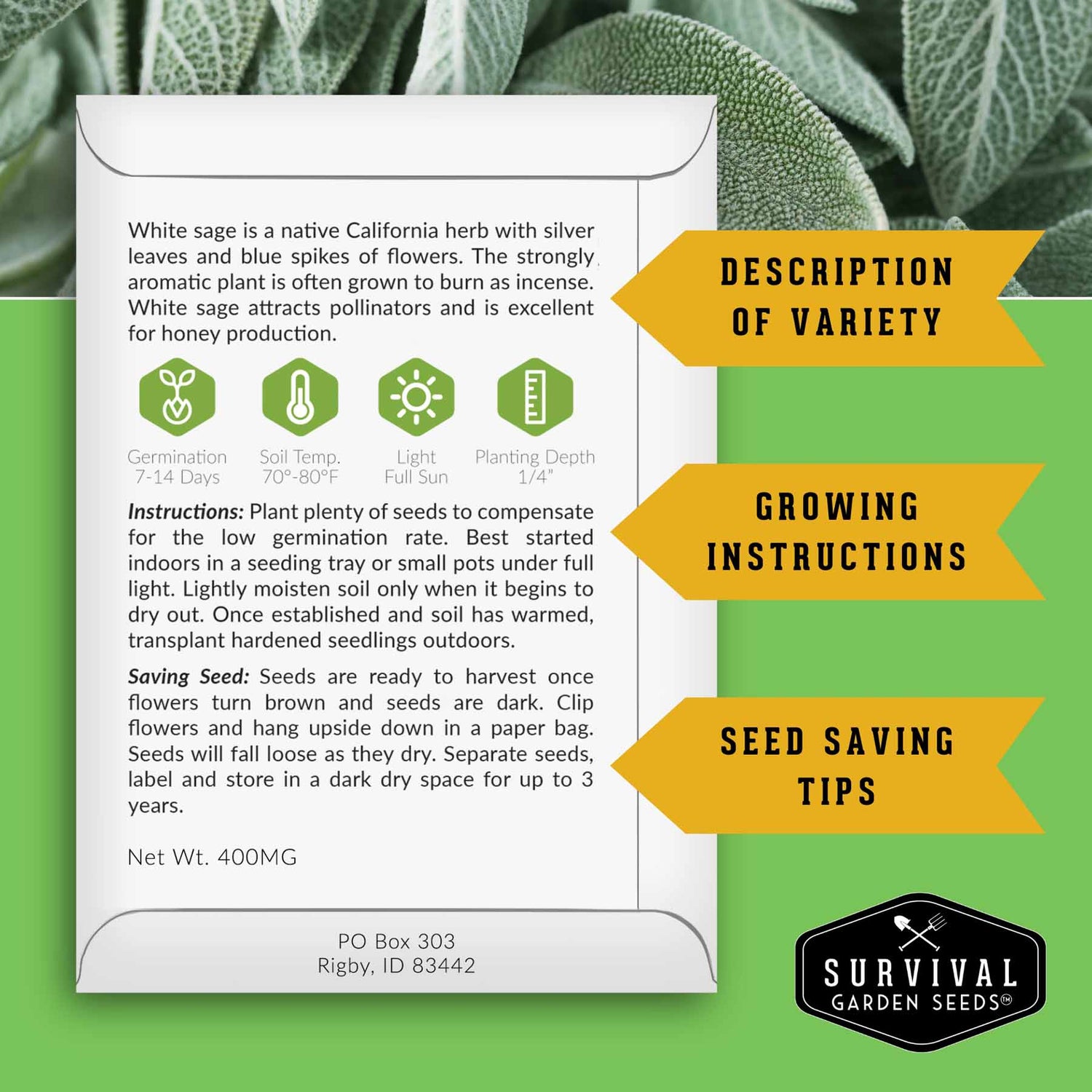
Sow sage seeds in full sun and well-drained soil. Start seeds indoors for earlier growth or sow directly outdoors once temperatures warm. Keep soil lightly moist until plants establish. White Sage prefers dry, sunny conditions once mature, while Culinary and Victoria Blue Sage thrive with moderate watering. Provide space for airflow to encourage healthy growth and fragrant foliage.
Harvest & Use:
Harvest Culinary Sage leaves as needed for fresh or dried use in cooking. White Sage leaves can be dried for incense bundles or used to brew herbal tea. Victoria Blue Sage is typically grown for its long-lasting blooms, which may be cut for ornamental arrangements or left in place to support pollinators.
Sage Seed Collection – White Sage, Culinary Sage & Victoria Blu...
Heirloom Garden Seeds
All of our seeds are open-pollinated, non-GMO, heirloom varieties with tested germination rates
Payment & Security
Payment methods
Your payment information is processed securely. We do not store credit card details nor have access to your credit card information.
Why Choose Survival Garden Seeds
At Survival Garden Seeds, we believe in preparing today for tomorrow’s peace of mind. That’s why we offer only heirloom, non-GMO, and untreated seeds you can trust to nourish your family and support a sustainable lifestyle. As a family-owned American company, we’re committed to providing seeds that grow strong and true—helping you cultivate health, resilience, and beauty in your garden.
Frequently Asked Questions
Are your seeds heirloom and open-pollinated?
Are your seeds heirloom and open-pollinated?
Yes. All of our seeds are heirloom, open-pollinated varieties, which means they can produce seeds that grow true to type and are suitable for seed saving.
You can learn more about open-pollinated, heirloom, and non-GMO seeds in our Survival Garden Training blog.
Are your seeds non-GMO?
Are your seeds non-GMO?
Yes. All Survival Garden Seeds are 100% non-GMO. Our seeds are open-pollinated heirloom varieties and are never genetically modified.
Are your seeds treated with chemicals?
Are your seeds treated with chemicals?
No. Our seeds are completely untreated and free from chemical coatings, fungicides, or synthetic treatments.
How do I know my seeds are fresh?
How do I know my seeds are fresh?
Every seed packet includes a packed-for date, and we germination-test each seed lot before packaging to ensure high viability.
What is the shelf life of your seeds?
What is the shelf life of your seeds?
Most seeds remain viable for 3 to 5 years or longer when stored properly in a cool, dry place away from light and moisture.
In what USDA hardiness zones can I grow your seeds?
In what USDA hardiness zones can I grow your seeds?
Our varieties are selected to grow successfully across USDA Hardiness Zones 3 through 10. Each packet includes variety-specific planting guidance and germination tips.