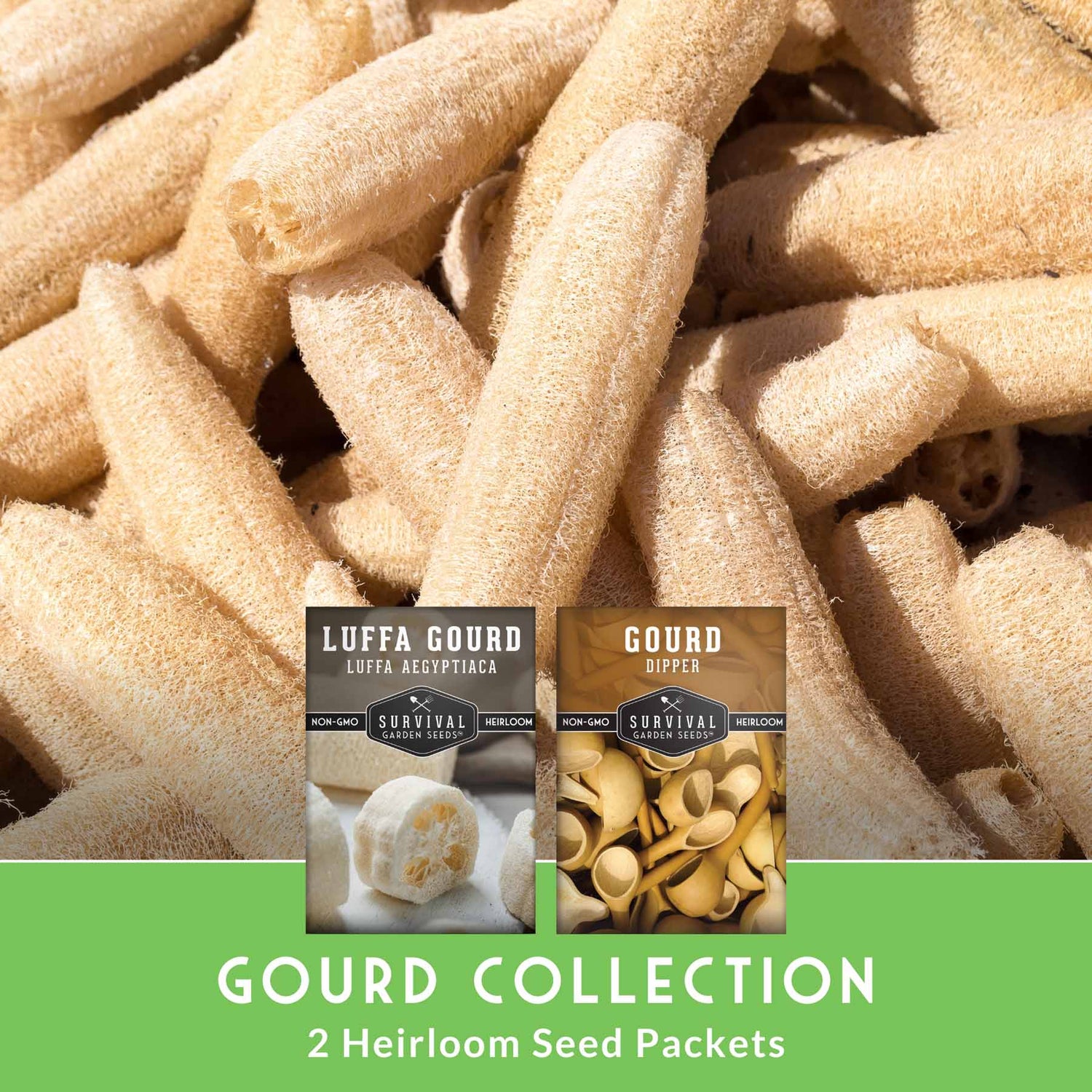


Gourd Seed Collection – Dipper Gourds & Luffa (Loofah) Gourds for Crafting, Utility & Eco-Friendly Uses
Heirloom - Non-GMO - Reliable Germination
Gourd Seed Collection – Dipper Gourds & Luffa (Loofah) Gourds for Crafting, Utility & Eco-Friendly Uses is backordered and will ship as soon as it is back in stock.
Couldn't load pickup availability

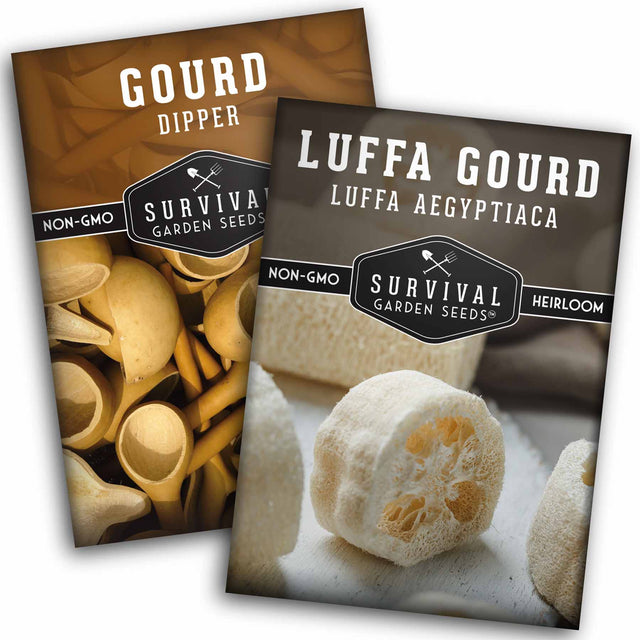
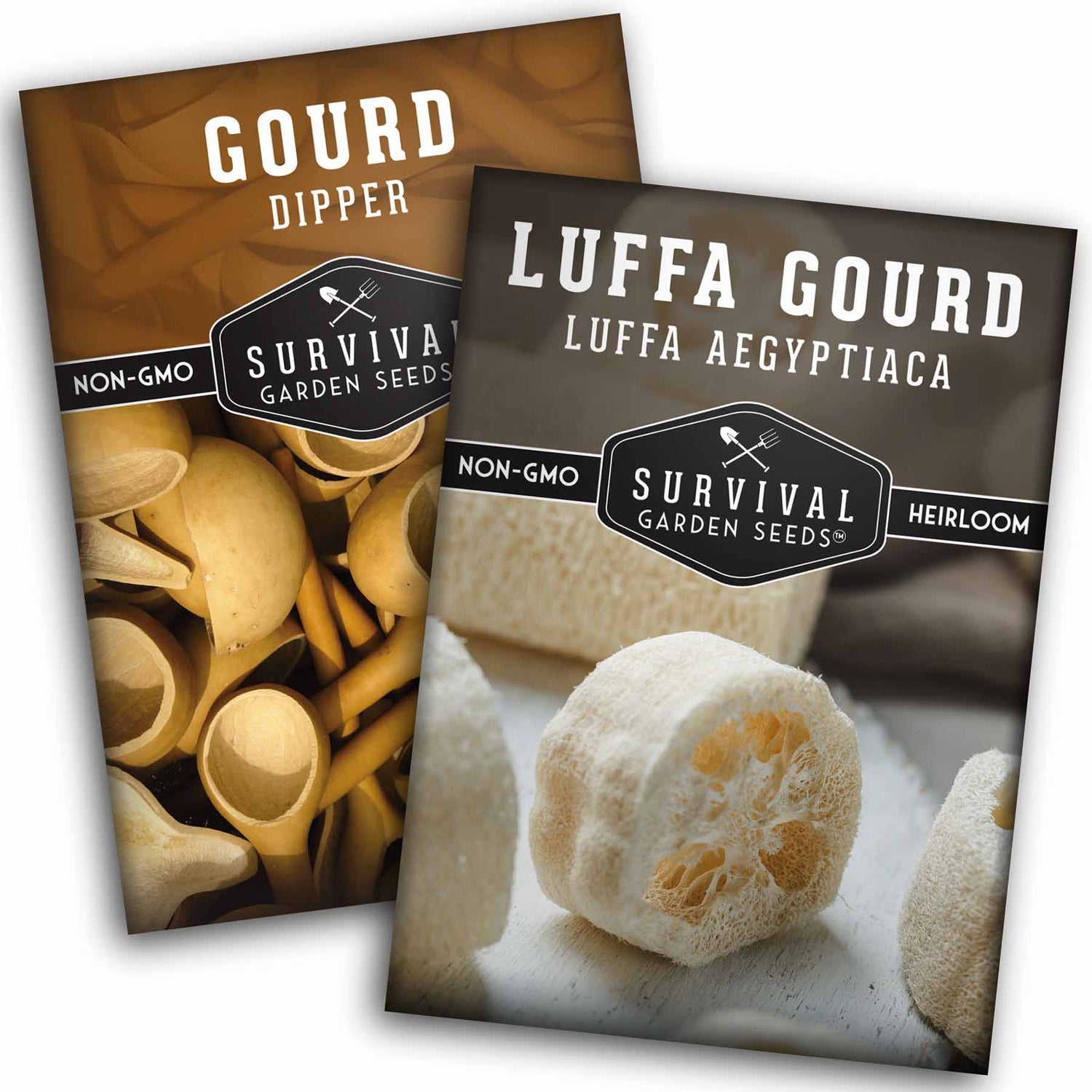
Discover the practical and creative possibilities of gourds with the Gourd Seed Collection from Survival Garden Seeds. This two-variety assortment includes Dipper Gourds and Luffa (Loofah) Gourds—both vigorous, warm-season plants that grow long, impressive fruits ideal for crafting, household use, and sustainable living projects. These gourds thrive in full sun and can be grown on the ground or trellised to encourage straighter, more uniform shapes.
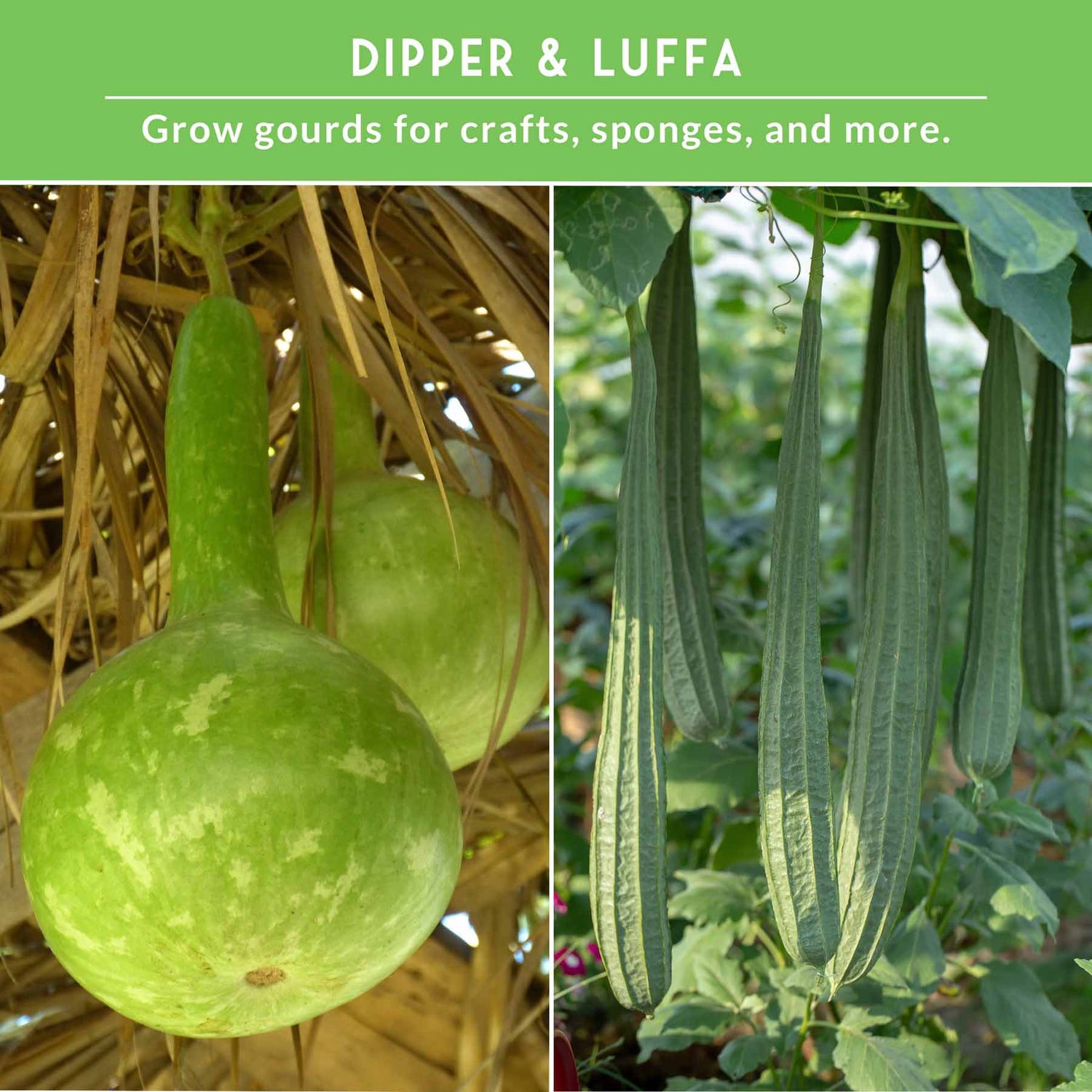
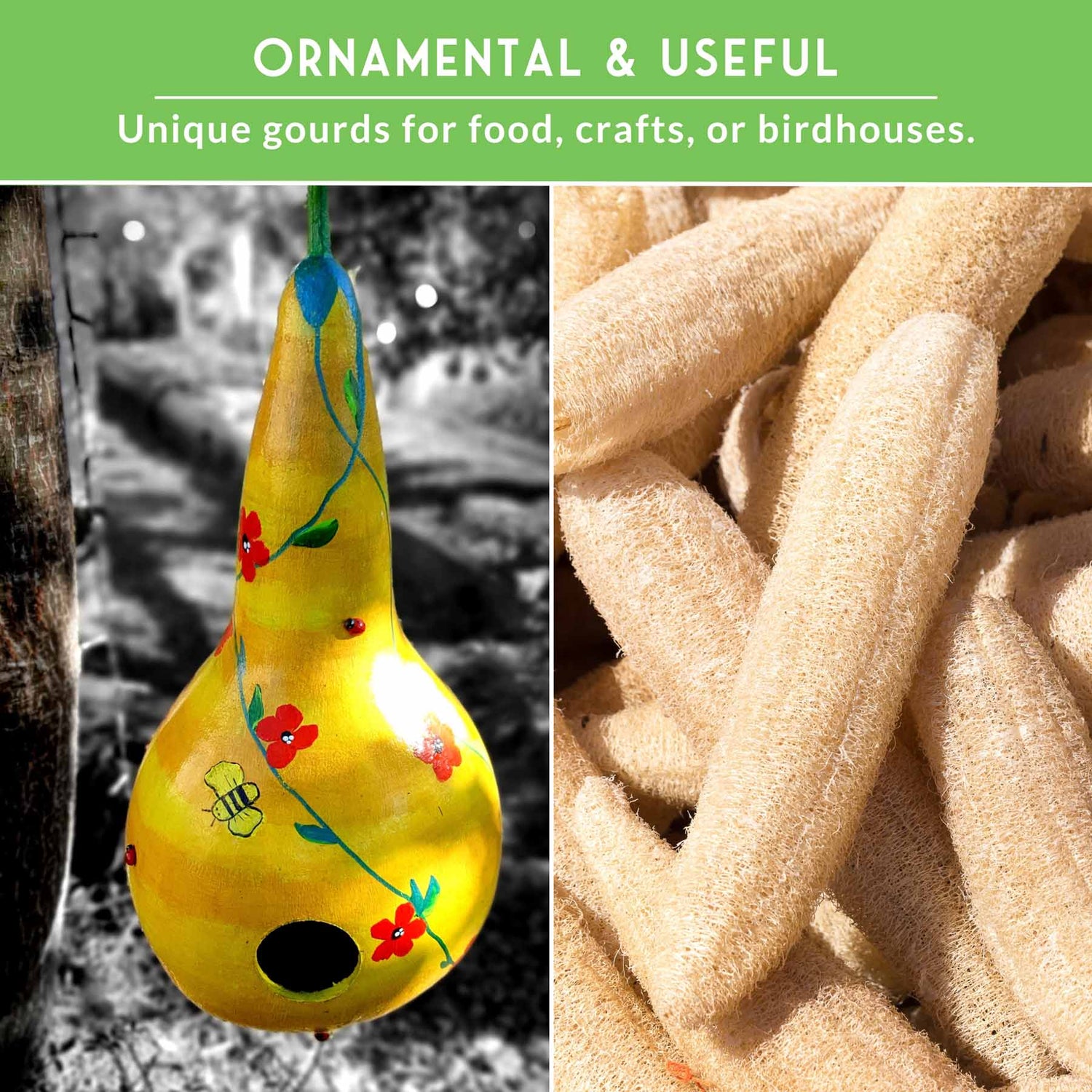
Dipper Gourds develop distinctive long handles—up to 2 feet in length—with a rounded base that can be dried, hollowed, and shaped into water dippers, ladles, decorative crafts, or birdhouses. Luffa Gourds offer edible young fruits that cook similarly to okra, and when fully mature and dried, they can be peeled into natural, reusable kitchen and bath sponges.
Varieties Included in the Gourd Seed Collection:
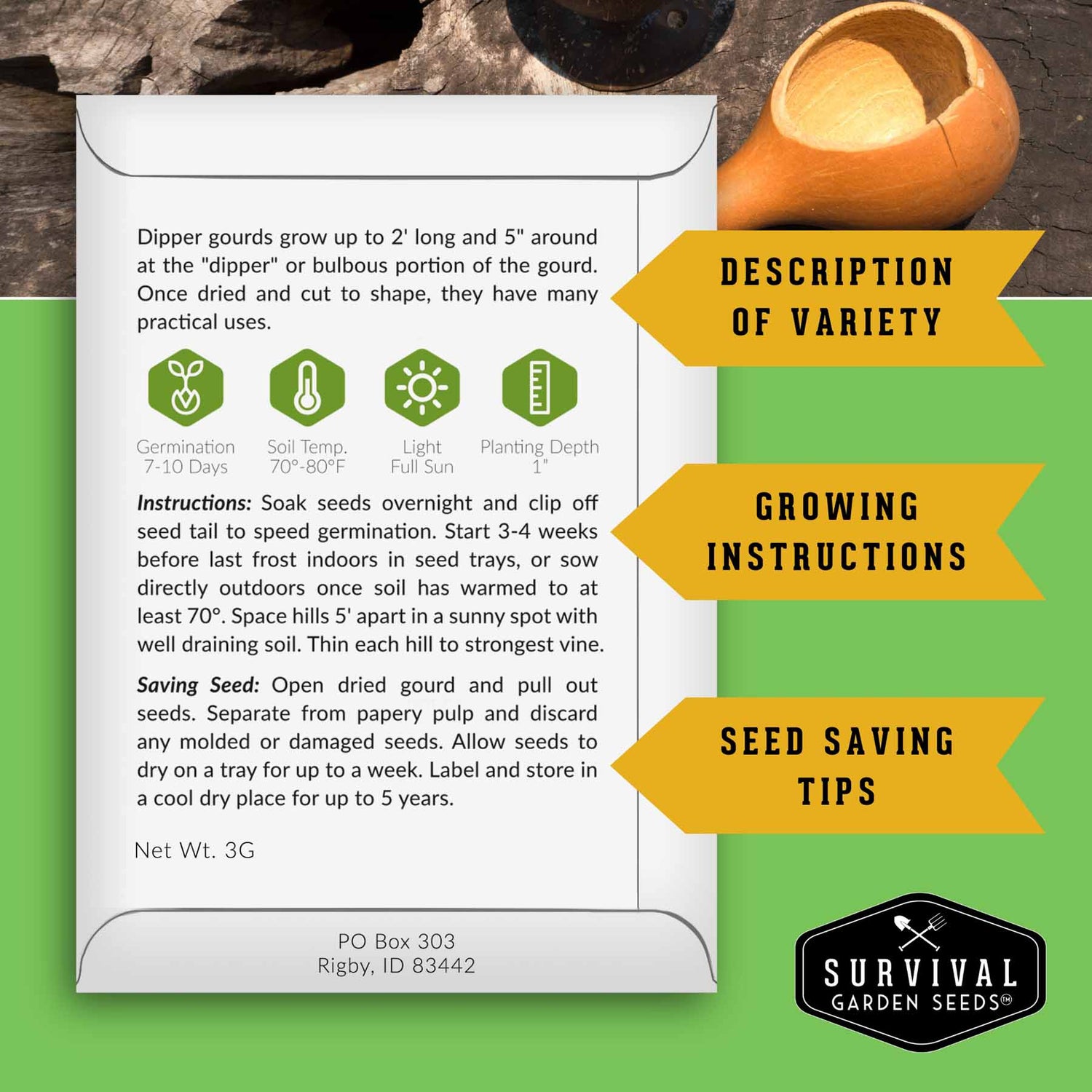
- Dipper Gourd: Produces large, long-handled fruits with a bulbous end, reaching up to 2 feet long and 5 inches wide. Once dried, the hard shells can be shaped into traditional dippers, ladles, or birdhouses favored by purple martins.
- Luffa (Loofah) Gourd: A fast-growing vine that produces long, hanging fruits—often up to 2 feet. Young luffas are edible, while mature fruits can be dried and peeled to create durable, eco-friendly scrubbers for the kitchen or bath.
Why Customers Love the Gourd Seed Collection:
- Includes two versatile gourds with many practical and crafting uses
- Ideal for eco-friendly households, homesteads, and creative gardeners
- Produces long, impressive fruits suitable for décor, tools, and natural sponges
- Thrives in warm climates with full sun and well-drained soil
- Each packet includes clear planting and seed-saving instructions
How to Grow:
Plant seeds outdoors after the danger of frost has passed and soil has warmed thoroughly. Gourds grow best in full sun with ample space and consistent moisture. Trellising helps produce straighter fruits and improves airflow around vines. Allow gourds to fully mature on the vine before harvesting for drying; edible luffas should be picked young and tender. To dry gourds, leave them in a warm, ventilated area until the shells harden.
Gourd Seed Collection – Dipper Gourds & Luffa (Loofah) Gourds f...
Heirloom Garden Seeds
All of our seeds are open-pollinated, non-GMO, heirloom varieties with tested germination rates
Payment & Security
Payment methods
Your payment information is processed securely. We do not store credit card details nor have access to your credit card information.
Why Choose Survival Garden Seeds
At Survival Garden Seeds, we believe in preparing today for tomorrow’s peace of mind. That’s why we offer only heirloom, non-GMO, and untreated seeds you can trust to nourish your family and support a sustainable lifestyle. As a family-owned American company, we’re committed to providing seeds that grow strong and true—helping you cultivate health, resilience, and beauty in your garden.
Frequently Asked Questions
Are your seeds heirloom and open-pollinated?
Are your seeds heirloom and open-pollinated?
Yes. All of our seeds are heirloom, open-pollinated varieties, which means they can produce seeds that grow true to type and are suitable for seed saving.
You can learn more about open-pollinated, heirloom, and non-GMO seeds in our Survival Garden Training blog.
Are your seeds non-GMO?
Are your seeds non-GMO?
Yes. All Survival Garden Seeds are 100% non-GMO. Our seeds are open-pollinated heirloom varieties and are never genetically modified.
Are your seeds treated with chemicals?
Are your seeds treated with chemicals?
No. Our seeds are completely untreated and free from chemical coatings, fungicides, or synthetic treatments.
How do I know my seeds are fresh?
How do I know my seeds are fresh?
Every seed packet includes a packed-for date, and we germination-test each seed lot before packaging to ensure high viability.
What is the shelf life of your seeds?
What is the shelf life of your seeds?
Most seeds remain viable for 3 to 5 years or longer when stored properly in a cool, dry place away from light and moisture.
In what USDA hardiness zones can I grow your seeds?
In what USDA hardiness zones can I grow your seeds?
Our varieties are selected to grow successfully across USDA Hardiness Zones 3 through 10. Each packet includes variety-specific planting guidance and germination tips.