Bean Seed Collection – Contender Bush Beans, Kentucky Wonder Pole Beans & Henderson Lima Beans
Heirloom - Non-GMO - Reliable Germination
Bean Seed Collection – Contender Bush Beans, Kentucky Wonder Pole Beans & Henderson Lima Beans is backordered and will ship as soon as it is back in stock.
Couldn't load pickup availability

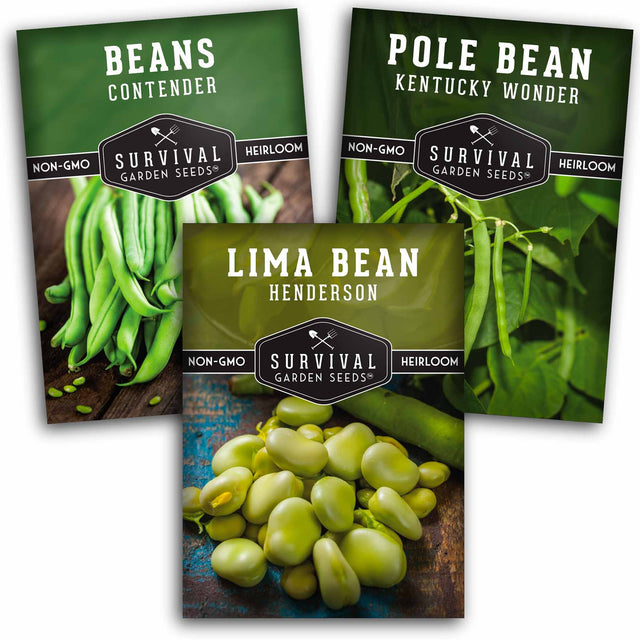
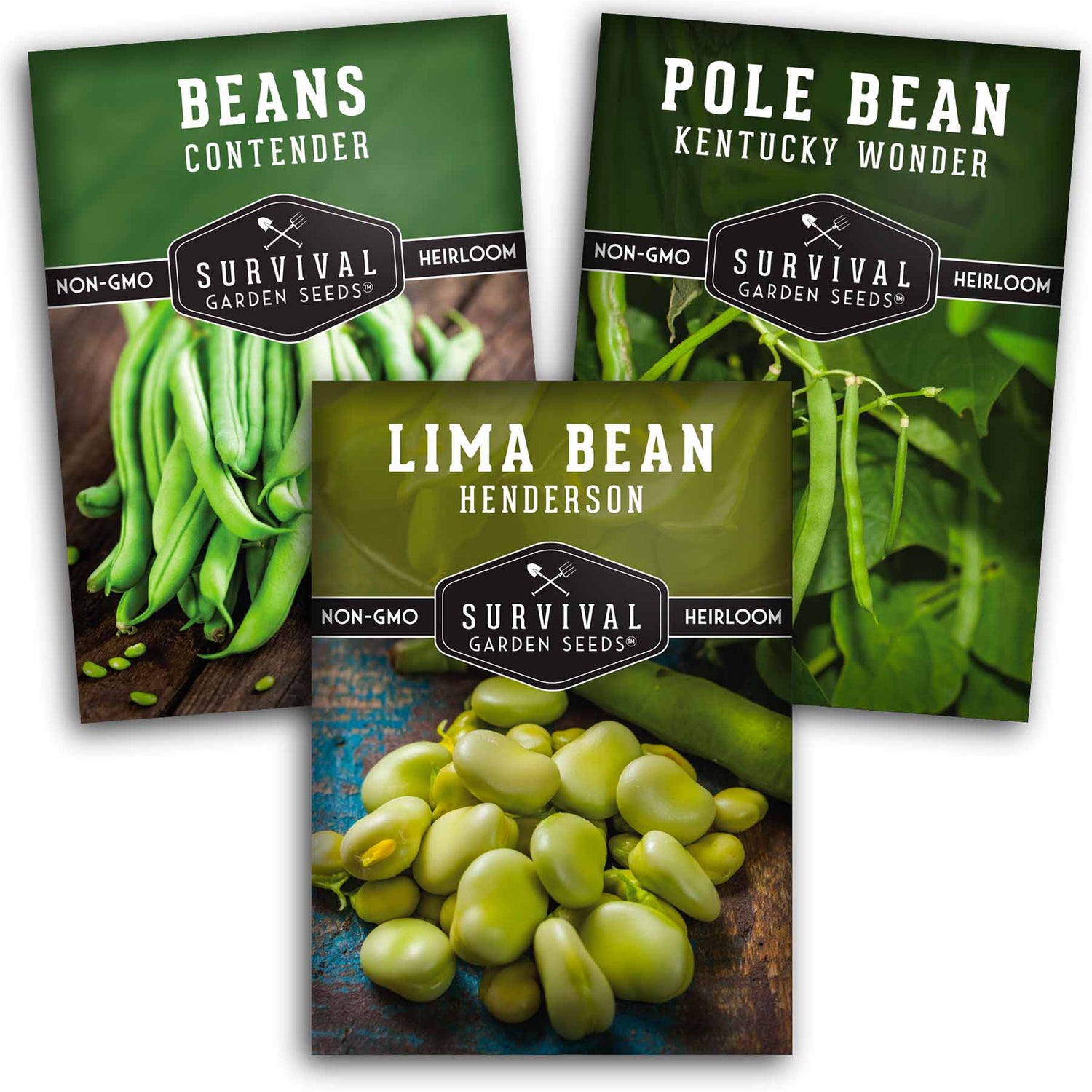
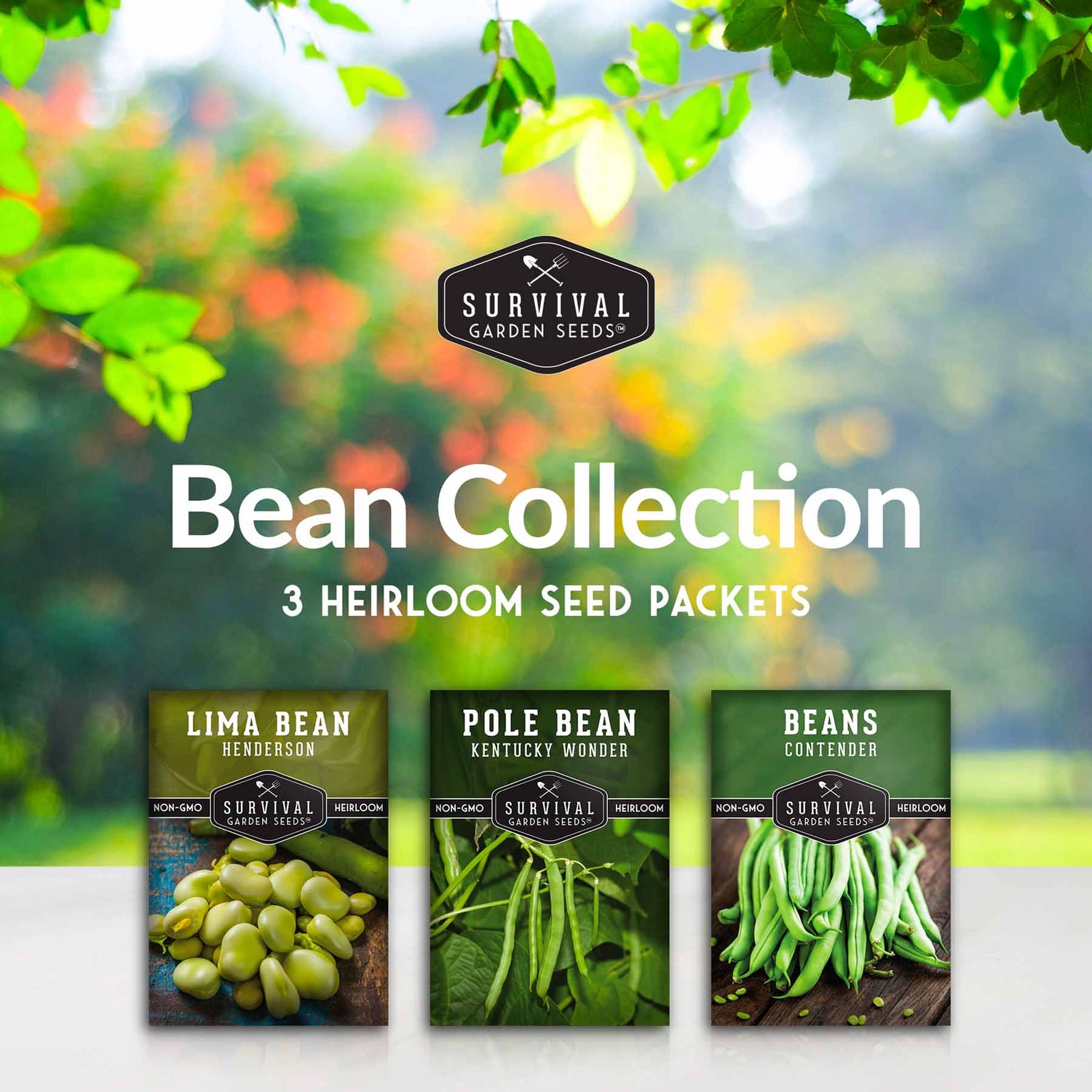
Build a productive, nutrient-rich garden with the Bean Seed Collection from Survival Garden Seeds. This trio of essential annual beans—Contender Bush Bean, Kentucky Wonder Pole Bean, and Henderson Bush Lima Bean—offers reliable performance, generous yields, and excellent versatility in the kitchen. Beans are a cornerstone of any survival-minded or self-sufficient garden thanks to their protein content, adaptability, and suitability for fresh eating or long-term storage.
Each variety grows well in full sun and delivers dependable harvests across a wide range of climates. Whether you’re planting in raised beds, traditional garden rows, or containers, these beans provide steady production and outstanding value throughout the growing season.
Nutritious Varieties Included:
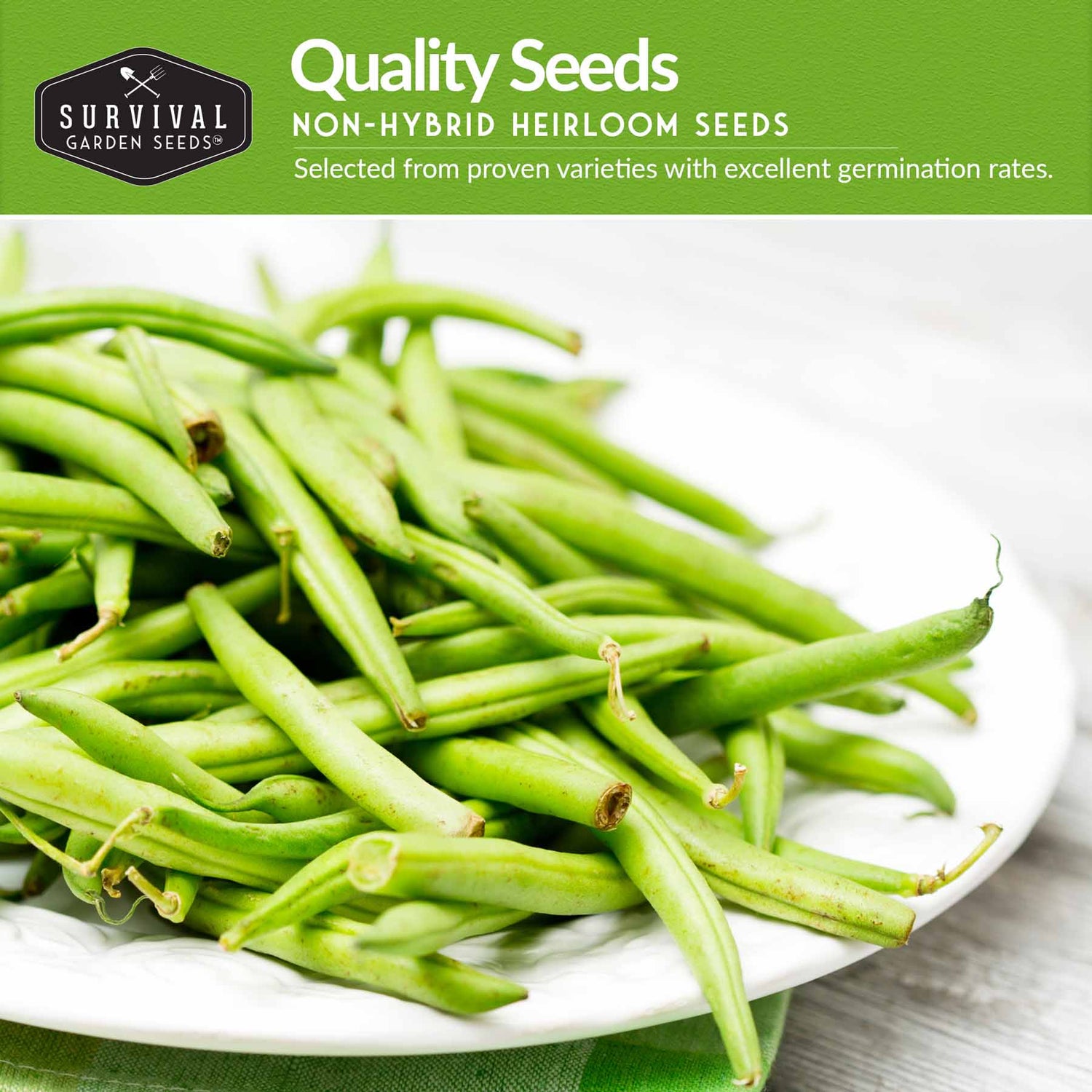
- Contender Bush Bean: A dependable early producer that thrives in both cool and warm conditions. Plants yield heavy crops of tender, stringless green pods best harvested at 5–6 inches. Well suited for outdoor gardens, containers, and even hydroponic systems with strong light.
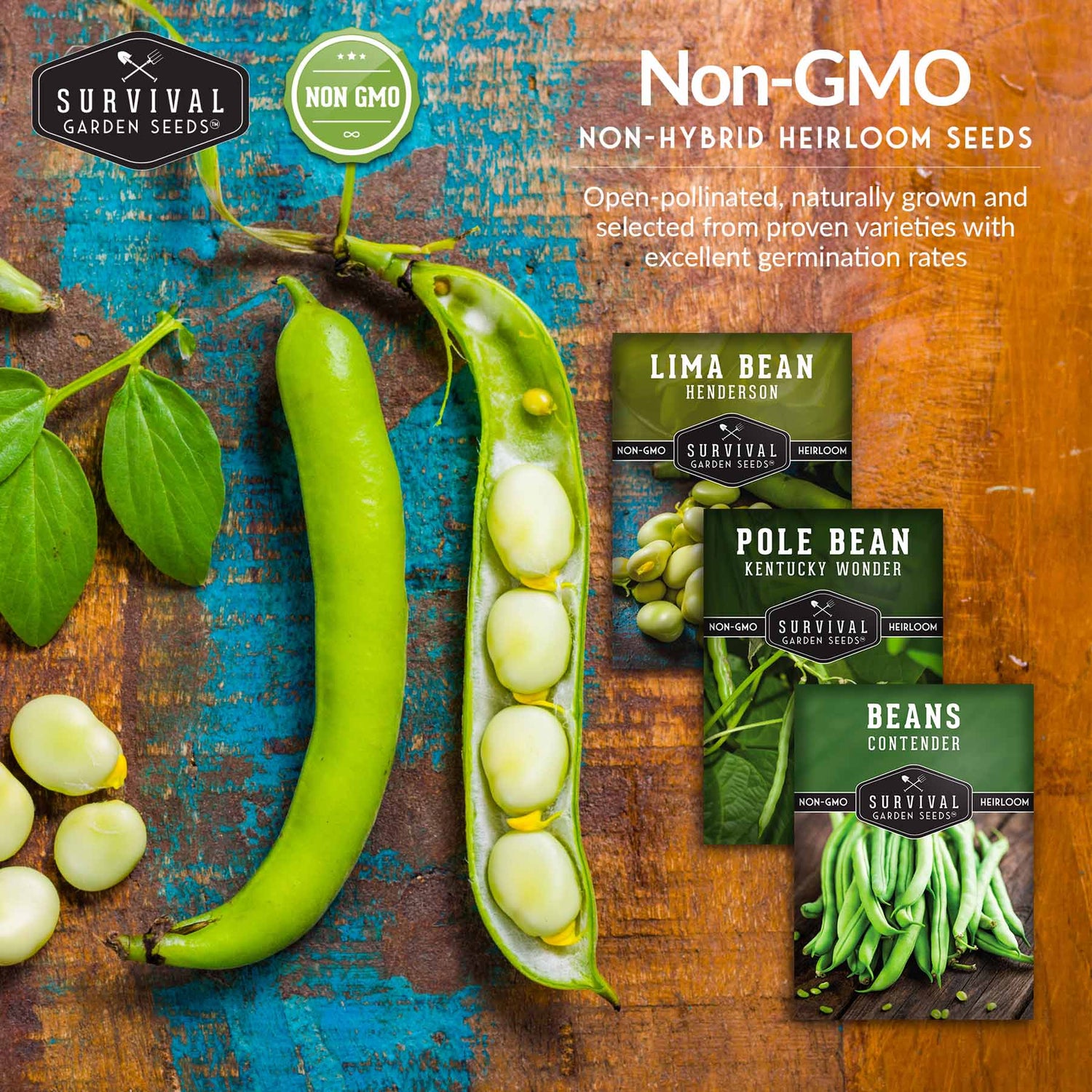
- Kentucky Wonder Pole Bean: A classic, high-yielding pole bean with vigorous climbing vines. Produces abundant snap beans that are sweet, crisp, and stringless when picked young. Pods reach 7–10 inches at full maturity and are excellent fresh, canned, or frozen.
- Henderson Bush Lima Bean: A compact, drought-tolerant lima bean known for early production. The green-to-cream baby lima beans have a rich, buttery flavor and can be enjoyed fresh, canned, or dried for long-term storage.
Why Customers Love the Bean Seed Collection:
- Includes three productive, high-nutrition bean varieties
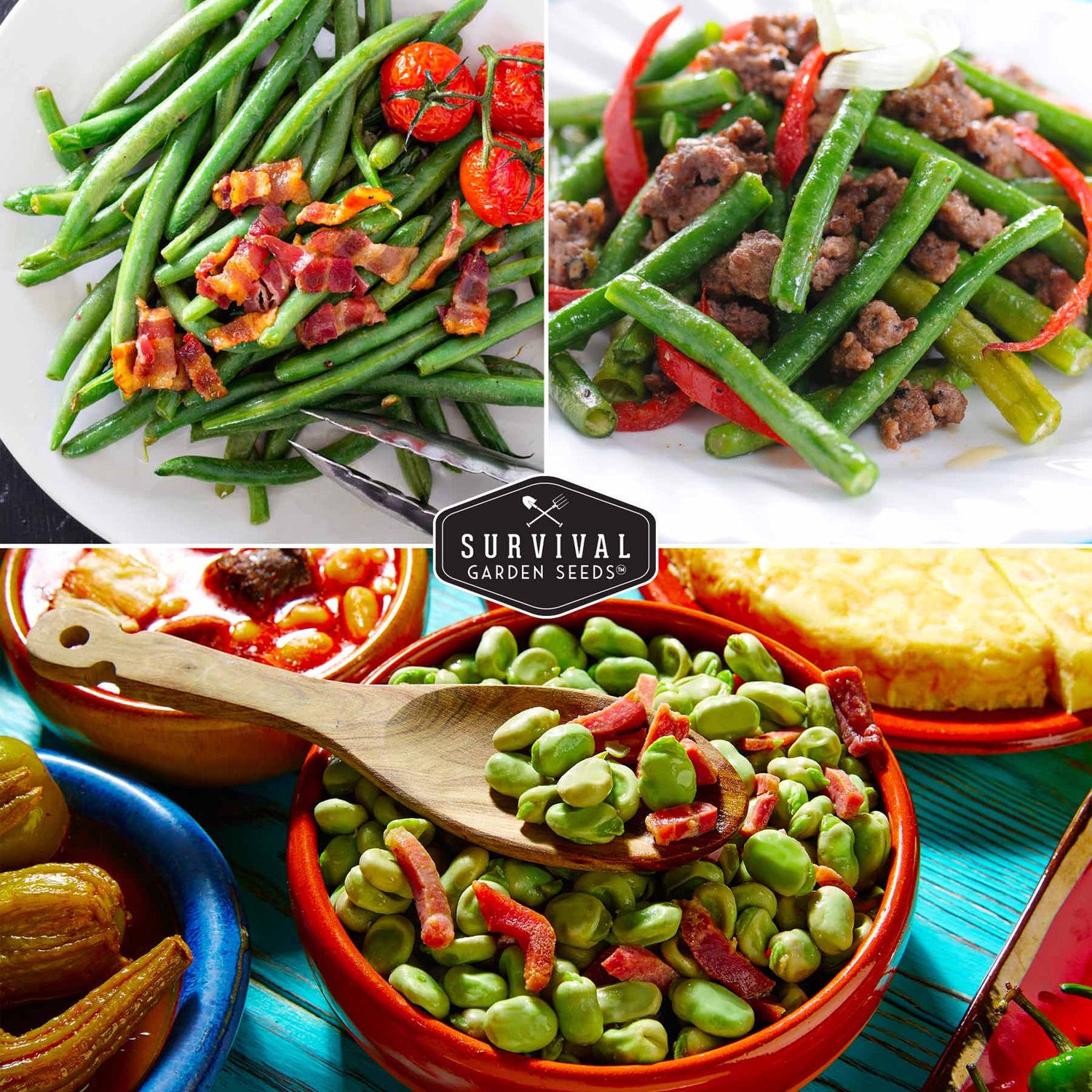
- Ideal for fresh harvests, canning, freezing, or dry storage
- Suitable for raised beds, garden rows, or containers
- Provides protein-rich crops for survival gardening and self-sufficiency
- Each packet includes clear planting and seed-saving instructions
How to Grow:
Plant seeds directly outdoors in warm soil after the danger of frost has passed. Provide full sun and well-drained soil for vigorous growth. Pole beans benefit from a sturdy trellis or support structure, while bush beans and lima beans grow compactly without support. Water consistently, especially during flowering and pod development. Harvest beans frequently to encourage continued production.
Bean Seed Collection – Contender Bush Beans, Kentucky Wonder Pole B...
Heirloom Garden Seeds
All of our seeds are open-pollinated, non-GMO, heirloom varieties with tested germination rates
Payment & Security
Payment methods
Your payment information is processed securely. We do not store credit card details nor have access to your credit card information.

3 Prolific Varieties of Beans

Environmentally Tolerant
Why Choose Survival Garden Seeds
At Survival Garden Seeds, we believe in preparing today for tomorrow’s peace of mind. That’s why we offer only heirloom, non-GMO, and untreated seeds you can trust to nourish your family and support a sustainable lifestyle. As a family-owned American company, we’re committed to providing seeds that grow strong and true—helping you cultivate health, resilience, and beauty in your garden.
Frequently Asked Questions
Are your seeds heirloom and open-pollinated?
Are your seeds heirloom and open-pollinated?
Yes. All of our seeds are heirloom, open-pollinated varieties, which means they can produce seeds that grow true to type and are suitable for seed saving.
You can learn more about open-pollinated, heirloom, and non-GMO seeds in our Survival Garden Training blog.
Are your seeds non-GMO?
Are your seeds non-GMO?
Yes. All Survival Garden Seeds are 100% non-GMO. Our seeds are open-pollinated heirloom varieties and are never genetically modified.
Are your seeds treated with chemicals?
Are your seeds treated with chemicals?
No. Our seeds are completely untreated and free from chemical coatings, fungicides, or synthetic treatments.
How do I know my seeds are fresh?
How do I know my seeds are fresh?
Every seed packet includes a packed-for date, and we germination-test each seed lot before packaging to ensure high viability.
What is the shelf life of your seeds?
What is the shelf life of your seeds?
Most seeds remain viable for 3 to 5 years or longer when stored properly in a cool, dry place away from light and moisture.
In what USDA hardiness zones can I grow your seeds?
In what USDA hardiness zones can I grow your seeds?
Our varieties are selected to grow successfully across USDA Hardiness Zones 3 through 10. Each packet includes variety-specific planting guidance and germination tips.