

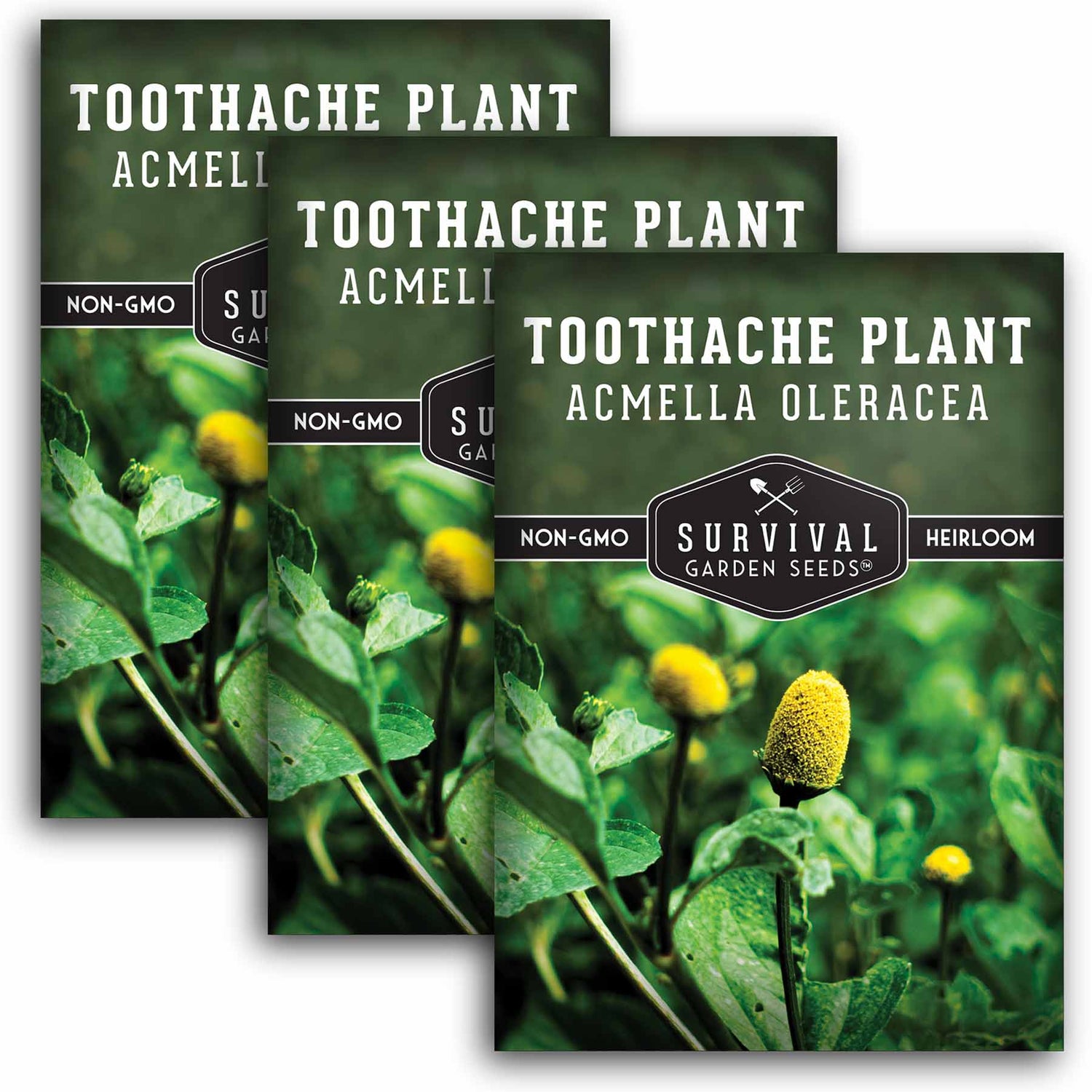
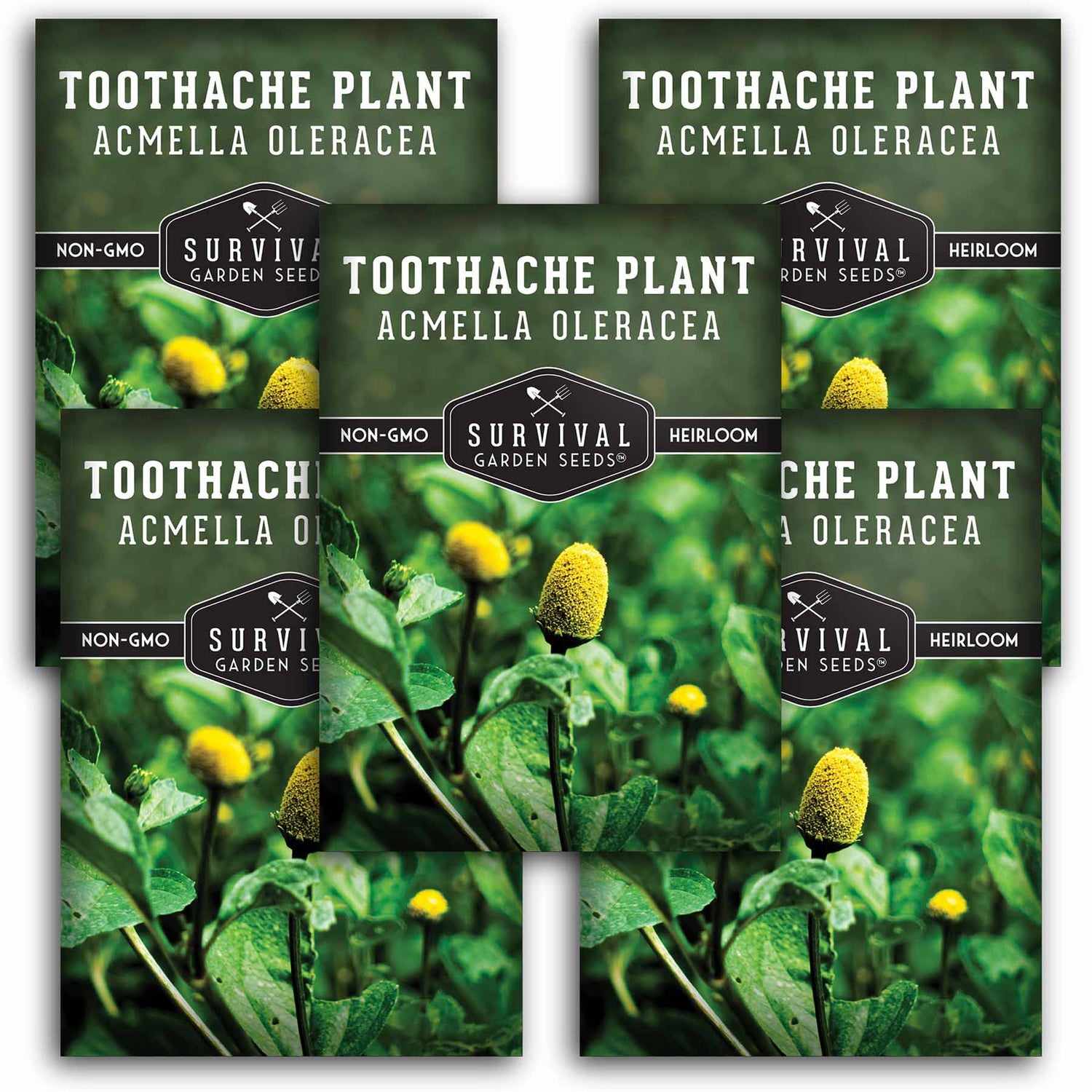
Toothache Plant Seeds – Acmella oleracea Electric Daisy for Culinary & Herbal Gardens
Heirloom - Non-GMO - Reliable Germination
Toothache Plant Seeds – Acmella oleracea Electric Daisy for Culinary & Herbal Gardens - 1 Packet is backordered and will ship as soon as it is back in stock.
Couldn't load pickup availability

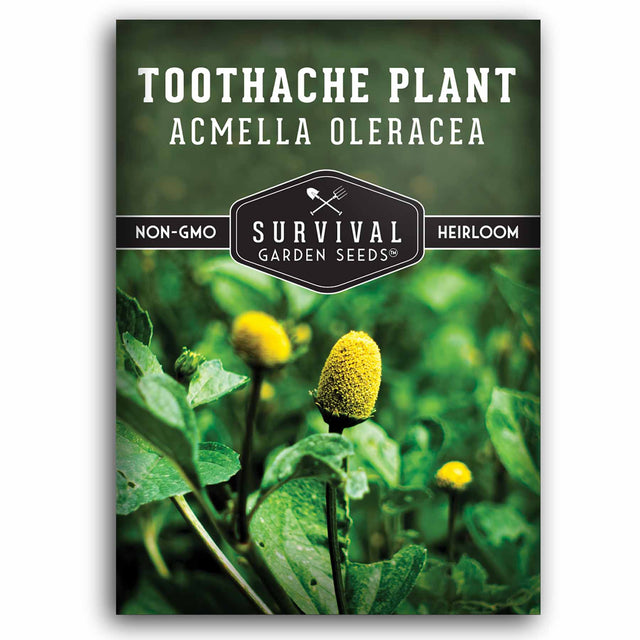
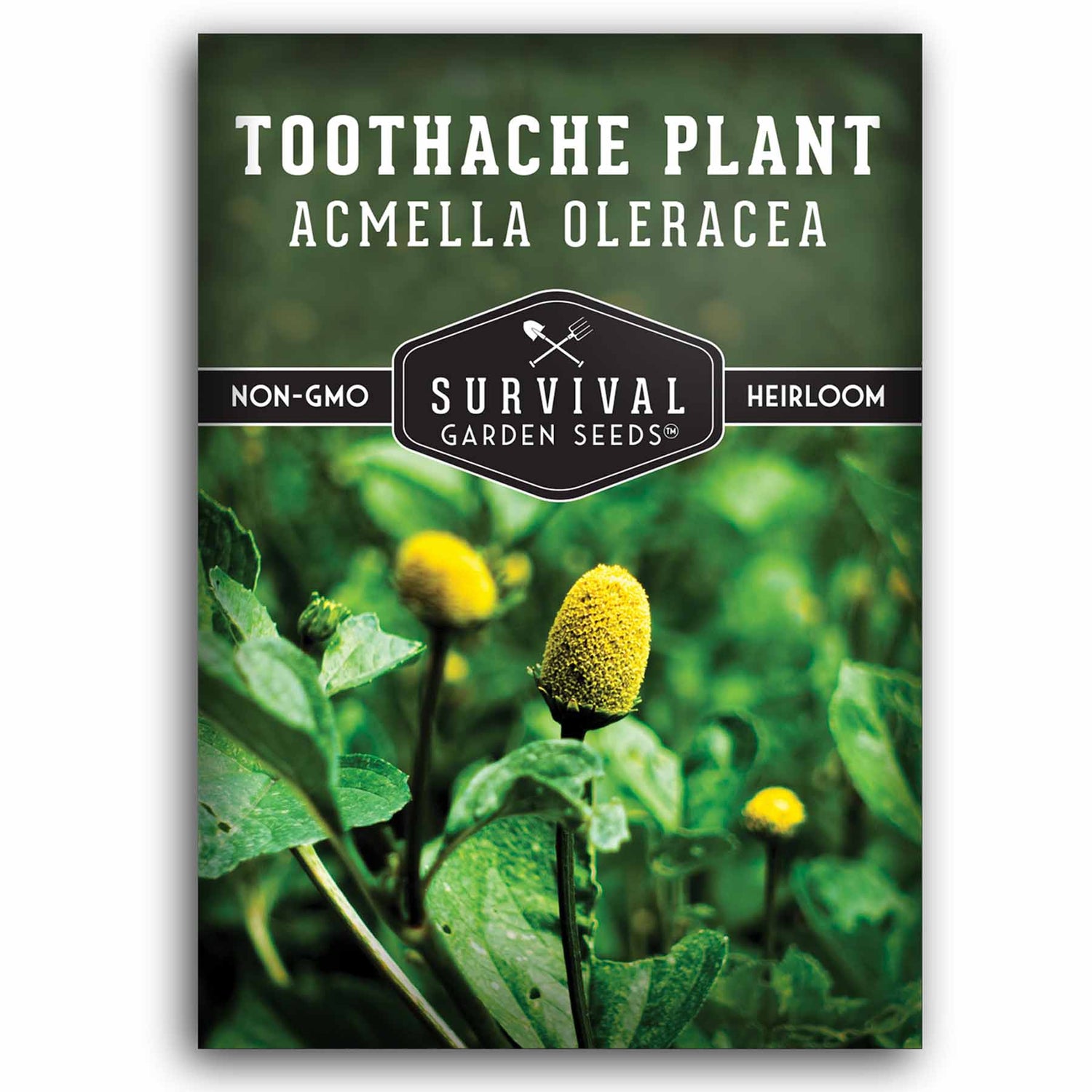
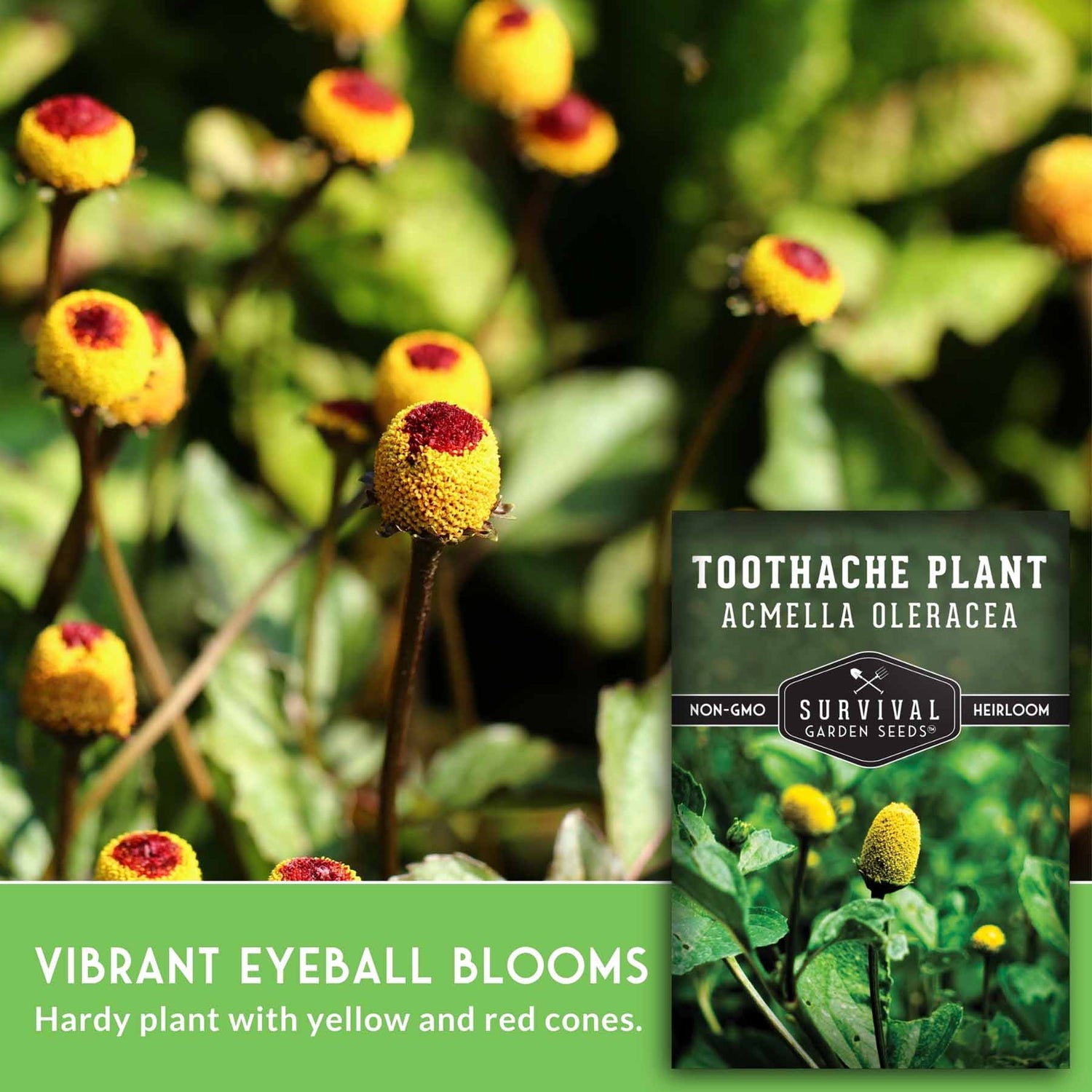
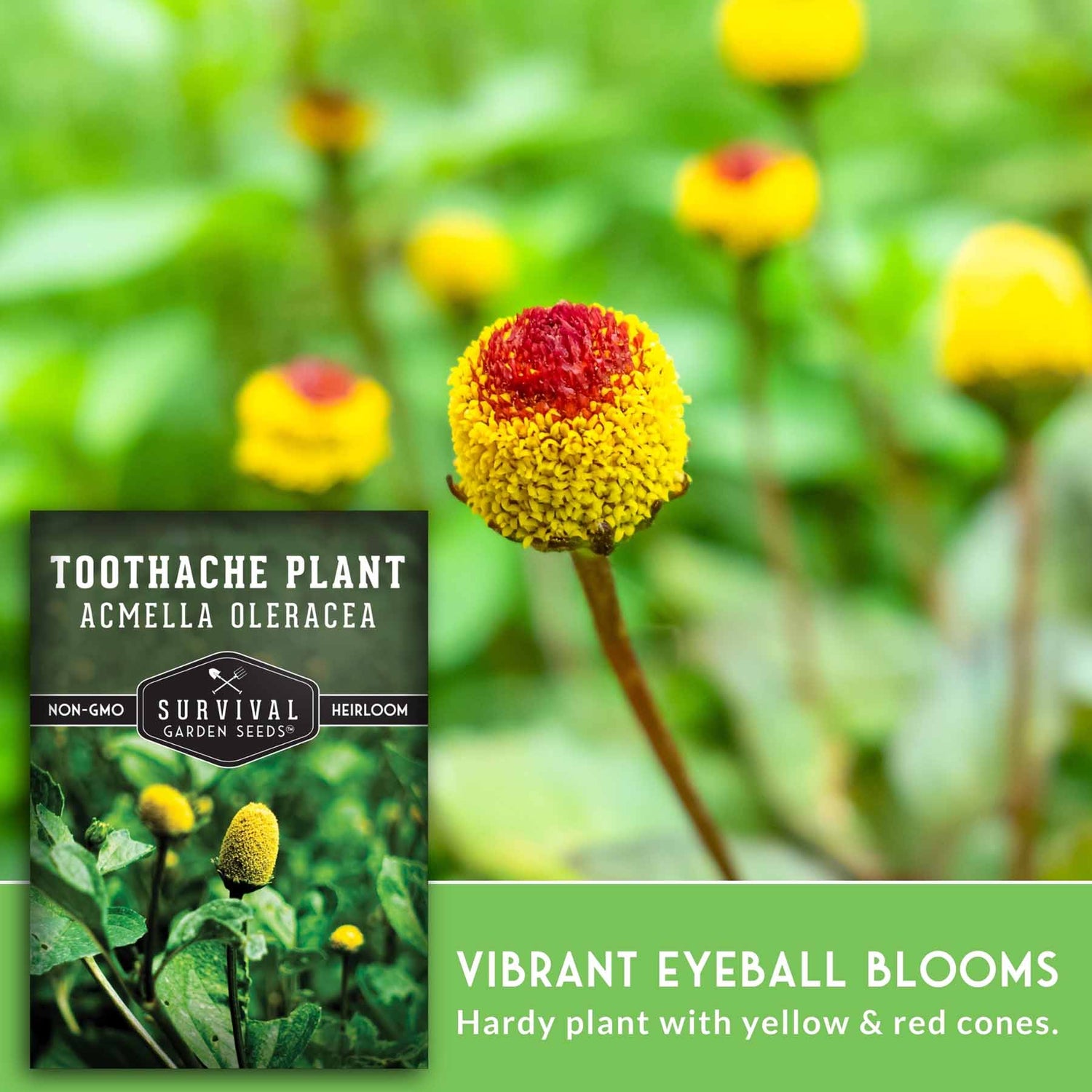
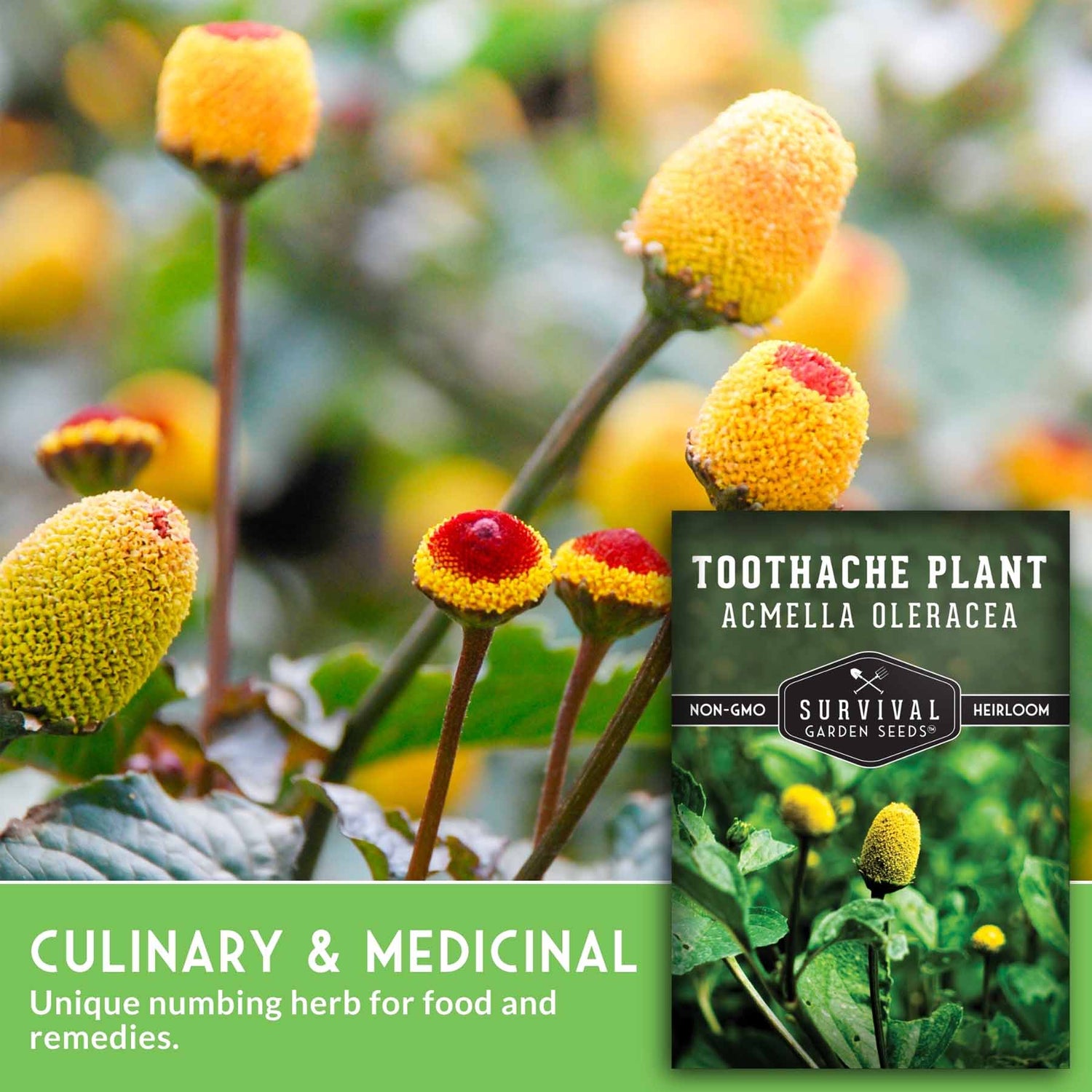
Toothache Plant Seeds from Survival Garden Seeds grow Acmella oleracea, a distinctive herb known for its vibrant, cone-shaped flowers and unique sensory qualities. Commonly called Electric Daisy, this plant produces yellow and red “eyeball” blooms and glossy green foliage on compact, bushy plants. Valued for its traditional herbal uses and creative culinary applications, Toothache Plant adds visual interest, novelty, and versatility to herb gardens, edible landscapes, and container plantings.
Attractive, Hardy, and Easy to Grow:
- Compact, bushy plants reach up to 2 feet tall
- Bright yellow and red cone-shaped flowers add ornamental appeal
- Tolerates a range of soil conditions
- Grows well outdoors or indoors in containers
- Tender perennial in warm climates; grown as an annual in cooler zones
Unique Flavor with Traditional Uses:
- Leaves and flowers produce a distinctive numbing, tingling sensation
- Traditionally used in herbal practices
- Popular in culinary applications as a novelty ingredient or edible garnish
- Adds interest to salads, drinks, and specialty dishes
Why Customers Love Toothache Plant Seeds:
- Unusual plant with eye-catching flowers
- Grown for both ornamental and edible uses
- Compact size suitable for gardens and containers
- Easy to grow and adaptable to different environments
- A conversation-starting addition to herb collections
How to Use / How to Grow:
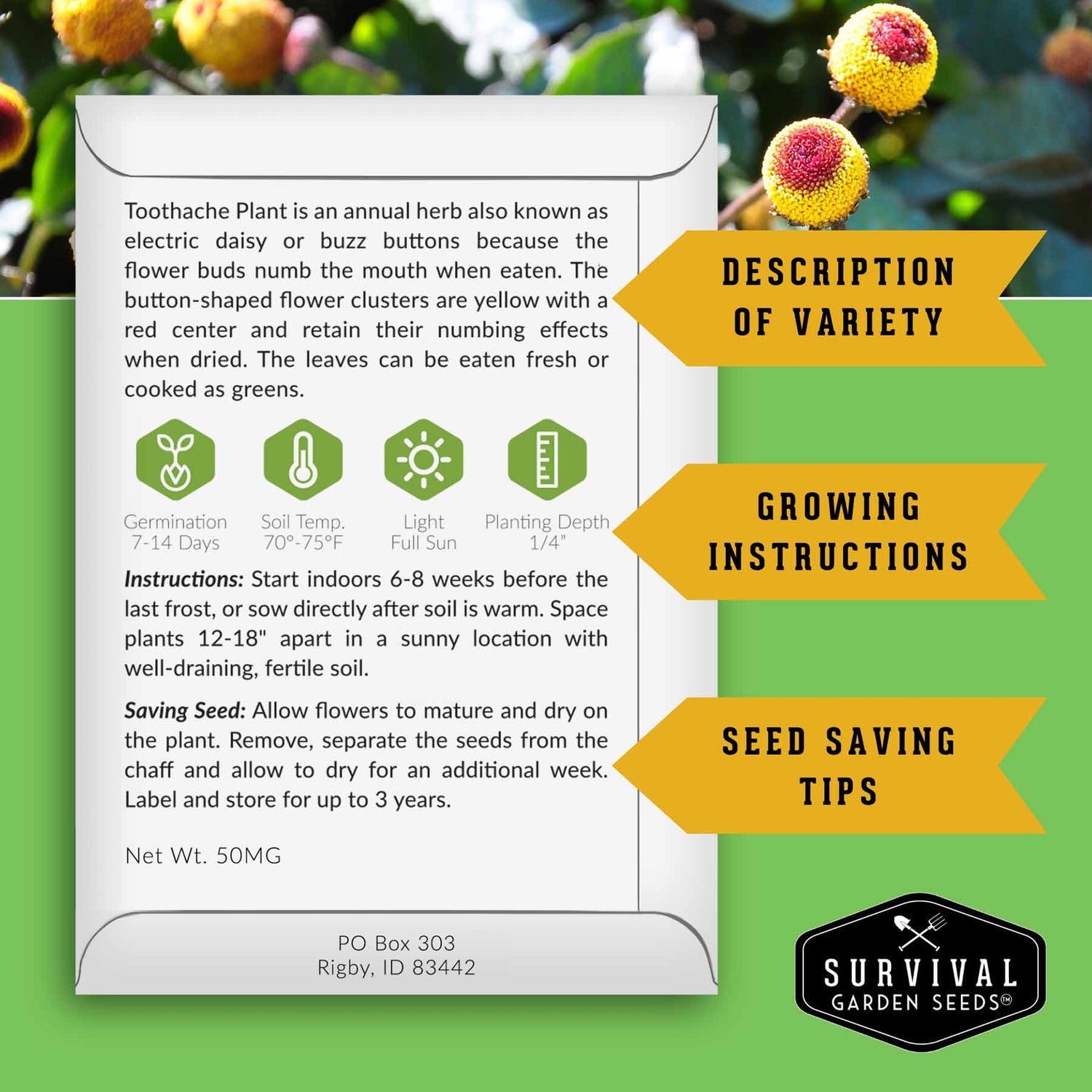
Sow Toothache Plant seeds indoors or outdoors after the danger of frost has passed. Plant in full sun to partial shade with well-drained soil and consistent moisture. In cooler climates, plants can be grown as annuals or brought indoors to overwinter. Harvest flowers and leaves as needed once plants are established.
Net Wt. 40MG
Toothache Plant Seeds – Acmella oleracea Electric Daisy for Culinar...
Heirloom Flower Seeds
All of our seeds are open-pollinated, non-GMO, heirloom varieties with tested germination rates
Specifications
Specifications
-
Botanical Name
-
Seasonality
-
Planting Zones
-
Light
-
Soil Temp for Germination
-
Germination Time
-
Planting Depth
-
Plant Size
-
Days to Bloom
-
Growing Instructions
-
Seed Saving Instructions
-
Seed Count (approximate)
Payment & Security
Your payment information is processed securely. We do not store credit card details nor have access to your credit card information.
Why Choose Survival Garden Seeds
At Survival Garden Seeds, we believe in preparing today for tomorrow’s peace of mind. That’s why we offer only heirloom, non-GMO, and untreated seeds you can trust to nourish your family and support a sustainable lifestyle. As a family-owned American company, we’re committed to providing seeds that grow strong and true—helping you cultivate health, resilience, and beauty in your garden.
Frequently Asked Questions
Are your seeds heirloom and open-pollinated?
Are your seeds heirloom and open-pollinated?
Yes. All of our seeds are heirloom, open-pollinated varieties, which means they can produce seeds that grow true to type and are suitable for seed saving.
You can learn more about open-pollinated, heirloom, and non-GMO seeds in our Survival Garden Training blog.
Are your seeds non-GMO?
Are your seeds non-GMO?
Yes. All Survival Garden Seeds are 100% non-GMO. Our seeds are open-pollinated heirloom varieties and are never genetically modified.
Are your seeds treated with chemicals?
Are your seeds treated with chemicals?
No. Our seeds are completely untreated and free from chemical coatings, fungicides, or synthetic treatments.
How do I know my seeds are fresh?
How do I know my seeds are fresh?
Every seed packet includes a packed-for date, and we germination-test each seed lot before packaging to ensure high viability.
What is the shelf life of these gardening seeds?
What is the shelf life of these gardening seeds?
Most seeds remain viable for 3 to 5 years or longer when stored properly in a cool, dry place away from light and moisture.
In what USDA hardiness zones can I grow your seeds?
In what USDA hardiness zones can I grow your seeds?
Our varieties are selected to grow successfully across USDA Hardiness Zones 3 through 10. Each packet includes variety-specific planting guidance and germination tips.